Reliable bathroom ventilation dampness: The Real Reason Your Bathroom Keeps Getting Mouldy helps to keep your bathroom clean. If your bathroom keeps getting damp no matter how often you clean it, the cause almost always comes down to one thing: moisture isn’t being removed fast enough after every shower or bath. That’s the entire principle behind bathroom ventilation dampness prevention: get the warm, wet air out of the room before it has the chance to settle on a cold wall or ceiling and turn into mildew. A bottle of bleach spray can keep treating the symptom for years without ever fixing the actual problem underneath it.
Here’s what’s really going on, what UK regulations actually require, and how to stop the cycle for good rather than just managing it.
Why Bathrooms Are More Prone to Damp Than Almost Any Other Room
Every time you run a hot shower, liters of water vapor are released into a small, enclosed space. That warm air rises, hits a colder surface like a tiled wall, a mirror, or a ceiling, and condenses straight back into liquid water. Repeat that twice a day, every day, for years, and you’ve got a constant supply of moisture feeding mold spores that thrive in exactly those conditions.
This is condensation damp, and it’s different from rising damp or penetrating damp, which comes from groundwater or a defect in the building’s exterior. Bathroom ventilation damp prevention specifically targets condensation damp, which happens to be the type that causes the vast majority of bathroom mold problems in UK homes.
What UK Regulations Actually Require
A surprising number of people assume an openable window counts as adequate ventilation on its own. It doesn’t, not under current rules. Approved Document F of the Building Regulations sets the minimum extract rate for a bathroom with a bath or shower at 15 liters per second for a fan that runs intermittently or 8 liters per second for a continuous system that boosts automatically when humidity rises.
A standalone toilet with no bath or shower only needs 6 liters per second, since smell rather than moisture is the main issue there. The bathroom ventilation dampness prevention rule matters more than the headline numbers, though: the extracted air has to go outside the building, never into a loft or wall cavity.
Plenty of older bathrooms have a fan that runs perfectly well but simply dumps moist air into the loft space above, which just moves the damp problem somewhere you can’t see it until the insulation is ruined and the timber starts to suffer.
Choosing and Positioning a Fan That Actually Works
Not all extractor fans perform the same way in a bathroom, and the wrong choice or position is often why ventilation fails even when a fan is technically fitted.
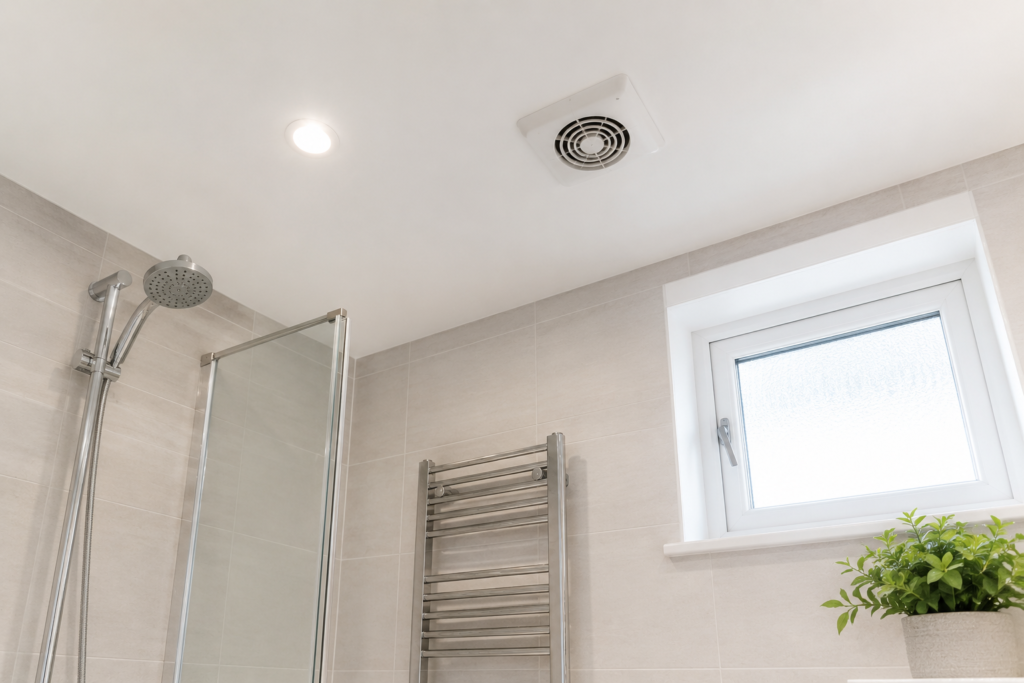
Axial fans are the simplest setup, generally fitted through an external wall, and they suit bathrooms with a short, direct route outside. Centrifugal fans create more pressure and cope far better with longer duct runs, which makes them the better option for internal bathroom ventilation dampness with no outside wall nearby. Inline fans sit within the ducting itself, often tucked into a loft space, which keeps noise out of the room entirely.
Continuous extract systems, sometimes called dMEV, run quietly in the background all day and boost automatically as humidity rises, which suits a busy family bathroom far better than a basic on/off switch. Position is just as important as type.
The fan should sit as high as practical, no more than 400mm below the ceiling, and as close to the bath or shower as possible so it captures steam at the source rather than letting it spread across the room first. A timer that keeps the fan running for fifteen to twenty minutes after you leave is worth having on almost any system, since most condensation actually forms after you’ve finished bathing, not during it.
Quick Ways to Tell Yours Isn’t Doing Its Job
A few signs reliably point to ventilation that isn’t keeping up.
- Mirrors or windows that stay fogged up long after you’ve left the room
- Dark spotting creeping along grout lines, sealant, or the corners of the ceiling
- A musty smell that comes back within days of cleaning
- Paint or wallpaper lifting near the ceiling or behind the toilet
- A fan that runs but seems to barely move any air, or one that’s noticeably loud or rattling
Spotting two or more of these is a fairly reliable sign your current setup isn’t actually hitting that 15 liters per second benchmark, regardless of whether a fan is fitted at all.
Habits That Take the Pressure Off Your Ventilation System
A fan does most of the heavy lifting, but a handful of small habits genuinely reduce how hard it has to work.
Run the extractor during your shower and leave it going for fifteen to twenty minutes afterward rather than switching it off the moment you step out. Squeegee or towel down tiles and glass straight after bathing, since standing water left to evaporate slowly adds far more moisture to the air than a quick wipe ever costs you in time. Prop the door open for a short while once you’re done, or fit a slightly undercut door so trapped air has somewhere to go.
Keep window trickle vents clear of paint, dust, and bathroom ventilation dampness, since they provide constant background airflow even when nobody’s run the fan. A cheap hygrometer is also worth having, since keeping indoor humidity somewhere between 40 and 60 percent makes a noticeable difference to how often condensation forms in the first place.
What Ignoring It Actually Costs You Over Time
Beyond the obvious, mold isn’t just unpleasant to look at; it can genuinely affect health, particularly for anyone with asthma, allergies, or a compromised immune system. Left unchecked, condensation damp also chips away at the bathroom itself: grout crumbles, paint peels, and moisture that gets behind tiles or into timber can eventually mean a far bigger repair bill than a £5 spray ever would have prevented.
This matters even more for landlords. Recent changes to housing law, including the introduction of Awaab’s Law, now place a clear, time-bound responsibility on landlords to act on damp and mold reports rather than letting them sit unresolved.
Building Proper Ventilation Into a Bathroom Renovation
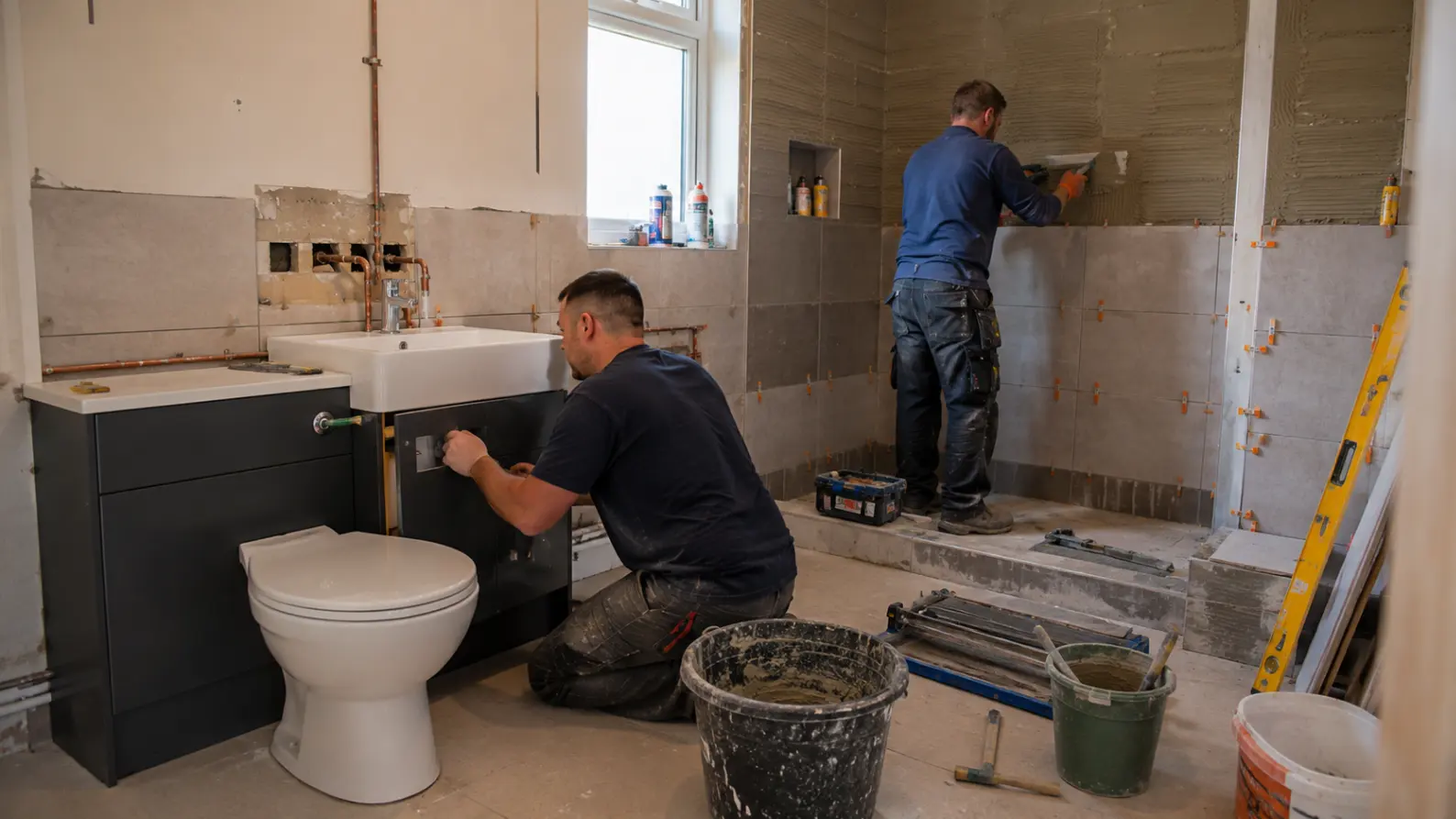
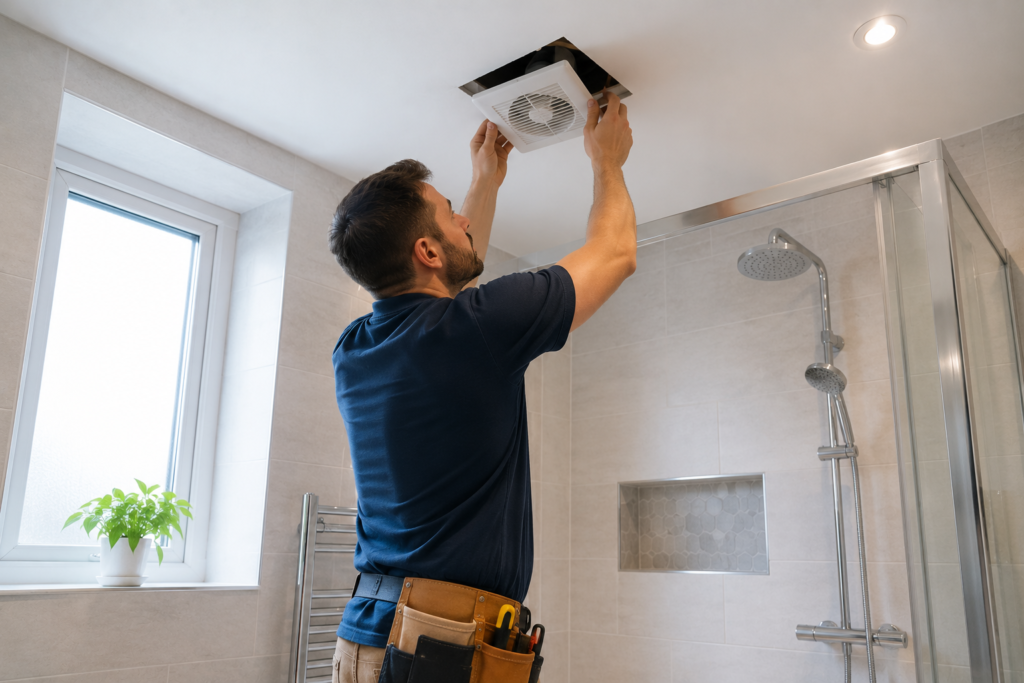
If you’re already planning a renovation, this is genuinely the best moment to sort ventilation out properly rather than patching an old fan later. Once the room is stripped back, repositioning the fan above the shower, running a clean duct route straight outside, and fitting a continuous extract system instead of a tired old timer fan all become far simpler and cheaper to do than retrofitting them into a finished bathroom.
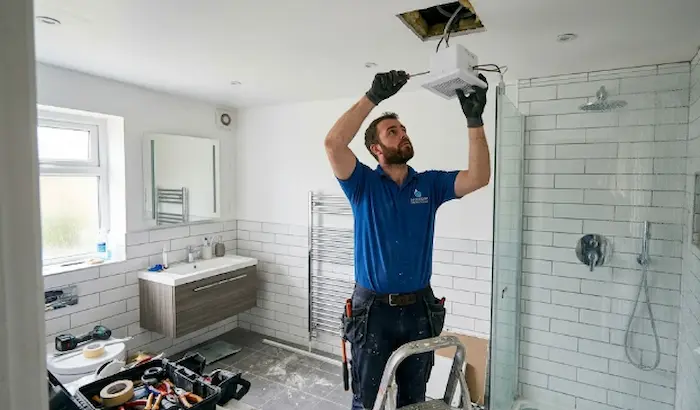
Any fan installation counts as notifiable electrical work under Part P of the Building Regulations, so it needs signing off by someone properly qualified, not left as an afterthought once the tiling’s gone down.
If you’re planning a bathroom renovation in Wolverhampton, ventilation is one of those details that’s far easier to get right from the design stage than to fix after the fact, and it’s something we plan into every project rather than treating as an optional extra.
Frequently Asked Questions
What is the most effective way to prevent damp in a bathroom?
For bathroom ventilation dampness, use a properly sized, well-positioned extractor fan that vents straight outside; run it during and after every shower, and back it up with habits like wiping down wet surfaces and airing the room afterward. Together, these form the practical basis of bathroom ventilation and damp prevention.
Is a window enough ventilation for a bathroom?
On its own, usually not. An openable window helps with general airflow, but it rarely removes moisture quickly enough to stop condensation, which is why UK regulations require mechanical extraction in most bathrooms regardless of whether a window is present.
What ventilation rate does a UK bathroom need by law?
Under Approved Document F, a bathroom with a bath or shower needs a minimum extract rate of 15 liters per second for an intermittent fan or 8 liters per second for a continuous system with a boost function.
Why does mold keep coming back even though I have an extractor fan?
The most common reasons are an undersized fan, poor positioning away from the source of steam, or ducting that vents into a loft space instead of outside. Any of these can leave a fan running without actually meeting the required extraction rate.
Should ventilation be planned at the start of a bathroom renovation?
Yes. Fitting or repositioning an extractor fan while the room is already stripped back is far cheaper and less disruptive than retrofitting one into a finished bathroom, and it gives you the chance to choose a system that properly matches the room’s size and layout.