Bathroom Taps Buying Guide: How to Choose the Perfect Bathroom Taps for Your Home
Choosing bathroom taps sounds simple until you’re faced with dozens of styles, finishes, mounting options, and technical specifications — and you’re not entirely sure which ones will actually work with your plumbing. This bathroom taps buying guide is designed to cut through that confusion and help you make a confident, informed decision before you spend a penny.
The right tap does more than control water flow. It contributes to the overall look of your bathroom, affects how easy the room is to clean and maintain, and directly impacts your water efficiency. Whether you’re fitting out a compact cloakroom, renovating a family bathroom, or designing a luxury ensuite, tap selection matters more than most people realise.
This guide covers the main tap types, how to match them to your water system and basin configuration, how to choose a finish that works with your bathroom style, and what to check before you buy.
Bathroom Tap Types Explained
Understanding the different tap types is the first step in any bathroom taps buying guide worth reading. Each type is designed for a specific installation context — and choosing the wrong one for your basin or bath can mean an expensive return.
Basin Mixer Taps
Basin mixer taps combine the hot and cold supply into a single spout with one or two control handles. They’re the default choice for most modern bathrooms — practical, easy to use, and available in an enormous range of styles. A single-lever mixer gives you full flow and temperature control with one hand, which is particularly useful in a busy family bathroom. Dual-control mixer taps with separate hot and cold handles give a more traditional look while still delivering mixed water from a single spout.
Pillar Taps
Pillar taps are the traditional option — two separate taps, one for hot and one for cold, each fitted into their own tap hole. They work well in classic and period-style bathrooms where the aesthetic calls for crosshead or ceramic disc handles. The main practical drawback is that you get separate hot and cold streams rather than a comfortable mixed temperature, though modern ceramic disc pillar taps are considerably smoother to operate than older designs.
Monobloc Taps
Monobloc taps are designed for single tap hole installations. The entire tap — body, spout, and controls — fits through one hole in the basin or bath deck. This makes them ideal for basins with a single pre-drilled hole and for spaces where a clean, uncluttered appearance is the priority. Most modern basin mixer taps are monobloc designs.
Wall-Mounted Taps
Wall-mounted taps are fixed to the wall above the basin rather than to the basin or worktop itself. They work particularly well with countertop basins and vessel basins, creating a minimalist look with clean lines and no visible pipework at the basin level. The installation is more involved than deck-mounted options — the supply pipes need to be routed inside the wall — but the visual result is striking and easy to clean around.
Bath Filler Taps
Bath filler taps are designed specifically for baths, delivering a high flow rate to fill the tub quickly. They can be deck-mounted to the bath rim, floor-mounted as a freestanding unit, or wall-mounted above the bath. A good bath filler should have a flow rate appropriate to your water system — a tap rated for high-pressure systems may perform poorly on a gravity-fed installation.
Bath Shower Mixer Taps
Bath shower mixer taps combine a bath filler with a handheld shower head, typically operated by a diverter control. They’re the most practical choice for a family bathroom where the bath is also used for showering. The diverter switches the water flow between the bath spout and the shower hose, and the mixer control manages temperature and flow for both.
Freestanding Bath Taps
Freestanding bath taps — also called floor-mounted or freestanding fillers — are a statement fixture designed for use with freestanding baths. They rise from the floor on a tall spout column, often with a telephone-style handshower attached. They make a strong visual impact and work best in larger bathrooms where the freestanding bath is a focal point of the design. Installation requires floor-level supply connections, so they are best planned at the early stages of a bathroom renovation. These make the strongest impact as part of a luxury bathroom renovation where the bath itself is the centrepiece
Waterfall Taps
Waterfall taps produce a wide, flat stream of water that flows over a broad spout rather than a conventional circular outlet. They create a spa-inspired, boutique hotel aesthetic and work well in modern, minimalist bathroom designs. They’re available as both basin and bath fillers and in a wide range of finishes. Flow rate and water pressure compatibility should be checked carefully for waterfall designs, as the wide spout requires adequate pressure to perform as intended.
Which Bathroom Tap Is Right for You?
| Bathroom Type | Recommended Tap |
| Small cloakroom | Compact cloakroom mixer tap |
| Family bathroom | Bath shower mixer tap |
| Modern ensuite | Wall-mounted basin mixer |
| Luxury bathroom | Freestanding bath tap |
| Traditional bathroom | Pillar or crosshead mixer tap |
| Spa-inspired bathroom | Waterfall basin or bath filler |
| Minimalist ensuite | Monobloc single lever mixer |
Check Your Water Pressure Before Buying
Water pressure compatibility is one of the most important — and most frequently overlooked — factors when choosing bathroom taps. A tap that looks perfect in a showroom may underperform or fail to function properly if it is not compatible with your home’s water system.
Low Pressure Systems
Gravity-fed systems — where a cold water storage tank in the loft feeds the bathroom — typically operate at low pressure, often between 0.1 and 0.3 bar. Not all taps are compatible with this pressure range. When shopping for taps for a gravity-fed system, check the minimum operating pressure stated in the product specification and look specifically for taps marked as suitable for low pressure. Many mixer taps require a minimum of 0.5 bar to function correctly, which makes them unsuitable for gravity systems without a pump.
High Pressure Systems
Combi boilers and unvented cylinders deliver water at mains pressure — typically 1 to 3 bar or higher. Most standard mixer taps and monobloc designs are rated for high pressure systems and will perform well. Some taps include a flow restrictor for use on high-pressure systems to prevent excessive water use and splashing. Check the maximum operating pressure stated in the product specification if your system delivers particularly high pressure.
Minimum Operating Pressure
Every tap has a stated minimum operating pressure. This figure is the lowest pressure at which the tap will function as designed. Always compare this figure against the pressure your system delivers before purchasing. If you are unsure of your water pressure, a simple pressure gauge can be attached to a tap or outdoor bib to give a reading in bar.
Tap Hole Configuration Guide
Before purchasing any tap, confirm the tap hole configuration of your basin or bath. Fitting the wrong tap to the wrong basin means either drilling additional holes — which can crack some basin materials — or returning the product.
Single tap hole:
One central hole accepts a monobloc mixer tap. Most modern basins are supplied with a single tap hole as standard.
Two tap holes:
Two side-by-side holes accept a pair of pillar taps or a three-piece mixer tap set with separate hot and cold controls and a central spout.
Three tap holes:
Three holes accept a widespread mixer set with handles positioned separately from the central spout. This configuration is more common in traditional-style bathrooms and larger basins.
No tap holes:
Some basins — particularly countertop and vessel basins — are supplied with no pre-drilled holes, intended for use with wall-mounted taps. Do not attempt to drill tap holes in vitreous china basins without specialist equipment.
For baths, deck-mounted tap positions and the number of holes vary between manufacturers. Always cross-reference the bath specification with the tap before purchasing.
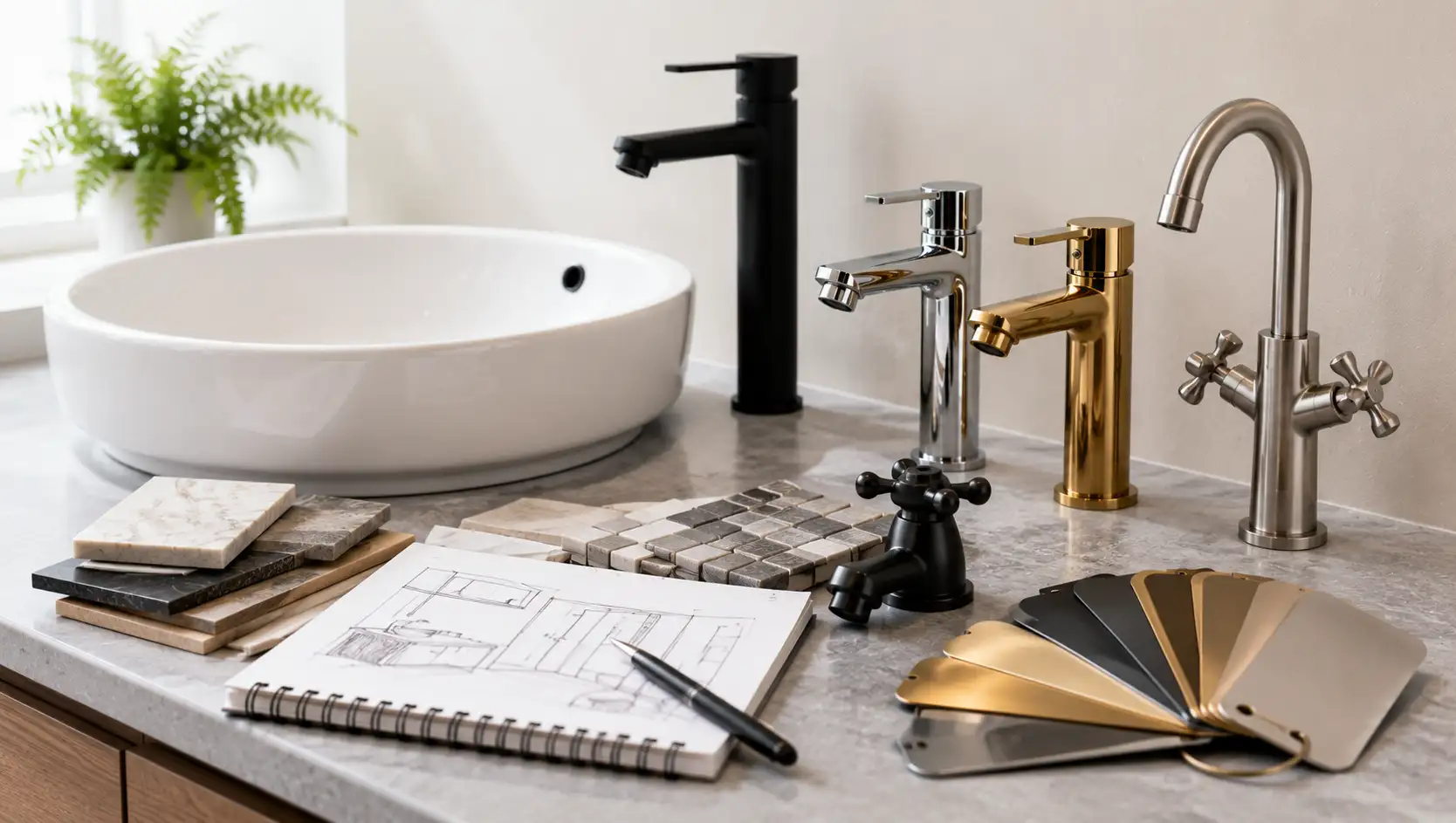
Choose the Right Tap Finish
Tap finish has a significant impact on the overall look of a bathroom and on how easy the tap is to keep clean. It also needs to coordinate with other fixtures and fittings towel rails, shower fittings, cabinet handles, and mirror frames for the bathroom to feel cohesive. If you’re unsure which finish will tie the room together, our bathroom design service can help you build a coordinated scheme.
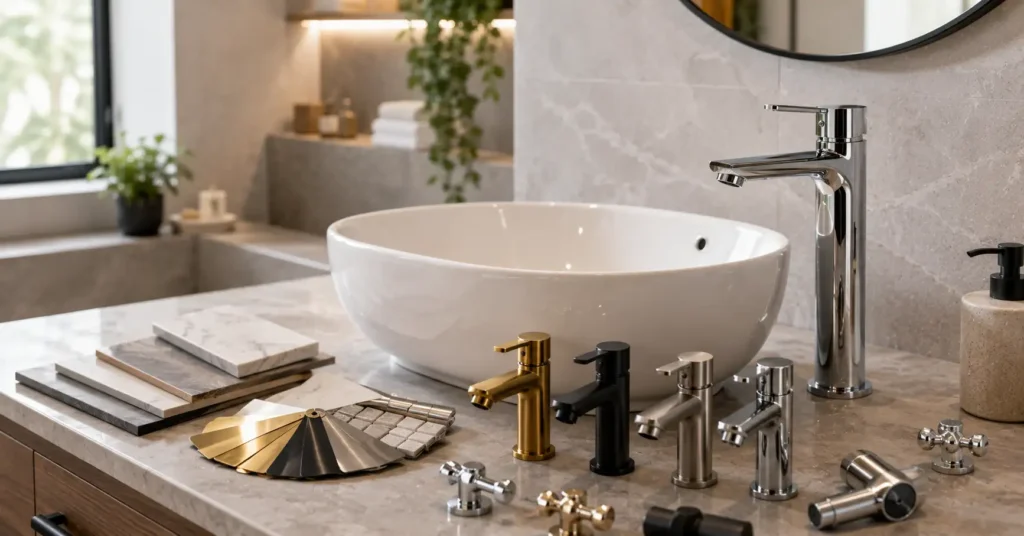
Chrome
Chrome is the most popular bathroom tap finish for good reason. It is durable, easy to clean, suits virtually every bathroom style from classic to contemporary, and coordinates effortlessly with most other fixture finishes. Chrome taps are typically the most affordable option and the widest range of styles is available in this finish.
Matt Black
Matt black has become one of the most popular choices in modern and contemporary bathroom design. It creates a strong, graphic contrast against white sanitaryware and light-coloured tiles. The matt surface shows water spots and fingerprints more readily than chrome, so regular wiping is needed to keep it looking its best. Matt black taps work particularly well in minimalist and industrial-style bathrooms.
Brushed Brass
Brushed brass brings warmth and a sense of luxury to bathroom design. It works well in both traditional and contemporary settings — in traditional bathrooms it echoes period hardware, while in modern bathrooms it adds warmth to otherwise cool, neutral schemes. The brushed surface is more forgiving of water spots than polished finishes.
Brushed Nickel
Brushed nickel sits between chrome and brushed brass in tone — cooler than brass but warmer than standard chrome. It works well in bathrooms with grey, stone, or blue-toned colour schemes and coordinates well with other brushed metal finishes. Like brushed brass, the textured surface is practical and relatively low maintenance.
Gold
Polished gold and satin gold tap finishes suit luxury and boutique hotel-style bathrooms. They make a strong statement and work best when coordinated with other gold accessories throughout the space. Gold finishes are available from a growing range of manufacturers and have moved firmly into the mainstream of bathroom design in recent years.
Stainless Steel
Stainless steel taps offer a clean, contemporary look with good durability and corrosion resistance. They work well in modern bathrooms and are a practical choice where longevity and ease of maintenance are priorities.
Which Finish Works Best?
| Bathroom Style | Recommended Finish |
| Modern / contemporary | Chrome or matt black |
| Traditional / classic | Brushed brass or chrome |
| Luxury / boutique hotel | Gold or brushed brass |
| Minimalist | Matt black or brushed nickel |
| Industrial | Matt black or stainless steel |
| Spa-inspired | Brushed nickel or brushed bronze |
Bathroom Tap Materials and Durability
The material from which a tap is constructed affects both its durability and its long-term performance. Most quality bathroom taps are manufactured from brass — either solid brass or brass with a chrome or PVD coating. Brass is resistant to corrosion, holds its shape under temperature changes, and accepts high-quality surface finishes well. It is the material used by the majority of reputable tap manufacturers.
Cheaper taps may use zinc alloy (zamak) bodies, which are more prone to corrosion and may not hold surface finishes as well over time. When comparing taps, look for brass construction in the product specification rather than assuming all taps are built to the same standard.
Ceramic disc cartridges are the current standard for tap internals. They provide smooth, precise control and are considerably more durable than the rubber washers used in older tap designs. Most quality taps from reputable manufacturers include ceramic disc technology as standard.
A manufacturer warranty of at least five years on the tap body and finish is a reasonable benchmark for quality. Many premium bathroom tap brands offer warranties of ten years or more. For guidance on approved fittings, the Water Regulations Advisory Scheme (WRAS) maintains the official compliance list
Installation Considerations
DIY vs Professional Installation
Straightforward tap replacement — swapping an existing tap for a like-for-like replacement on the same supply connections — is within the capability of a confident DIYer with basic plumbing knowledge. However, any installation involving new supply pipework, wall mounting, or connection to an unvented system should be carried out by a qualified plumber.
Wall-Mounted Tap Requirements
Wall-mounted taps require supply pipes to be routed inside the wall cavity. The pipe centres must match the tap inlet spacing precisely — this is typically confirmed in the product specification. Wall-mounted tap installations are best planned before tiling begins, as accessing the pipework after tiles are fixed is considerably more difficult and costly.
Flexible Connectors
Most tap installations use flexible tap connectors to link the tap inlets to the supply pipework. These are available in a range of lengths and make installation significantly easier than using rigid pipe. Always use connectors of the correct diameter and thread specification for both the tap and the supply valve.
Typical Installation Costs
A straightforward tap replacement by a qualified plumber typically costs between £75 and £150 in the UK, depending on location and the complexity of the existing connections. Wall-mounted tap installation as part of a bathroom renovation is generally included within the overall bathroom fitting cost.
Bathroom Tap Buying Checklist
Before you finalise your tap choice, work through this checklist to avoid the most common purchasing mistakes:
- Check your water pressure and confirm the tap’s minimum operating pressure is compatible
- Measure your basin or bath tap hole configuration and confirm it matches the tap
- Choose a finish that coordinates with your other bathroom fixtures and fittings
- Confirm basin or bath compatibility — countertop, wall-hung, freestanding, or deck-mounted
- Set a realistic budget that accounts for both the tap and installation costs
- Review the warranty period and confirm the manufacturer has a UK service presence
- For wall-mounted taps, confirm the pipe centre spacing before tiling
Common Bathroom Tap Mistakes to Avoid
Ignoring water pressure: Buying a tap without checking minimum pressure compatibility is the single most common mistake. A tap that requires 0.5 bar minimum will not perform correctly on a gravity system delivering 0.2 bar.
Choosing the wrong tap size: Oversized taps on small basins look awkward and can cause splashing. Undersized taps on large basins look lost. Check the spout reach and height relative to your basin dimensions.
Mixing incompatible finishes: Fitting a chrome tap alongside brushed brass accessories creates visual inconsistency. Plan your finish choices across all bathroom fixtures before purchasing any individual item.
Overlooking installation requirements: Wall-mounted taps, freestanding fillers, and three-hole mixer sets all have specific installation requirements. Confirm these before purchasing and factor installation costs into your budget.
Prioritising style over compatibility: A beautiful waterfall tap that delivers inadequate flow on your water system will be a constant source of frustration. Compatibility should always be confirmed before style decisions are finalised.
Frequently Asked Questions
What are the best bathroom taps for low water pressure?
For low-pressure gravity-fed systems, look for taps with a minimum operating pressure of 0.1 bar and consider a monobloc mixer with a larger internal bore to maximise flow at low pressure. Some manufacturers produce taps specifically designed and tested for low-pressure performance. Fitting an inline pump can also boost pressure to open up a wider tap selection.
Are mixer taps better than pillar taps?
Mixer taps are more practical for most modern bathrooms — they deliver a comfortable mixed temperature from a single spout and are easier to use with one hand. Pillar taps suit traditional bathroom aesthetics well and can be the right choice where a classic look is the priority. For most homeowners undertaking a bathroom renovation today, a mixer tap will be the more functional choice.
What finish is easiest to keep clean?
Chrome and brushed finishes are generally the easiest to maintain. Polished chrome wipes clean quickly and shows water spots less than matt black. Brushed finishes — brass, nickel, bronze — disguise light marks and fingerprints well. Matt black and polished gold finishes show water deposits more readily and require more regular wiping to stay looking their best.
Can I replace bathroom taps myself?
Like-for-like tap replacement on accessible, standard supply connections is manageable for a competent DIYer. Any work involving new pipework, an unvented cylinder, or wall-mounted installations should be handled by a qualified plumber. Incorrect installation can cause leaks, water damage, and — in the case of unvented systems — serious safety risks.
How much does bathroom tap installation cost?
A straightforward tap swap by a plumber typically costs £75–£150 in the UK. More complex installations — wall-mounted taps, freestanding fillers, or taps requiring new supply pipework — cost more, often as part of a broader bathroom fitting project. and our team at Bathroom Renovation Wolverhampton can advise on the right tap for your system during your quote
Why Buy Bathroom Taps From Us?
Trusted Quality
We stock a carefully selected range of bathroom taps from manufacturers whose quality, warranty terms, and finish durability we trust. Every tap in our collection is chosen with real-world bathroom performance in mind — not just showroom appearance.
Wide Range of Premium Taps
From compact cloakroom mixer taps to luxury freestanding bath fillers, our range covers every bathroom type, water system, and design style. Whether you’re looking for an affordable, reliable chrome basin tap or a statement brushed brass bath filler, we have options at every price point.
Expert Buying Advice
If this bathroom taps buying guide has answered most of your questions but you still want to talk through your specific situation, our team is available to help. We can advise on water pressure compatibility, finish coordination, and installation requirements based on your exact bathroom.
Competitive Pricing and Manufacturer Warranties
All taps in our range are supplied with manufacturer warranties. We offer competitive pricing without compromising on the quality standards our customers expect.
Fast Delivery and Installation Support
We offer fast delivery across the UK and can provide installation support and guidance for homeowners managing their own renovation project.
Ready to Choose Your Bathroom Taps?
Whether you’re planning a complete bathroom renovation or simply upgrading an existing tap, we hope this bathroom taps buying guide has given you the clarity to make a confident, well-informed decision.
Explore our full collection of basin taps, bath taps, wall-mounted taps, and freestanding designs — filtered by finish, style, water pressure compatibility, and price.
Shop Bathroom Taps | Get Expert Advice | Request Installation Support