
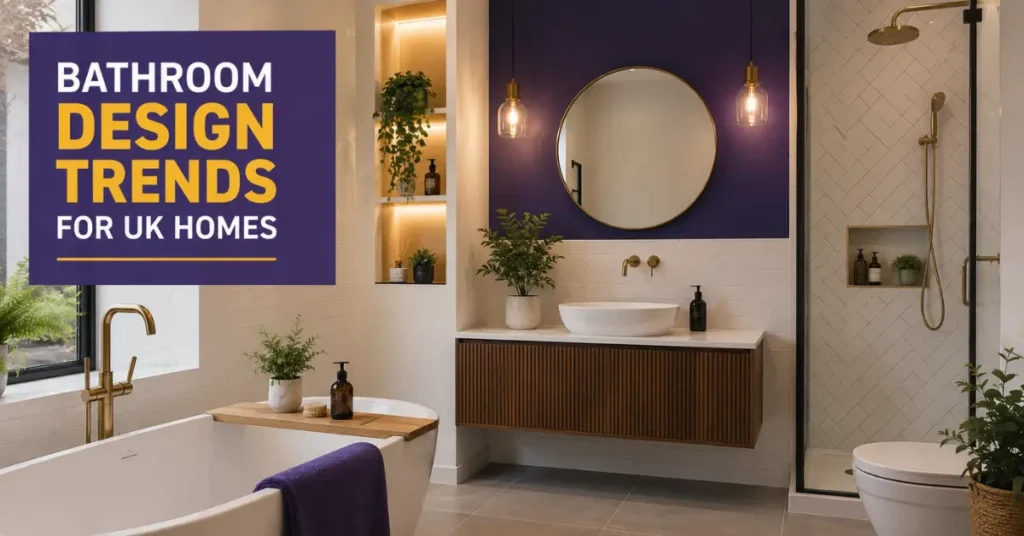
The bathroom design trends for UK homes represent the most exciting shift in residential bathroom design in over a decade, and if you are planning a renovation this year, understanding these trends will help you create a space that feels genuinely current without becoming dated by next year. Across the UK, bathrooms are evolving from purely functional rooms into personal sanctuaries, wellness spaces, and one of the most considered investments a homeowner can make. The defining themes are warmth, texture, atmosphere, and longevity, with UK homeowners moving confidently away from the cold grey palettes that dominated the 2010s toward spaces that feel human, calm, and built to last. This guide covers every major trend shaping bathrooms and exactly how to apply each one in your own home.
Why 2026 Is a Defining Year for UK Bathroom Design
Something genuinely interesting is happening in UK bathroom design right now. After years of cool grey walls, white metro tiles, and chrome fixtures, homeowners across the country are collectively deciding they want something different. They want warmth instead of clinical precision. They want texture instead of flat surfaces. They want a room that feels like a retreat rather than a utility space.
The shift is not about following fashion for its own sake. It is about homeowners making more considered investments and wanting results that hold up visually and practically for at least a decade. The bathroom design trends UK homeowners are embracing most strongly all share one quality: they are genuinely better than what came before, not just different.
Trend 1: Warm Neutral Colour Palettes Replace Cool Grey
Cool grey bathrooms are officially out. The dominant colour story is warmth: beige, greige, stone, and warm charcoal now lead the UK market, prized for how they reflect natural light, pair with any metallic finish, and age gracefully.
Bolder tones are also gaining ground as accents or full-room choices, olive green, terracotta, warm clay, and deep navy add character, while butter yellow offers a softer, more uplifting take on warmth.
Meanwhile, the cool white and pale grey combination that defined 2010s bathrooms has all but disappeared, now seen as flat and dated next to today’s warmer palettes.
Trend 2: Texture Takes Centre Stage
Texture is the defining material trend of 2026. Flat, glossy tiles are giving way to surfaces with depth and tactility, fluted vanity panels, relief-textured stone-effect porcelain, ribbed wall tiles, and handmade decorative finishes. These textures add warmth and visual interest without relying on bold colour, making them easy to work into almost any bathroom style.
A textured feature wall, especially in the shower area, is one of the simplest ways to transform a space, pairing beautifully with warm neutrals and natural materials for a layered, luxurious feel.
Fluted furniture stands out as a standout move this year: flat-panel vanities are being swapped for fluted or ribbed designs that add subtle architectural character without overwhelming the room.
Trend 3: Spa-Inspired Bathrooms Become the Standard
Recreating a spa or boutique hotel feel at home is one of the top requests from UK homeowners, and it’s more about atmosphere than expensive equipment.
Five elements define the trend: natural materials (stone-effect tiles, timber-effect flooring, warm wood), layered lighting that shifts from bright mornings to soft evenings, frameless walk-in showers with rainfall heads, integrated storage for a clutter-free look, and a freestanding bath as a centrepiece where space allows.
Rainfall showers are a standout upgrade, especially paired with a thermostatic valve for a properly considered shower system rather than just a fixture swap.
Bathscaping, styling the area around the tub with trays, candles, and soft lighting, is also emerging, turning bath time into a curated ritual rather than a routine task.
Trend 4: Warm Minimalism Replaces Cold Minimalism
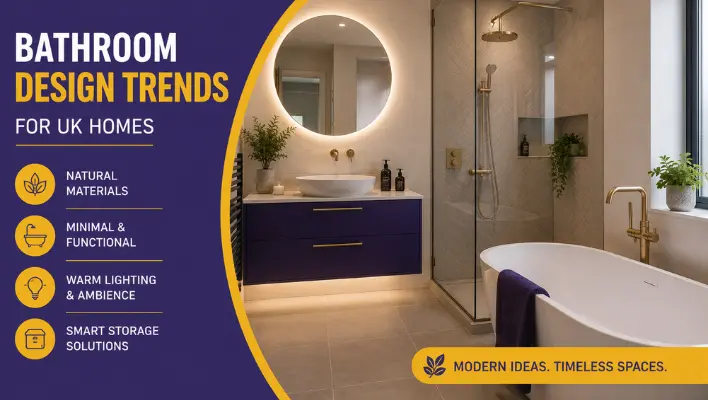
Minimalism remains a strong direction in UK bathrooms, but 2026 brings a warmer take. Warm minimalism keeps the clean lines and uncluttered surfaces of traditional minimalism, but swaps cold, clinical materials for warmer, more human ones: think trayless wet rooms, frameless glass screens, wall-hung rimless toilets, and stone-effect tiles in beige or limestone tones.
This style suits contemporary new builds, open-plan apartments, and city homes especially well, matching architectural restraint with a genuinely inviting feel.
Wall-hung toilets and floating vanities play a key role, freeing up floor space to make even small bathrooms feel more open. Concealed cisterns and rimless pans add to the clean look while also being easier to keep clean, a practical win as much as a stylish one.
Trend 5: Smart Bathroom Technology Becomes Mainstream
Smart bathroom tech goes mainstream in 2026, with adoption driven by practical, everyday improvements rather than gimmicks.
Digital thermostatic showers lead the way, letting users save preferred temperature and flow settings and skip the wait for water to warm up, with external controls adding a safety benefit for kids and older family members.
Smart mirrors with LED lighting, demisting, and Bluetooth are becoming standard in higher-end renovations, combining task lighting, ambient lighting, and fog-free convenience in one fixture.
Humidity-sensing extractor fans work quietly in the background, switching on with rising steam and off once the air clears, key for keeping spa features like rainfall showers comfortable long-term.
Japanese-style smart toilets and bidet seats are also gaining real traction, valued for hygiene, reduced paper use, and heated comfort, now available in designs that blend seamlessly into modern bathrooms.
Trend 6: Metallic Finishes Move Toward Warmth and Coordination
Chrome hasn’t disappeared, but it’s no longer the go-to. Warm metallics are on the rise across all bathroom fixtures, with coordinating a single finish throughout the space now seen as one of the most impactful design choices you can make.
Brushed brass leads as the most aspirational option, adding warmth and pairing beautifully with warm neutral tiles and timber tones. Brushed nickel offers a cooler but still warm middle ground that suits a wider range of palettes, while matt black remains popular for bolder, more contemporary looks, especially against white fixtures.
The real takeaway is consistency: using one finish across taps, fittings, rails, and accessories creates a considered, cohesive look, while mixing metals at random reads as unplanned rather than deliberate.
Trend 7: Freestanding Baths Used with Greater Restraint
Freestanding baths are still a top aspirational feature, but this year brings a more thoughtful approach to using them. Oversized statement baths crammed into small rooms are giving way to choices that suit the room’s actual proportions.
Softer, curved silhouettes are now favoured over the sharp-edged shapes popular a few years back. Deep soaking baths offer a better bathing experience, and the ofuro-inspired style, rooted in Japanese bathing culture, is especially well suited to smaller UK bathrooms.
Roll-top baths with ball-and-claw feet still have their place in period properties with a more traditional feel. The right bath in the right space is a powerful design statement, while an ill-fitted one undermines the whole room.
Trend 8: Large Format Tiles and Fewer Grout Lines
Larger tiles are one of the clearest trends in UK bathrooms. Standard 300x600mm tiles are being replaced by 600x1200mm formats, with 1200x2400mm slabs showing up in more design-forward projects.
The appeal is simple: fewer grout lines mean a cleaner, more expansive look and less maintenance over time. Stone-effect porcelain in limestone, travertine, or marble tones hits the sweet spot, delivering natural stone’s visual richness without its cost, weight, or upkeep.
Vertical tile stacking is also gaining popularity in smaller bathrooms, drawing the eye upward to make compact spaces feel taller and more open.
Trend 9: Integrated Storage as a Design Priority
Storage is no longer an afterthought, it’s a core part of the design process. With space at a premium in most UK homes, well-planned storage is now seen as essential to achieving that calm, spa-like feel.
Popular solutions include soft-close vanity drawers, mirrored cabinets that double as light-multiplying surfaces, recessed shower niches, and tall storage towers, all planned from the start rather than added later.
The logic is simple: a bathroom with everyday clutter tucked away feels like a sanctuary, while visible bottles and products make even a beautifully finished room feel more like a utility space. Good storage is what keeps a bathroom looking as good in daily use as it does in photos.
Trend 10: Sustainability and Water Efficiency as Standard
Sustainability has moved into the mainstream, driven by both environmental awareness and rising utility costs. Water-efficient fixtures are appealing not just for their eco credentials but for the real savings they offer on water bills.
Common specifications now include flow-restricted taps, dual-flush toilets, fast-heating thermostatic shower valves, and humidity-sensing extractor fans, all popular across a range of budgets.
Material choices matter too, with more homeowners considering responsibly sourced timber, recycled content in tiles, and low-VOC sealants.
But the biggest sustainability win is longevity: choosing fixtures and finishes built to last fifteen to twenty years avoids the environmental cost of frequent renovations, making durability the most responsible choice of all.
Bathroom Colour Trends for UK Homes
Colour is having a genuinely exciting moment in UK bathrooms this year, with the confidence to move beyond safe neutrals growing strongly across the market.
Warm neutrals including beige, greige, warm white, and limestone tones remain the dominant choice for the largest surface areas, particularly tiles and walls. These shades provide the calm, warm foundation that most bathrooms are built on.
Earthy accent colours are being introduced through furniture, accessories, and feature walls. Olive green, warm clay, soft terracotta, and rich ochre tones all appear with increasing frequency and bring genuine character without overwhelming a space.
Deep blues and teal tones are proving particularly popular for those who want a stronger colour statement, offering a sophisticated, serene quality that works particularly well in bathrooms with generous natural light.
Butter yellow is emerging as one of the freshest colour choices of 2026, bringing a gentle warmth and optimism that lifts a bathroom without dominating it. It works beautifully as a paint colour for walls or as a specification for a painted vanity unit.
Matt black remains a strong choice for fixtures and accents in contemporary bathrooms, providing visual contrast and a sense of intentional boldness that chrome simply cannot replicate.
Bathroom Tile Trends for UK Homes
Stone-effect porcelain in warm limestone and travertine tones is the single most popular tile choice across the UK bathroom market in 2026. It provides the visual richness of natural stone with the durability and low-maintenance properties of porcelain, making it an exceptionally practical choice for both walls and floors.
Fluted and ribbed ceramic tiles are appearing strongly as feature wall specifications, bringing the textural depth trend into the tile market in a way that works across a wide range of budgets and bathroom styles.
Handmade and artisan ceramic tiles with subtle surface variation and imperfect edges bring warmth and individuality to a space, and their slightly uneven character contrasts beautifully with the precision of contemporary fixtures and furniture.
Large format rectified tiles continue to grow in popularity for the reasons discussed earlier, with formats of 600 by 1200 millimetres becoming increasingly standard in mid-range and higher-end renovations.
Mosaic tiles are returning as accent elements rather than full-room specifications, used in shower floors, border details, and niche interiors to add a layer of considered detail within a broader, simpler tile scheme.
How to Apply Bathroom Trends Without a Full Renovation
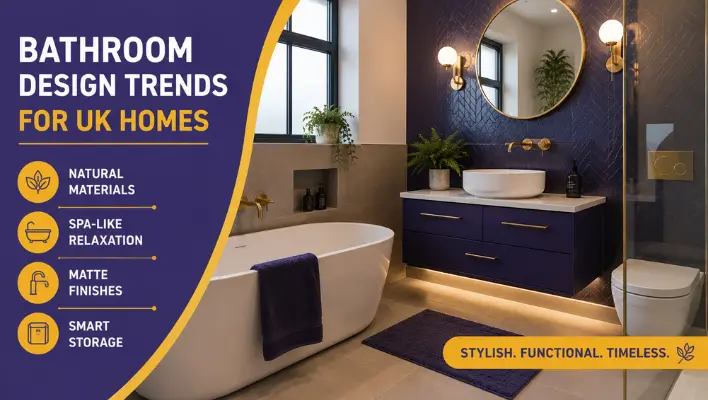
Not every homeowner is in a position to undertake a complete bathroom renovation, and the good news is that the most impactful elements of the current design trends can be introduced into an existing bathroom without replacing every fixture and surface.
Replacing your existing shower door or screen with a frameless walk-in panel is a single change that immediately modernises the room and introduces the warm minimalist aesthetic that defines 2026. Changing all of your metallic fixtures, taps, shower fittings, towel rail, and accessories to a coordinated brushed brass or brushed nickel finish is another high-impact change that can be made without any structural work. Repainting walls or replacing a vanity unit in a warm, contemporary colour introduces the warm neutral palette without disturbing tiles or plumbing.
Regrouting existing tiles and replacing old silicone sealant around the bath and shower is a low-cost intervention that makes an older bathroom look significantly fresher and cleaner. Adding proper layered lighting with a dimmer-controlled ambient layer alongside the main functional light changes the atmosphere of a bathroom dramatically and is one of the most underrated upgrades available.
What to Avoid in a UK Bathroom Design
Understanding what is moving out of style is as useful as understanding what is coming in, because avoiding the wrong choices is often what makes the difference between a bathroom that looks current and one that feels slightly behind the moment. Cool grey tiles paired with cool white walls and chrome fixtures represent the definitive outdated combination. Not because grey is inherently poor, but because this specific combination is so ubiquitous from the previous decade that it now reads as unthought-out. High-gloss surfaces across walls, furniture, and floors are giving way to matt and satin finishes that look softer, feel more luxurious, and show water marks and fingerprints far less readily in daily use. Overly matched and coordinated bathroom suites where every element is from the same manufacturer’s suite, and nothing varies, feel safe but lack the considered, curated quality that makes the best bathrooms distinctive. Mixing a quality basin from one source with a carefully chosen toilet from another and a vanity unit that reflects your specific storage needs produces a more considered result.
Final Thoughts on Bathroom Design Trends for UK Homes
The bathroom design trends for UK homes share a common thread that makes them more than just aesthetic shifts. They reflect a genuine evolution in how UK homeowners think about and use this room. The bathroom has become the space where people invest most carefully, design most thoughtfully, and where the quality of the result makes the most difference to daily life.
Warmth, texture, atmosphere, and longevity are the values driving every major trend of the year. A bathroom designed around these principles will not just look beautiful when the work is completed. It will look beautiful in ten years, function perfectly throughout, and represent one of the most rewarding investments you make in your home.
Whether you are planning a complete renovation or making targeted improvements to an existing bathroom, the trends outlined in this guide provide a clear, practical framework for making choices you will still be happy with long after.
Frequently Asked Questions
What is the biggest bathroom colour trend in the UK?
Warm neutrals such as beige, greige, and stone are replacing cool grey palettes, with earthy accents like olive green, terracotta, and butter yellow gaining popularity too.
Is chrome still a good choice for bathroom fixtures in?
Chrome is still used, but warm metallics like brushed brass and brushed nickel are now more popular. The key is coordinating one finish across all taps, rails, and hardware rather than mixing several.
Do I need a full renovation to update my bathroom for trends?
No. Swapping to a frameless shower screen, coordinating metallic fixtures, repainting in a warm tone, regrouting tiles, and adding layered lighting can modernise a bathroom without structural work.
What tile sizes are trending in UK bathrooms this year?
Large format tiles, typically 600 x 1200mm and up to 1200 x 2400mm, are increasingly popular because they reduce grout lines and make rooms feel larger and easier to maintain.
What smart technology is becoming standard in UK bathrooms?
Digital thermostatic showers, LED smart mirrors with demisting and Bluetooth, humidity-sensing extractor fans, and Japanese-style smart toilets or bidet seats are all seeing mainstream adoption.
Are freestanding baths still on trend?
Yes, but with more restraint. Softer, curved silhouettes and appropriately scaled baths (rather than oversized statement pieces) are favoured to suit the room’s proportions.