Stepping into a bathroom where you can barely move without knocking your elbow against something is a daily frustration that far too many UK homeowners know all too well. The average British bathroom measures just 4.4 square metres, and in Victorian terraces, 1930s semis, and even some modern new-builds, that space often shrinks even further. Standing in a room that feels more like a cupboard than somewhere to relax and refresh can genuinely affect how you feel about your home.
The good news is that a small bathroom does not have to feel cramped or cluttered. With thoughtful planning, smart storage choices, and a few design tricks that professionals use, you can transform even the tiniest space into something that works beautifully and actually feels good to be in. This complete guide to small bathroom ideas UK covers everything from layout fundamentals to current trends, helping you make the most of every single inch with a clever Bathroom Renovation.
What Are the Best Small Bathroom Ideas UK Experts Recommend Right Now?
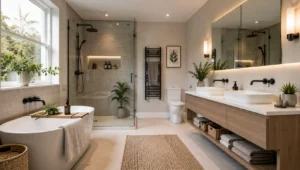
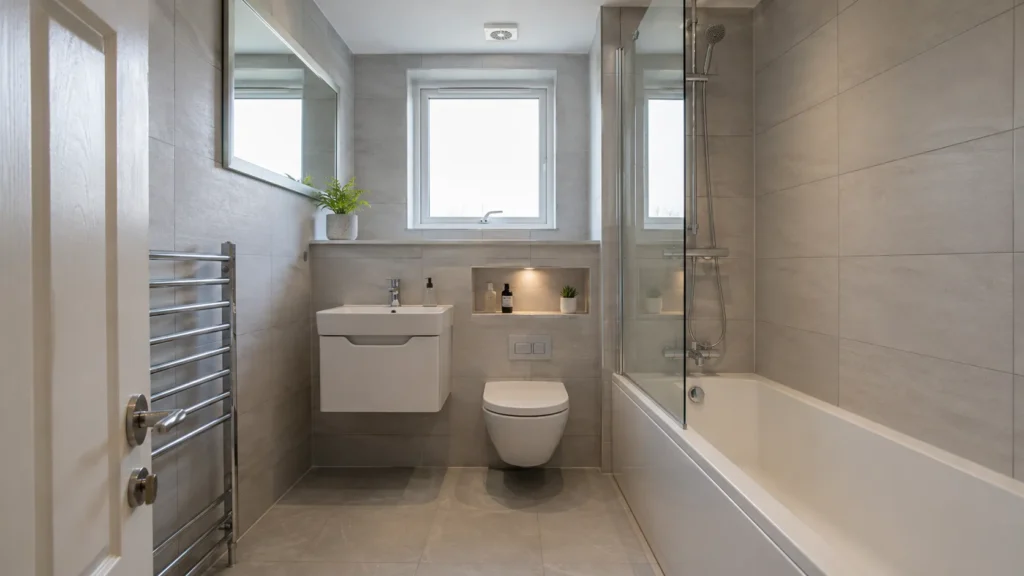
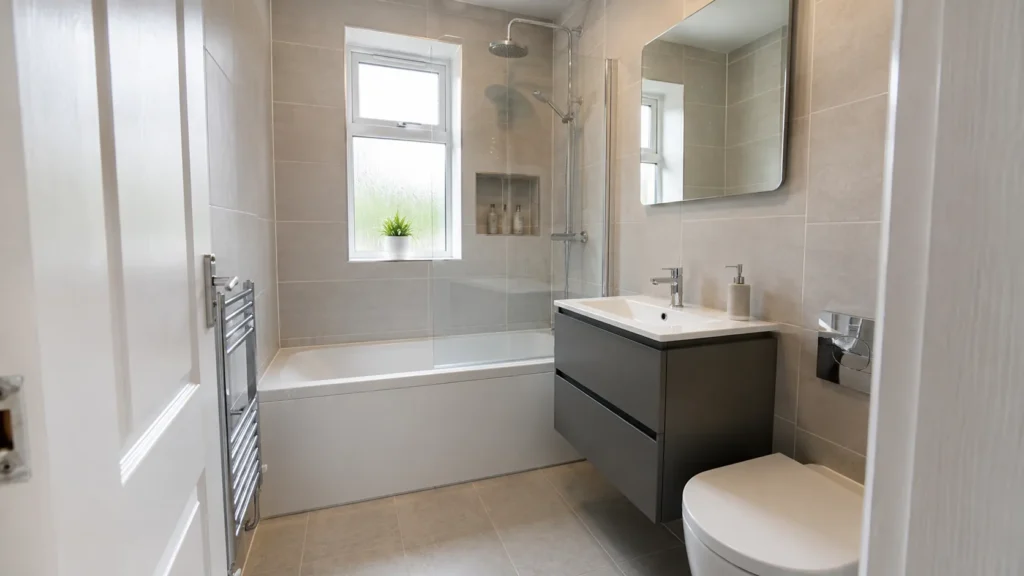
The most effective small bathroom ideas in the UK centre around strategic layout decisions combined with clever optical illusions that make a space feel larger than it really is. Replacing a traditional hinged door with a pocket door can free up approximately 0.7 square metres of floor space, which makes a noticeable difference in a compact room. Wall-hung toilets and floating vanities keep the floor surface visible, creating an uninterrupted sightline that tricks the eye into perceiving more space.
Large-format tiles with minimal grout lines reduce visual clutter and create a seamless look that expands the room visually. Frameless glass shower screens allow the eye to travel across the bathroom without interruption, while oversized mirrors reflect both light and depth back into the space. Colour palettes are shifting away from stark all-white schemes towards warmer, nature-inspired tones that feel more inviting and contemporary. Micro-makeovers, which involve quick budget-friendly refreshes rather than full renovations, are growing in popularity as a practical and accessible option for homeowners.
Why Getting the Layout Right Makes All the Difference
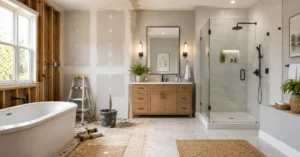
The layout of your bathroom is the single most important decision you will make during any renovation or refresh. Moving a fixture by just a few centimetres can be the difference between a room that feels awkward every time you use it and one that flows naturally and comfortably. In a small space, every millimetre counts, so careful planning at this stage pays enormous dividends later with a smart Bathroom Design Wolverhampton.
If you are working with a standard UK bathroom, the classic shower-over-bath setup remains a favourite for good reason. It gives you both bathing options within the footprint of a single fixture, which is incredibly space-efficient. If your room is particularly tight, short baths start from around 1500mm, and compact models go as small as 1350mm. These shorter baths free up valuable floor space at one end, which can then be used for a larger basin or additional storage.
If you rarely use a bath and prefer a quick shower, replacing it with a walk-in shower can liberate a significant amount of floor space, especially in long narrow rooms. A walk-in shower with a single frameless glass panel creates an open, airy feel and removes the visual bulk of a traditional shower enclosure. You can go as compact as 800x800mm for a square tray, though 900x900mm or a rectangular tray will feel noticeably more comfortable for daily use.
For really awkward spaces, consider a wet room. The entire floor is tanked and gently sloped towards a linear drain, eliminating the shower tray and creating a seamless barrier-free space, which requires expert Bathroom Plumbing Wolverhampton. This approach can make even a very small bathroom feel significantly more spacious because there are no visual breaks or step-ups to interrupt the flow of the room.
How to Make Your Bathroom Look and Feel Bigger
The layout of your bathroom is the single most important decision you will make during any renovation or refresh. Moving a fixture by just a few centimetres can be the difference between a room that feels awkward every time you use it and one that flows naturally and comfortably. In a small space, every millimetre counts, so careful planning at this stage pays enormous dividends later.
If you are working with a standard UK bathroom, the classic shower-over-bath setup remains a favourite for good reason. It gives you both bathing options within the footprint of a single fixture, which is incredibly space-efficient, making it ideal for modern Bathroom Suites. If your room is particularly tight, short baths start from around 1500mm, and compact models go as small as 1350mm. These shorter baths free up valuable floor space at one end, which can then be used for a larger basin or additional storage.
If you rarely use a bath and prefer a quick shower, replacing it with a walk-in shower can liberate a significant amount of floor space, especially in long narrow rooms. A walk-in shower with a single frameless glass panel creates an open, airy feel and removes the visual bulk of a traditional shower enclosure. You can go as compact as 800x800mm for a square tray, though 900x900mm or a rectangular tray will feel noticeably more comfortable for daily use.
For really awkward spaces, consider a wet room. The entire floor is tanked and gently sloped towards a linear drain, eliminating the shower tray and creating a seamless barrier-free space. This approach can make even a very small bathroom feel significantly more spacious because there are no visual breaks or step-ups to interrupt the flow of the room, especially when completed with seamless Bathroom Tiling Wolverhampton. We also bring this exact space-saving expertise to nearby areas with our tailored Bathroom Renovation Bilston services.
Smart Storage Solutions That Save Space
Clutter is the enemy of a small bathroom. A few bottles on the side of the bath, a pile of towels on a shelf, and suddenly the room feels chaotic and cramped. The trick is to build storage into the room so everything has a designated home, ideally out of sight.
Wall-hung vanity units are one of the smartest moves you can make. By floating the unit off the floor, you keep the floor space visible underneath, which makes the room feel larger. You also gain proper enclosed storage for toiletries and cleaning supplies. Units start from as narrow as 400mm wide, so there is an option for most spaces. Choose one with soft-close drawers rather than cupboards, as drawers allow you to access items at the back more easily.
If you are tiling anyway, talk to your tiler about recessed niches. These are shelves built into the wall cavity, typically between the studs, and then tiled to match the surrounding wall. They are completely flush with the surface, so they do not eat into your floor space at all. A niche in the shower area keeps bottles off the floor, while one beside the basin is perfect for everyday items like toothbrushes and skincare products.
Mirrored cabinets above the basin also do double duty. They give you a mirror and concealed storage behind it. Modern mirrored cabinets come with internal shelves, built-in lighting, and even shaver sockets, making them incredibly functional. Do not forget the space above the toilet, which is often completely wasted. A slim shelf unit or a small cabinet above the cistern can provide useful storage without taking up any additional floor space.
What Is Trending in Small Bathrooms Right Now
While classic principles always apply, staying aware of current trends can help you create a bathroom that feels both stylish and contemporary. In 2026, the trends are moving away from stark minimalism towards warmer, more characterful spaces.
We are seeing a shift towards nature-inspired colour palettes that feel calming and inviting. Soft greens, powder blues, warm greys, and earthy terracotta tones are replacing the all-white schemes that have dominated for years. These colours create a more soothing atmosphere and work beautifully with natural materials like wood and stone. Wet rooms and walk-in showers continue to gain popularity, not just for their aesthetic appeal but for their practical benefits in small spaces.
Bold design choices are also making their mark. The idea that a small bathroom must be pale and neutral is being challenged. A dramatic statement piece, such as a boldly coloured vanity unit or a patterned tile accent wall, can distract the eye and make the space feel larger than it actually is. Texture is another important trend, with materials like terrazzo, fluted glass, and ribbed ceramics adding tactile interest to compact spaces.
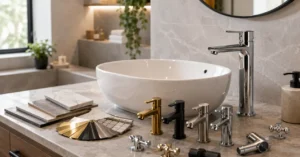
Micro-makeovers are growing in popularity as a practical alternative to full renovations. These involve quick budget-friendly updates like changing the mirror, updating taps, adding a new towel rail, or refreshing the paintwork. This approach allows you to transform the look and feel of your bathroom without the disruption and expense of a complete refurbishment, which is perfect if you are looking for easy budget bathroom updates.nt.
Frequently Asked Questions (FAQ)
Can I use dark colours in a small bathroom?
Yes, absolutely. While light colours do make a space feel airier, dark colours can actually make walls recede, creating a sense of depth and cosiness. Many designers recommend using dark shades as an accent on a single wall or pairing them with good lighting to prevent the room from feeling too enclosed. A dark feature wall behind the basin or around the bath can create a dramatic focal point that draws the eye and distracts from the room’s compact size.
Are freestanding baths suitable for small UK bathrooms?
Only very compact models are suitable for small bathrooms. Standard freestanding baths require clearance on all sides for cleaning and access, which can be challenging in a small room. If you have your heart set on one, look for a model with a footprint of around 1360mm to 1500mm. Even then, you will need to consider whether you have enough space to walk around it comfortably. For most small bathrooms, a built-in bath or a shower-over-bath setup is a more practical choice.
How can I make my small bathroom look more expensive on a budget?
Invest in good-quality fixtures that you touch and use every day, such as taps, shower heads, and handles. These details make a noticeable difference to the overall feel of the room. Adding layered lighting, such as combining ceiling spotlights with LED strips under the vanity or around the mirror, creates a luxurious spa-like atmosphere. Creating symmetry where possible, such as pairing matching wall lights on either side of a mirror, also gives a more polished and high-end look. Finally, choose a cohesive colour scheme and stick to it throughout the room.
What are the best tiles for a small bathroom floor?
Large-format porcelain tiles are an excellent choice for small bathroom floors because they create a seamless look with minimal grout lines. This reduces visual clutter and makes the floor appear larger. Choose tiles with a textured or matt finish to prevent slips when the floor is wet. Neutral colours like warm grey, beige, or soft cream work well and complement most design schemes. If you want to add a pattern, consider a geometric or patterned tile on the floor while keeping walls simple and plain.
What is the minimum size for a walk-in shower?
The absolute minimum size for a walk-in shower is 800x800mm, though this is quite compact and may feel restrictive for daily use. A 900x900mm or 1000x700mm rectangular tray will provide a noticeably more comfortable showering experience. The size you need also depends on your own height and build. Taller or broader individuals will naturally need more space to move comfortably. Remember that a walk-in shower with a single fixed glass panel looks more spacious than a fully enclosed cubicle.
Is underfloor heating worth it in a small bathroom?
Yes, underfloor heating is highly recommended for small bathrooms. It frees up wall space that would otherwise be taken by a radiator, which is valuable when every inch counts. It also provides even, comfortable heat that warms your feet, making the bathroom feel luxurious. Electric underfloor heating systems for a small bathroom typically cost between £150 and £300 for the kit itself. Installation costs will add to this, but the long-term comfort and added wall space make it a worthwhile investment.
How much does a small bathroom renovation cost in the UK?
A small bathroom renovation in the UK typically costs between £6,000 and £10,000 for a standard refresh with mid-range fixtures and fittings. A full luxury renovation with high-end tiles, premium sanitaryware, and professional installation can cost £15,000 to £18,000 or more. If you are on a tighter budget, a micro-makeover involving new accessories, paint, a mirror, and updated lighting can cost as little as £500 to £1,000 and still make a noticeable difference.
Ready to Transform Your Small Bathroom?
Feeling inspired to tackle your own small bathroom makeover? The key to success lies in careful planning and making choices that work for your specific space and lifestyle. Start by thinking about how you actually use the room and what frustrates you most about the current layout. Prioritise getting the layout right before you think about finishes and decorations.
Whether you are planning a full renovation or just a quick micro-makeover, there are plenty of small bathroom ideas UK homeowners can use to create a space that feels bigger, brighter, and more functional. Take your time, do your research, and do not be afraid to seek professional advice for the more technical aspects like plumbing and tiling. With the right approach, even the smallest bathroom can become a space you genuinely enjoy spending time in.