When planning your full bathroom renovation, you’ll likely face the classic bath vs shower decision. The answer to which is better isn’t straightforward because “better” means different things to different people. For someone juggling a busy family morning routine, a shower might be ideal. For someone seeking daily stress relief and muscle recovery, a bath becomes indispensable. This guide cuts through the debate by examining what actually matters for your renovation decision: your space, budget, household composition, lifestyle, and long-term satisfaction.
Bath vs Shower: How Space and Layout Affect Your Decision
Space availability often makes this decision for you before lifestyle considerations even enter the picture. A standard bathtub measures 60 inches long by 30 inches wide, requiring a clear footprint plus space for someone to move around it comfortably. A typical walk-in shower occupies 36 by 36 inches or larger but requires less linear wall space than a tub.
In compact bathrooms under 40 square feet, squeezing a bathtub often forces difficult compromises. The toilet might end up closer to someone’s knees than comfort dictates. The vanity might shrink to a barely functional size. Many experts in small bathroom renovation recommend prioritizing a quality shower with a curbless design and good ventilation over struggling to fit everything into a tight tub configuration.
Medium-sized bathrooms between 40 and 60 square feet present your real opportunity to choose deliberately. You can comfortably fit a tub and shower combination, or dedicate the space to a generous walk-in shower. Your layout doesn’t dictate your decision, allowing you to choose based on actual household needs rather than spatial desperation.
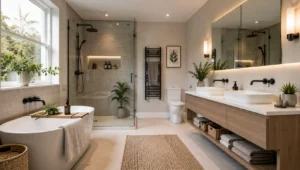
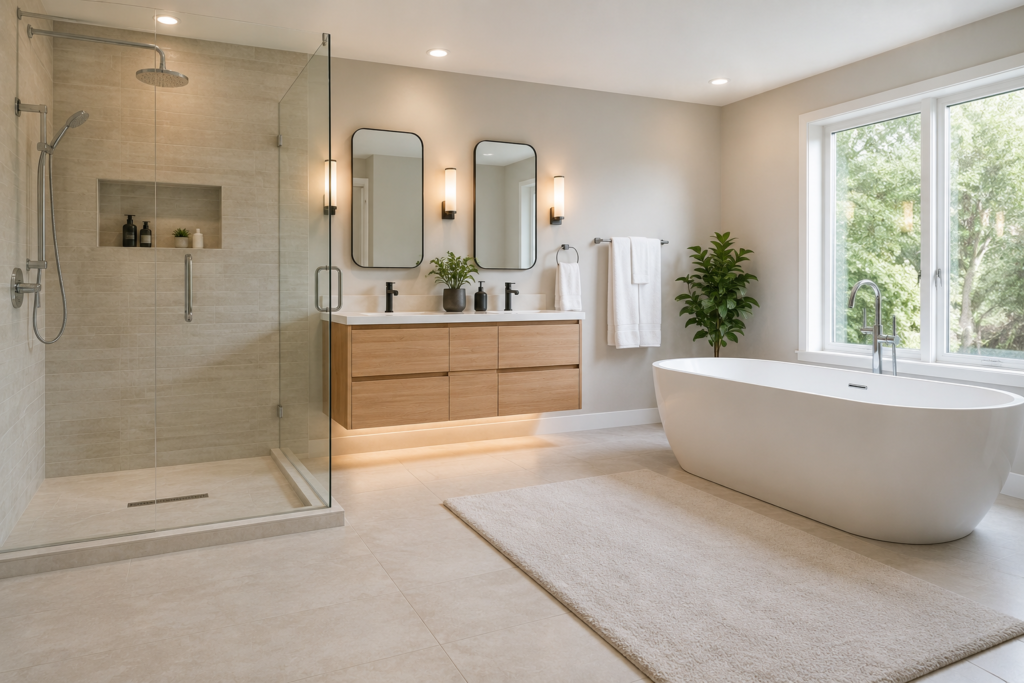
Larger master bathrooms above 60 square feet give you genuine flexibility. Many renovators at this scale include both a tub and a separate shower a freestanding bath becomes a design feature alongside a spacious walk-in shower, eliminating the need to choose at all.
The Significant Cost Difference Between Bath and Shower Installation
Budget considerations can be decisive in any renovation. A basic bathtub and surround cost considerably less than installing a high-end walk-in shower with multiple body jets, a rainfall showerhead, and premium finishes. However, the labour costs tell a different story.
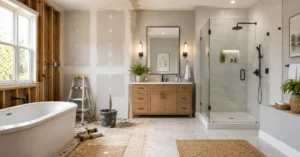
Relocating plumbing for a shower typically costs more than keeping existing pipework in place for a tub installation. If your current bathroom already has a tub and you’re simply opting for a shower bath replacement, the labour expense drops significantly. Moving pipes to create a new shower location, installing proper waterproofing for a shower enclosure, and setting tile work all add substantial costs.
Maintaining existing plumbing connections saves thousands during renovation. This is why many bathroom fitters recommend staying with what you already have unless serious problems justify the expense of relocation. For budget-conscious renovations, replacing your existing fixtures in place rather than relocating them represents your biggest saving opportunity.
Determining What Your Household Actually Uses Daily
Here’s the honest truth many homeowners discover too late: the choice between bath and shower should reflect real usage patterns, not aspirational ones. Consider your household’s actual bathing habits over the past six months. How often do family members actually bathe versus shower? When did someone last take a relaxing bath in the existing tub?
Many households install beautiful bathtubs during renovation with genuine intentions of using them for relaxation, then shower exclusively because that’s what the daily routine demands. A family with young children might have bathed the kids frequently in the old tub, justifying its continued inclusion. An adult household with no children might realise neither adult has taken a bath in years.
Modern life for many people simply doesn’t accommodate 20-minute soaking sessions. Morning routines prioritise speed. Evening routines often end with collapsing into bed rather than lengthy self-care rituals. If this describes your household, acknowledging that reality during renovation prevents waste.
Age and Accessibility: Planning for Long-Term Home Use
Aging in place has become increasingly important for homeowners planning renovations. Bathtubs present genuine accessibility challenges as people age. Stepping over the tub wall becomes difficult with mobility limitations. Rising from a seated bath position stresses joints and the back. The risk of slipping inside a tub increases significantly with age.
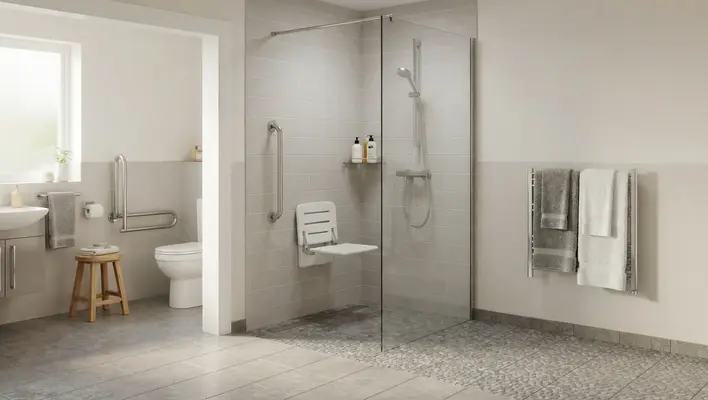
Walk-in showers with grab bars, non-slip surfaces, and optional seating accommodate ageing adults far more successfully. A curbless shower entry eliminates the tripping hazards that bathtubs present. If accessibility is a priority in your home, exploring professional disabled bathroom adaptations during your renovation is far more cost-effective than retrofitting later.
Conversely, if you have young children or plan to have them, bathing capabilities matter significantly. Small children need careful supervision during washing, and shallow tubs simplify that process compared to showers where water pressure and spray patterns challenge young children.
The Family Bathroom Decision When Multiple People Share Space
Multi-person households face different considerations than individuals. Morning routines where multiple people need rapid bathroom access often suit showers better. Everyone can shower individually without the extended time commitment that bathing demands.
Some family situations genuinely require bath access. Parents bathing multiple small children need efficient facilities designed for that task. Teenagers and adults seeking stress relief value bathing capabilities. Households with people of varying ages and mobility levels benefit from having both options available.
This is where the combination solution becomes attractive. If space and budget allow, including both a tub and shower eliminates compromise. Kids can enjoy baths, adults can take quick showers, and someone recovering from injury or illness has bath options available.
Understanding the Relaxation and Wellness Angle Honestly
Research clearly demonstrates that immersion in warm water provides genuine physiological benefits. Muscle tension releases, blood circulation improves, and nervous system stress reduces. In fact, studies published by the National Institutes of Health show that regular tub bathing provides measurable improvements in fatigue, stress, and overall mood. These benefits aren’t imaginary aspirations; they’re real biological responses.
However, obtaining these benefits requires actually taking baths regularly, not simply having tub capability installed. If your lifestyle currently prevents regular bathing, installing a beautiful tub during renovation won’t suddenly change your habits. If you genuinely value this wellness practice, improving the tub situation represents a genuine quality-of-life investment.
Shower vs Bath Water Usage: The Environmental Comparison
A full bathtub requires approximately 70 gallons of water. A five-minute shower uses between 10 to 25 gallons depending on showerhead efficiency. From a pure water consumption standpoint, showers win significantly particularly important in environmentally conscious households.
| Fixture | Water Used |
|---|---|
| Full bathtub | ~70 gallons (318 litres) |
| 5-minute shower | 10–25 gallons (45–113 litres) |
| 5-minute shower (low-flow head) | ~10 gallons (45 litres) |
| 25-minute shower | Exceeds a full bath |
According to the EPA WaterSense programme, installing a modern low-flow showerhead reduces water consumption even further, making the environmental advantage clearer. With efficient showerheads, you could theoretically take 12 showers for the equivalent water of one full bath.
However, long showers shift the equation. A 25-minute shower exceeds a full bath’s water consumption. For environmentally conscious renovations, installing low-flow fixtures alongside your choice creates the best outcome regardless of bath or shower selection.
Resale Value: What Home Buyers Actually Want
If you plan to sell your home within the next decade, market research suggests specific preferences. Homes with at least one full bathroom containing a bathtub historically attract broader buyer appeal, particularly families with children. A bathroom offering both bathtub and shower capability appeals to the widest buyer demographic.
Properties with only shower facilities and no tub can challenge some buyer segments who specifically want bathing capability. Conversely, homes with only a tub and no separate shower enclosure frustrate buyers accustomed to convenient shower access.
The practical implication is clear: if resale appeal matters to you, a combination approach maximises market value. If you’re renovating to stay long-term, resale considerations matter less than your actual satisfaction.
The Walk-In Shower Trend and Modern Preferences
Current bathroom design trends strongly favour spacious walk-in showers, often with rainfall showerheads and quality tile work. Builders and designers note that walk-in showers increasingly replace standalone bathtubs in contemporary renovations, particularly in urban markets and modern home designs.
This trend reflects genuine utility. A well-designed shower offers speed, accessibility, and water efficiency. It photographs well for property marketing and fits modern minimalist design aesthetics.
However, trends evolve. Freestanding baths have experienced a resurgence precisely because people value the contrast to trend-focused design. Your renovation should reflect your actual life and values, not merely chase current fashion.
Making Your Decision: 5 Practical Questions to Answer
- Usage: When did you last take a relaxing bath? Does your household bathe regularly or exclusively shower?
- Household: Will children’s needs change in the next 5–10 years? Will aging parents require accessibility features?
- Space: Does your bathroom comfortably accommodate both options, or would a bath compromise essential features?
- Budget: Can you afford plumbing relocation, or would keeping existing plumbing free up budget for better finishes?
- Future plans: Are you planning to age in place, or will you likely sell within five to seven years?
The Honest Recommendation: Bath vs Shower for Most Renovations
Bathroom professionals working with typical family households often recommend this practical approach in the bath vs shower debate: include a shower as your primary fixture because that’s what most household members will actually use daily. If space and budget allow, add a tub or combination system for household members who genuinely value bathing.
For smaller bathrooms or restricted budgets, a quality walk-in shower with good drainage, accessibility features, and excellent finishes serves most households better than attempting to squeeze in a rarely-used bathtub. For larger bathrooms, the combination approach eliminates all compromise.
The worst outcome is installing a feature chosen for aspirational reasons rather than practical reality. That expensive bathtub becomes an unused space-waster gathering cleaning supplies. That shower-only bathroom frustrates the one household member who genuinely values bathing.
FAQs: Bath vs Shower
Is a shower or bath cheaper to install?
A basic bathtub and surround usually costs less than a premium walk-in shower. However, keeping your existing plumbing in place whichever fixture it serves saves the most money during renovation.
Does removing a bathtub hurt resale value?
It can. Homes with at least one bathtub appeal to families with young children. If yours is the only bathroom, keeping a tub or a combination unit protects resale value.
Which uses less water, a bath or a shower?
A five-minute shower uses 10–25 gallons versus roughly 70 gallons for a full bath. Showers win unless your showers exceed 20–25 minutes.
What’s better for elderly or limited-mobility users?
A curbless walk-in shower with grab bars, non-slip flooring, and a shower seat is significantly safer and more accessible than a bathtub.
Can I have both a bath and shower in a medium bathroom?
Yes a tub-shower combination fits comfortably in bathrooms of 40–60 square feet and serves diverse household needs.