Storage Solutions Begin with Honestly Assessing What Your Bathroom Actually Contains
Bathroom storage ideas for small bathrooms start not with impressive product solutions but with fundamental truth. Before considering floating shelves, corner cabinets, or over-the-toilet organizers, you need to understand what you’re actually storing. This assessment determines whether your storage problem is insufficient space or inadequate organization of existing space.
Take an afternoon and remove everything from your current bathroom cabinets, drawers, and visible storage. Separate items into categories: daily essentials, regular-use products, occasional items, and things you’re not sure why you keep. This exercise typically reveals that small bathrooms contain far more stuff than anyone reasonably needs in that space. Items pile up because there’s nowhere better to put them and nowhere obvious enough to take them away.
Many small bathrooms would function perfectly adequately with half their current contents moved elsewhere. Bulk toilet paper, extra towels, seasonal medications, and expired products can live in bedroom closets, hallway linen cupboards, or under-stair storage instead of competing for bathroom real estate. This decluttering step often solves storage challenges more effectively than any architectural solution could achieve.
Understanding Your Space Before Investing in Storage Solutions
Small bathroom dimensions matter less than how you work with what you have. A 5- by 7-foot bathroom contains roughly 35 square feet of floor space. A 5- by 8-foot bathroom offers 40 square feet. These numbers sound minimal until you realize that much bathroom space doesn’t need to be storage at all. Your toilet occupies floor space. Your shower or tub occupies floor space. Your vanity occupies floor space. The remaining walkable area is what actually defines whether storage feels achievable or impossible.
Before your renovation, measure your small bathroom’s existing usable wall space above fixtures and in corners. This vertical space represents your greatest storage opportunity. In tight bathrooms, floor-based storage solutions compound the crowding problem because they occupy the precious open space that makes the room feel usable.
Measure cabinet depths carefully. Many small bathrooms fail with storage not because of too little space but because vanity cabinets are too deep. A vanity that extends 24 inches into the bathroom might feel reasonable mathematically but creates a cramped walkway that makes the space frustrating to use daily. Choosing a shallower vanity with better vertical storage above it often feels more spacious than a traditional deep cabinet.
Vertical Storage Transforms Small Bathroom Functionality
The single most impactful storage idea for small bathrooms involves redirecting your thinking upward. Most small bathroom walls sit empty above fixtures while floor and counter space fills with clutter. Floating shelves, recessed cabinets, and wall-mounted storage systems occupy zero floor space while providing genuine storage capacity.
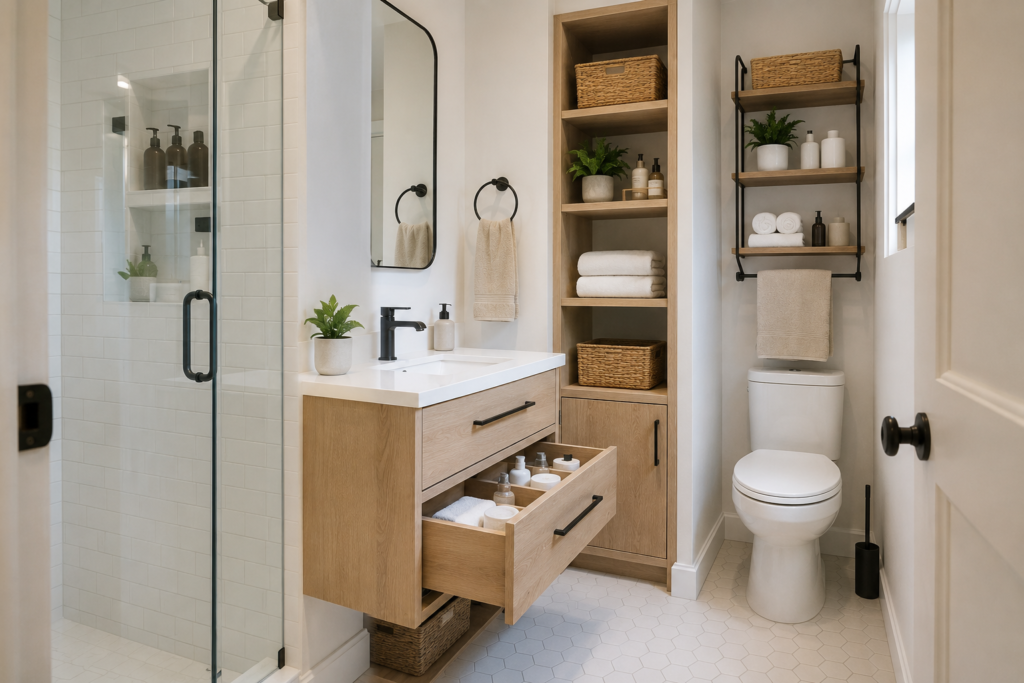
Floating shelves work particularly well in small bathrooms because they create visual lightness. Unlike traditional cabinets with solid doors, shelves maintain sight lines across the room, preventing the space from feeling boxed in. Two or three well-placed shelves above the toilet provide storage for towels, backup supplies, and decorative elements without occupying any floor area. Position frequently used items at eye level and reserve higher shelves for backup supplies or decorative items that make the space feel intentional rather than utilitarian.
Recessed storage built into bathroom walls during renovation offers hidden storage that doesn’t protrude into the room at all. A recessed medicine cabinet above the vanity serves the dual purpose of mirror and storage. A recessed niche in the shower wall holds shampoo bottles without a freestanding caddy taking up space. These permanent solutions require planning before your renovation begins but deliver the most seamless small bathroom storage outcome.
Corner spaces typically sit unused in small bathrooms. Tall, narrow corner cabinets or corner shelving units tuck into corners without projecting far into the room. These solutions work particularly well in corners visible when entering the bathroom, as they don’t create sightline obstruction when the door opens.
Over-the-toilet storage maximizes often-wasted space.
The wall area above toilets represents prime storage real estate in most small bathrooms. Few people successfully use this space before renovation, yet it offers substantial storage without consuming any floor area. Over-the-toilet shelving units, cabinets, or organizers fit most toilet heights without installation complications.
For renovations, a built-in shelf or cabinet in this space during construction integrates more seamlessly than a freestanding unit. These permanent fixtures feel less temporary than leaning units and often provide better storage capacity. Reserve this space for items used regularly or for attractive storage containers that don’t look like clutter.
Some small bathrooms include toilet paper storage in the wall cavity behind the toilet during renovation, eliminating the need for visible roll storage on the floor or countertop. This seemingly minor detail dramatically improves how spacious the bathroom feels.
Medicine Cabinets Provide Double-Duty Storage and Mirrors
A mirrored medicine cabinet accomplishes what separate mirror and cabinet installations require in two fixtures. In tiny bathrooms, this dual purpose makes a genuine difference in how efficiently the space functions. Choose cabinets that span most of the vanity width rather than small single-door units, maximizing storage without requiring additional wall real estate.
Surface-mounted medicine cabinets project slightly from the wall, which matters in very narrow bathrooms. Recessed cabinets that nestle between wall studs eliminate this projection entirely, creating a seamless wall plane. Recessing requires planning during renovation but delivers superior results in compact spaces.
Under-Sink Storage Requires Strategic Planning
The space beneath the sink represents valuable storage if planned correctly during renovation. This area accommodates cleaning supplies, extra toiletries, and backup products without occupying visible space. Pedestal sinks waste this opportunity entirely, which is why many small bathroom renovations avoid pedestal sinks despite their space-saving appearance.
A vanity with thoughtful under-sink organization transforms that space into functional storage. Stackable shelves, pull-out drawers, and compartmentalized organizers make under-sink storage actually usable. A hinged door that opens smoothly matters more than you’d expect in a tight space where every movement needs to be efficient.
During renovation, consider installing a pull-out towel bar or narrow shelf beside the vanity. This often-empty space can accommodate rolled towels or cleaning supplies in a vertical tower that doesn’t block cabinet doors from opening fully.
Door Space Provides Hidden Storage Options
The back of the bathroom door and the inside surfaces of cabinet doors offer hidden storage that doesn’t compromise the room’s visual openness. Adhesive hooks on the bathroom door hold robes and towels without permanent damage. Over-the-door organizers with pockets store small products like hair tools, makeup, and styling products invisibly when the door closes.
Cabinet door interiors can hold magnetic strips for metal items like tweezers and scissors, adhesive hooks for hanging microfiber cloths, or small shelves for less-frequently-used products. Maximizing these often-overlooked surfaces adds meaningful storage without consuming any wall or floor space.
Permanent Versus Temporary Storage Solutions
Your renovation decisions determine whether to install permanent built-in storage or use freestanding solutions. Built-in options like recessed cabinets, floating shelves, and custom cabinetry integrate seamlessly but require planning and construction investment. These solutions feel permanent and polished, making the bathroom feel designed rather than improvised.
Freestanding storage like carts, ladder shelves, and over-the-toilet units work quickly and cost less initially but sometimes create a cluttered appearance in very tight spaces. However, freestanding solutions work well when properly styled and when they serve specific functions.
For renovations, combining both approaches often works best. Permanent built-in storage provides hidden storage and structural solutions. Strategic freestanding pieces add flexibility for seasonal changes or items that don’t warrant permanent installation.
Organising What You Keep in Small Bathroom Storage
Once you’ve determined your storage space and installed solutions, organization systems become critical. Small bathrooms don’t forgive chaotic systems. Everything needs designated locations that make sense for how you actually use items.
Group items by function rather than randomly filling storage. Keep shower products together, dental care items together, skincare products together, and cleaning supplies in one designated area. This approach means fewer items occupy unused space, making the small bathroom feel surprisingly organized.
Invest in attractive containers that function as storage and design elements. Glass jars, woven baskets, and coordinated bins transform visible storage into intentional décor rather than obvious clutter. This approach works particularly well when you keep frequently used items on floating shelves rather than hidden in cabinets.
Reserve easily accessible storage for daily essentials. Position toothpaste, toothbrushes, and frequently used products at eye level or just below. Push backup supplies and occasional items into higher shelves or more difficult-to-reach corners. This simple hierarchy ensures you’re not wasting valuable eye-level storage on items you use monthly while searching for daily essentials.
Dry Zone Versus Wet Zone Storage Planning
During renovation, planning where storage sits relative to water sources prevents future damage. Moisture and humidity degrade stored items and enclosures over time. Storing products directly adjacent to shower water spray isn’t sustainable unless you use waterproof containers.
Organize your storage so that frequently accessed items sit outside the primary wet zone. Reserve the area immediately adjacent to the shower for waterproof soap dispensers and shower-specific storage. Place towels, toiletries, and other items that prefer drier conditions in locations where morning shower steam won’t constantly expose them to moisture.
This separation also makes the dry area feel more like a dressing space and the wet area feel more specifically functional. This subtle distinction improves how the small bathroom feels to use.
Alternative Storage Removes Items From The Bathroom Entirely
Sometimes the best bathroom storage solution involves storing items outside the bathroom. Towel collections beyond what you use weekly can live in a bedroom closet linen cabinet. Backup toilet paper can live in a hallway cupboard. Seasonal medications can live in a kitchen cabinet. This approach dramatically improves how much storage your actual bathroom requires.
Many small bathrooms would feel sufficiently organized if they contained only items used daily or multiple times weekly. Everything else lives elsewhere, pulled as needed rather than permanently occupying bathroom space.
This approach requires accepting that your guest bathroom doesn’t need every possible amenity permanently available. Pull out visitor items when guests arrive rather than dedicating permanent storage to occasional-use products.