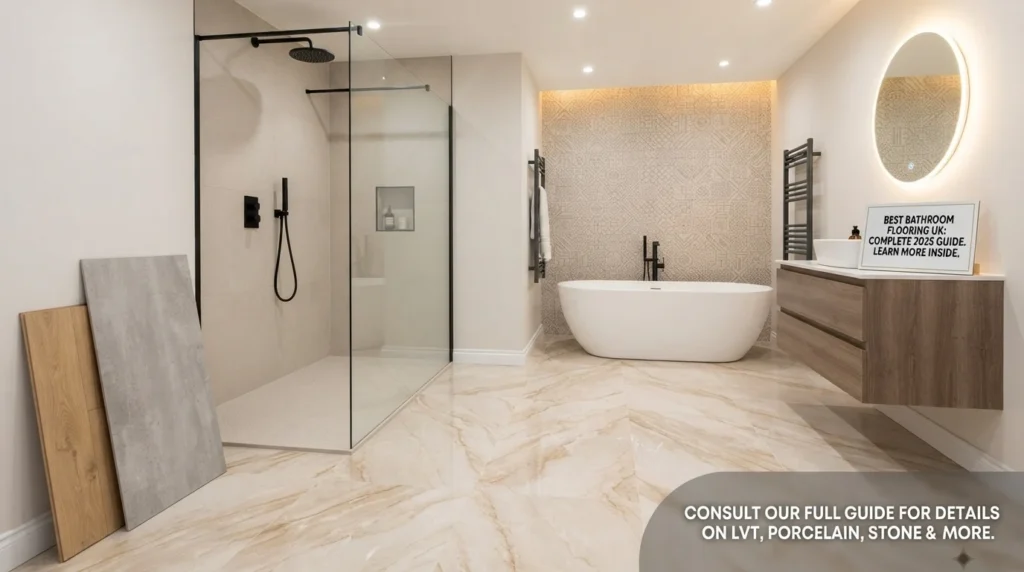
Choosing the best bathroom flooring UK homeowners can rely on is not just about picking something that looks good on a showroom floor. It is about finding a material that holds up to daily moisture, keeps your family safe, suits your heating setup, and still looks brilliant five years from now.
With so many options available in 2025, from luxury vinyl tile to porcelain, engineered wood to natural stone, making a confident decision can feel overwhelming. This guide cuts through the noise completely. You will find a full comparison of every major bathroom flooring material available in the UK, broken down by cost, durability, safety, and where each option performs best.
Whether you are renovating a family bathroom, designing a sleek ensuite, or converting a wet room, this guide gives you everything you need to choose correctly the first time.
What Is the Best Bathroom Flooring in the UK?
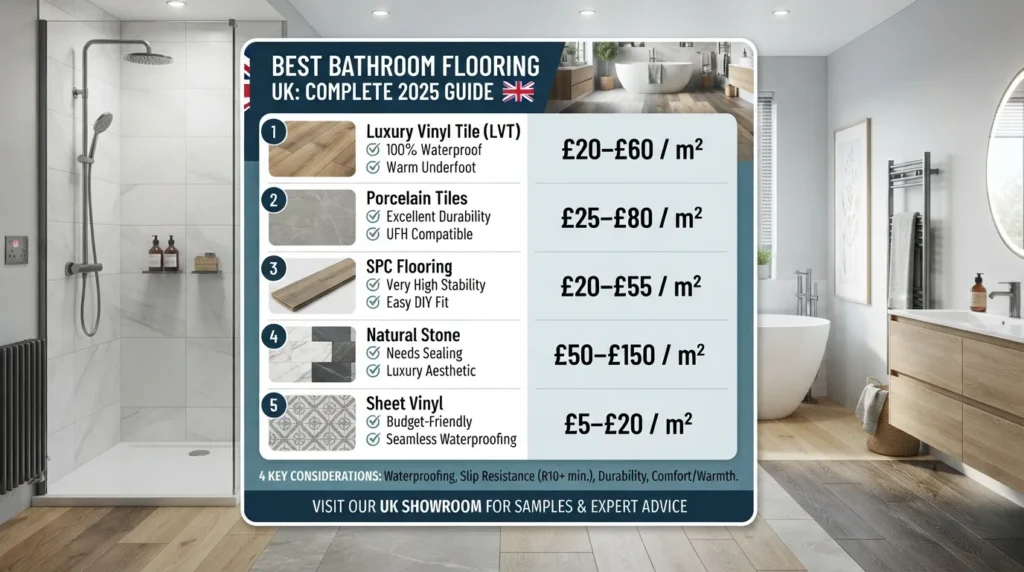
The best bathroom flooring in the UK depends on your priorities, but luxury vinyl tile (LVT) and porcelain tiles consistently top the list for most homes. LVT offers 100% waterproofing, warm underfoot comfort, excellent slip resistance, and realistic wood or stone aesthetics at a mid-range price point. Porcelain tiles deliver unmatched durability, hygiene, and design versatility, though they feel colder underfoot without underfloor heating.
For budget buyers, sheet vinyl and ceramic tiles offer reliable performance at lower cost. For luxury spaces, natural stone and SPC flooring deliver a premium result. Safety is a priority in any bathroom floor choice. Look for an R10 slip resistance rating or higher for domestic bathrooms. Always confirm compatibility with underfloor heating before purchasing any product, as not every adhesive, underlay, or material is rated for use with heated systems.
Quick Comparison Table: Best Bathroom Flooring UK 2025
| Flooring Type | Waterproof Rating | Durability | Cost Per m² | Maintenance | UFH Compatible | Best For | Lifespan |
| LVT | 100% | Very High | £20–£60 | Very Low | Yes (most) | All bathrooms | 20–25 yrs |
| Porcelain Tiles | 100% | Excellent | £25–£80 | Low | Yes | All bathrooms | 30–50 yrs |
| Ceramic Tiles | 100% | High | £10–£40 | Low | Yes | Budget/guest | 15–25 yrs |
| SPC Flooring | 100% | Very High | £20–£55 | Very Low | Yes | Family/wet rooms | 20–30 yrs |
| Natural Stone | Needs sealing | Excellent | £50–£150 | Medium | Yes | Luxury ensuites | 50+ yrs |
| Sheet Vinyl | 100% | Medium | £5–£20 | Very Low | Limited | Budget/small | 10–15 yrs |
| Laminate | Water-resistant | Medium | £10–£35 | Medium | Limited | Low-moisture | 10–20 yrs |
| Engineered Wood | Low | Medium | £35–£80 | High | Yes (some) | Dry ensuites | 10–20 yrs |
Why Bathroom Flooring Matters More Than Most People Think
The bathroom floor takes more punishment than almost any other surface in your home. It faces standing water, steam, soap residue, cleaning chemicals, dropped bottles, and constant foot traffic every single day.
Get the flooring wrong and you are looking at water damage beneath the subfloor, mould growth behind tiles, a slipping hazard that injures a family member, or a floor that degrades within a few years and needs complete replacement.
Get it right and your bathroom floor quietly does its job for decades while looking great, staying hygienic, and adding genuine value to your property.
Bathroom flooring is also a regulated consideration in the UK. Building Regulations Part B and Part M touch on safety standards, and slip resistance is now a key factor for rental properties and accessible bathrooms. Choosing a compliant product from the start protects both your family and your investment.
What Makes Good Bathroom Flooring?
Before comparing specific materials, it helps to understand the four qualities that matter most in any bathroom flooring decision.
Waterproofing
True waterproofing means water cannot penetrate the material or seep through joins into the subfloor. Some materials are water-resistant rather than waterproof, meaning they can tolerate splashes but will swell, warp, or deteriorate with prolonged exposure. For full bathrooms and wet rooms, only genuinely waterproof materials are appropriate. Understanding this distinction before purchasing is the single most important step in protecting your subfloor and home structure long term.
Slip Resistance
A wet floor without adequate grip is a serious hazard. The R-rating system is widely used in the UK, and an R10 rating is the recognised minimum for domestic bathrooms. Textured finishes, matte surfaces, and materials with inherent grip all contribute to safety underfoot. Always check the product specification sheet for a confirmed R-rating rather than relying on general marketing language or showroom appearances.
Durability
Bathroom floors are cleaned frequently with strong products, exposed to chemicals and moisture every day, and subject to impact from dropped items. Materials that chip, scratch, or degrade quickly will cost you more in the long run regardless of their low initial price. Assess durability over the expected lifespan of the material, not just at the point of purchase, and factor in the total cost of ownership across ten or twenty years.
Comfort and Warmth
British winters make cold bathroom floors genuinely unpleasant. Hard tiles and stone can feel uncomfortable underfoot without underfloor heating. Softer materials like LVT and vinyl provide natural warmth and cushioning that many homeowners value highly, particularly in family bathrooms used daily by children and elderly household members. Comfort is not a luxury consideration. It is a practical quality-of-life factor that shapes how much you enjoy your bathroom every morning.
Top Bathroom Flooring Options in the UK
Luxury Vinyl Tile (LVT)
LVT has become the most popular bathroom flooring in the UK over the past decade, and for very good reason. It is 100% waterproof throughout its entire thickness, not just on the surface. It comes in an enormous range of realistic wood, stone, and tile effects. It installs quickly with a click-lock system that many confident DIYers manage themselves. It feels warm and comfortable underfoot. And crucially for families, quality LVT products achieve R10 or R11 slip resistance ratings without any special finish required.
Wear layer thickness is the single most important quality indicator. A 0.3mm wear layer is fine for light use. A 0.5mm or thicker wear layer is the right choice for family bathrooms with heavy daily traffic.
LVT is also underfloor heating compatible in most cases, though you should always check the specific product’s temperature tolerance and verify that your adhesive is also rated for use with a heated system.
Cost: £20 to £60 per m² for materials. Installation adds roughly £10 to £20 per m².
Best for: Family bathrooms, ensuites, wet rooms, anyone wanting a warm and stylish floor without the complexity of tiles.
Porcelain Tiles
Porcelain is the gold standard for bathroom flooring in UK homes. It is fired at extremely high temperatures, which makes it incredibly dense, virtually non-porous, and fully waterproof without any additional sealing. The water absorption rate of quality porcelain is below 0.5%, making it highly resistant to moisture, staining, and bacterial growth.
Porcelain tiles are available in an almost limitless range of sizes, colours, and finishes. Large format tiles of 600x600mm and above are particularly popular in modern UK bathrooms because they minimise grout lines and make small spaces feel larger. Rectified porcelain tiles with tight 2mm grout joints are a particularly clean, contemporary choice for ensuites and wet rooms.
The main downside is comfort. Porcelain is hard and cold underfoot, particularly during UK winters. Pairing porcelain with an electric or hydronic underfloor heating system completely solves this issue and transforms the bathroom experience significantly.
Grout maintenance is something to plan for. Grout lines can discolour over time without regular sealing. Epoxy grout is worth the small additional cost in bathrooms, as it resists staining and moisture penetration far better than standard cement grout.
Cost: £25 to £80 per m² for materials. Professional installation with adhesive and grout typically adds £30 to £50 per m².
Best for: All bathroom types, wet rooms, luxury ensuites, anyone prioritising longevity and hygiene.
Ceramic Tiles
Ceramic tiles are a more affordable alternative to porcelain. They are made from clay fired at a lower temperature, making them slightly more porous than porcelain. For bathroom floors, always choose floor-rated ceramic tiles specifically. Wall tiles lack the surface hardness and slip resistance needed for floor use.
Ceramic tiles are fully waterproof when correctly installed with appropriate adhesive and properly sealed grout. They are available in a wide range of sizes, colours, and patterns, and they represent excellent value for money in guest bathrooms, cloakrooms, and family bathrooms where budget is a key consideration.
Their slightly softer surface makes them a little more susceptible to chipping from impact than porcelain, but for standard domestic use this is rarely a practical issue.
Cost: £10 to £40 per m² for materials.
Best for: Budget renovations, guest bathrooms, cloakrooms, first-time renovators.
SPC Flooring
Stone Plastic Composite (SPC) flooring is a rigid-core vinyl product that has gained significant popularity in UK bathrooms over the past few years. Its core is made from a blend of limestone powder and PVC, which creates an exceptionally stable, rigid plank that is 100% waterproof and highly resistant to indentation and impact.
SPC is dimensionally very stable, meaning it does not expand or contract significantly with temperature and humidity changes. This makes it an excellent choice for bathrooms where temperature fluctuations are common. It installs as a floating floor with a click-lock system, and many products include a pre-attached underlay.
Where LVT can occasionally feel slightly flexible underfoot, SPC has a solid, tile-like feel that many homeowners prefer. It typically achieves excellent slip resistance ratings and is compatible with underfloor heating in most cases, though you should check the maximum operating temperature for each product.
Cost: £20 to £55 per m² for materials.
Best for: Family bathrooms, wet rooms, busy households, anyone wanting the feel of tile with the installation ease of a floating floor.
Natural Stone
Natural stone, whether marble, slate, travertine, or limestone, brings a level of luxury and individuality to a bathroom that no manufactured material can fully replicate. Every stone tile is unique. The depth, texture, and natural variation create a visual richness that genuinely elevates a bathroom into something special.
Marble is the most popular stone choice for luxury UK bathrooms. For bathroom floors specifically, a honed or brushed finish is strongly preferable to a polished finish, as polished marble can be extremely slippery when wet. Slate offers a naturally textured surface and excellent grip, making it one of the safer natural stone options for bathroom floors.
The critical consideration with all natural stone is porosity. Most stone must be professionally sealed at installation and resealed periodically, typically every one to three years depending on the stone type and usage level. Unsealed stone will absorb water, staining agents, and cleaning chemicals, leading to permanent damage.
Natural stone is heavy, and older UK homes may need subfloor assessment before installation. It is also cold underfoot, making underfloor heating essentially a necessity rather than a luxury in most applications.
Cost: £50 to £150 per m² for materials. Professional installation adds £40 to £70 per m².
Best for: Luxury ensuites, statement bathrooms, high-value properties where premium materials add to resale appeal.
Sheet Vinyl Bathroom Flooring
Sheet vinyl is one of the most practical and underappreciated bathroom flooring options available in the UK. A single sheet of vinyl with no joins or grout lines is genuinely one of the most waterproof bathroom floors you can install. Water simply has nowhere to penetrate.
Modern sheet vinyl has moved a long way from the thin, cheap-looking rolls of the past. Higher-quality products now come with realistic printed surfaces, cushioned backing for comfort underfoot, and textured finishes that provide meaningful slip resistance.
Sheet vinyl is easy to clean, requires virtually no maintenance, and is by far the most budget-friendly option available. Its main limitations are design range and longevity compared to premium alternatives. It can also be damaged by sharp objects or heavy furniture being dragged across it.
Cost: £5 to £20 per m² for materials.
Best for: Budget renovations, small bathrooms, rental properties, quick updates.
Laminate Bathroom Flooring
Laminate flooring in bathrooms requires a careful conversation about what waterproof actually means on a product label. Standard laminate has an HDF core that swells and degrades when exposed to standing water or prolonged moisture. It is not appropriate for full bathrooms. However, a newer generation of waterproof laminate products uses a polymer or WPC core that genuinely resists moisture penetration.
If you want laminate in a bathroom, look specifically for products rated AC4 or AC5 with a fully waterproof core and waterproof joint technology. These products can perform well in bathrooms when installed correctly with appropriate silicone sealing around edges and at any joins with other flooring types.
Laminate should never be used in wet rooms. It remains a higher-risk choice than LVT or porcelain for any bathroom, and it is not recommended for bathrooms used frequently by young children or in homes where splashing is a regular occurrence.
Cost: £10 to £35 per m² for materials.
Best for: Low-moisture ensuites with good ventilation and very limited water contact.
Engineered Wood Bathroom Flooring
Engineered wood offers the genuine appearance and feel of real timber with improved moisture resistance compared to solid hardwood. Its multi-layer construction uses a real wood veneer bonded over a plywood or HDF core, which resists warping better than solid wood when humidity levels change.
That said, engineered wood is not waterproof and is not appropriate for wet rooms, shower areas, or bathrooms with young children who splash regularly. It works best in low-moisture ensuites with excellent ventilation and a controlled humidity environment.
Edges must be carefully sealed during installation, and any standing water should be wiped up promptly. With these precautions in place, engineered wood can look genuinely beautiful in a master ensuite and adds warmth and character that tile cannot replicate.
Cost: £35 to £80 per m² for materials.
Best for: Dry, well-ventilated ensuites in low-moisture environments.
Which Bathroom Flooring Lasts the Longest?
Properly installed porcelain tiles last longer than any other bathroom flooring option, with a realistic lifespan of 30 to 50 years in a well-maintained bathroom. Natural stone lasts even longer when correctly sealed and maintained, with some installations lasting a lifetime.
LVT and SPC flooring typically last 20 to 25 years with normal domestic use. Engineered wood lasts 10 to 20 years depending on the bathroom environment and maintenance quality.
Sheet vinyl and standard laminate have the shortest lifespan in bathroom applications, typically 10 to 15 years before they begin showing significant wear or deterioration. When comparing total cost of ownership across ten or twenty years, longer-lasting materials consistently represent better value even when their initial price is higher.
Best Waterproof Bathroom Flooring UK
What Is Truly Waterproof vs Just Water-Resistant?
Understanding the difference between genuinely waterproof flooring and water-resistant flooring is one of the most important distinctions in any bathroom purchase decision.
LVT is 100% waterproof through its entire thickness. Water cannot penetrate the core regardless of how long it sits on the surface. Porcelain tiles are effectively impermeable to water due to their extremely low absorption rate and, correctly installed with waterproof grout and adhesive, produce a fully waterproof floor. SPC flooring shares LVT’s 100% waterproof core with additional rigidity that makes it particularly well suited to heavy-use environments. Sheet vinyl with no joins is arguably the most practically waterproof option for a basic bathroom because there are simply no joints for water to find. Ceramic tiles are waterproof when correctly grouted and maintained. Laminate is water-resistant at best unless specifically rated with a waterproof core, and standard laminate has no appropriate place in a full bathroom environment.
Best Budget Bathroom Flooring UK
The most cost-effective bathroom flooring options in the UK that still perform reliably include the following.
Sheet vinyl at £5 to £20 per m² is the cheapest option available and performs well in small bathrooms and rental properties. Ceramic tiles at £10 to £40 per m² offer durability and full waterproofing at an accessible price point and a significantly longer lifespan than sheet vinyl. Entry-level LVT at £20 to £30 per m² provides far better long-term value than sheet vinyl if you can stretch the budget slightly, delivering warmth, waterproofing, and a more attractive finished appearance.
When budgeting for bathroom flooring, always include adhesive, grout, underlays, and installation costs in your total calculation. Materials alone rarely represent the full picture of what your flooring project will actually cost once every component is accounted for.
Best Luxury Bathroom Flooring UK
For a genuinely premium bathroom finish, three materials stand above the rest.
Large-format porcelain in 900x900mm or above with tight grout joints creates an uninterrupted surface that feels architecturally considered and genuinely luxurious. Honed marble brings natural beauty and exclusivity to an ensuite or master bathroom. It requires sealing and careful maintenance but rewards with a finish that no manufactured material can match. High-end LVT from premium manufacturers achieves remarkably convincing wood and stone effects at a fraction of the cost of natural materials, with none of the maintenance complexity that stone demands.
Best Flooring for Family Bathrooms UK
Family bathrooms need flooring that combines safety, durability, and easy cleaning above everything else.
LVT is the top recommendation for family bathrooms. It is warm underfoot, cushioned enough to reduce injury risk if young children slip, achieves excellent R10 or R11 slip resistance, and cleans quickly with a mop. SPC flooring is an equally strong choice where a firmer underfoot feel is preferred.
Porcelain tiles with a textured or matte finish also work well in family bathrooms, particularly when paired with underfloor heating so the surface is not cold during winter mornings.
Avoid polished stone, high-gloss tiles, or any flooring with a slippery wet surface in a bathroom used by children or elderly family members. Slip resistance should be treated as a non-negotiable requirement in every family bathroom flooring decision, not a secondary consideration.
Best Flooring for Small Bathrooms UK
Choosing Bathroom Flooring for Compact Spaces
In a small bathroom, flooring choice affects how spacious the room feels visually as much as how it performs practically.
Large format tiles or wide LVT planks with minimal joins create a calmer, more expansive visual impression. Fewer grout lines or joints mean the eye travels further across the floor without interruption, which makes the room feel larger than its actual dimensions.
Light colours and stone effects work particularly well in small bathrooms. A 600x600mm porcelain tile in a pale concrete or travertine effect can visually double the perceived size of a compact bathroom or ensuite.
Avoid small mosaic tiles or busy patterns in already small spaces, as they visually chop the floor into fragments and make the room feel cluttered and confined rather than open and airy.
Bathroom Flooring Costs in the UK
Understanding the full cost of bathroom flooring means looking beyond the headline material price.
Full Cost Breakdown Table
| Cost Element | Budget Range | Mid-Range | Premium |
| Materials per m² | £5–£20 | £20–£50 | £50–£150 |
| Adhesive and grout per m² | £3–£8 | £5–£12 | £8–£20 |
| Professional installation per m² | £10–£20 | £15–£30 | £25–£50 |
| Subfloor preparation | £50–£200 | £100–£400 | £200–£600 |
| Underfloor heating (electric) | N/A | £300–£700 | £500–£1,500 |
A realistic budget for a standard 5m² bathroom floor including materials and installation runs from approximately £150 for budget sheet vinyl to £1,500 or more for premium porcelain or natural stone.
Always set aside a 15 to 20 percent contingency for unexpected subfloor issues, which are particularly common in older UK homes where the condition of the existing subfloor is difficult to assess accurately before work begins.
Bathroom Flooring Maintenance Tips
Good maintenance extends the life of any bathroom floor significantly and protects the investment you have made in your renovation.
Maintaining LVT and SPC Flooring
Sweep or vacuum regularly to remove grit that can scratch the surface. Mop with a pH-neutral cleaner. Avoid steam mops, which can damage adhesive bonds and the wear layer on some products. LVT and SPC are among the lowest-maintenance bathroom flooring options available, requiring only routine cleaning to maintain their appearance and performance across many years of daily use.
Maintaining Porcelain and Ceramic Tiles
The tiles themselves require very little care. Grout is the main maintenance consideration. Seal grout lines annually with a penetrating grout sealer to prevent staining and moisture absorption. Clean grout periodically with a dedicated grout cleaner and a stiff brush. Applying epoxy grout at installation significantly reduces the long-term maintenance burden by resisting staining and moisture penetration far better than standard cement grout.
Maintaining Natural Stone
Reseal with an appropriate stone sealer every one to two years. Use only cleaners specifically formulated for natural stone. Acidic cleaners including vinegar and many standard bathroom cleaning products will etch stone surfaces permanently, and this damage cannot be reversed. Immediate attention to spillages and standing water prevents long-term staining and deterioration of the stone surface.
Maintaining Sheet Vinyl
Wipe clean easily with any general-purpose bathroom cleaner. Avoid dragging heavy items across the surface, as vinyl is susceptible to cuts and gouges from sharp edges or weights. Sheet vinyl requires no sealing, no specialised cleaning products, and virtually no ongoing maintenance beyond routine cleaning.
Maintaining Engineered Wood
Wipe up water immediately to prevent moisture penetrating through joins or edges. Maintain good bathroom ventilation at all times to control humidity. Use a wood floor cleaner specifically formulated for engineered wood surfaces and avoid excessive moisture during cleaning. Inspect edge sealing annually to confirm the seal remains intact and reapply where any gaps or deterioration are evident.
Common Bathroom Flooring Mistakes to Avoid
Choosing Wall Tiles for the Floor
Wall tiles have a harder, more slippery glaze and lack the surface hardness rating for floor use. Always check that a tile is specifically rated for floor application before purchasing. Using wall tiles on bathroom floors is one of the most common and costly tiling errors made during DIY renovations.
Ignoring Slip Resistance Ratings
A beautiful glossy tile that scores below R9 on wet slip resistance is a safety hazard in a bathroom. Always check the R-rating before purchasing. If a product listing does not include an R-rating or equivalent slip resistance data, ask the supplier directly before committing to a purchase.
Skipping Subfloor Preparation
Any unevenness in the subfloor will show through tiles, cause LVT planks to flex at joins, and lead to premature cracking of adhesive. Proper subfloor levelling is not optional and should be budgeted for as part of every bathroom flooring project from the outset.
Using the Wrong Adhesive With Underfloor Heating
Standard tile adhesive is not rated for the thermal cycling that comes with a heated floor system. Always use a flexible, heat-rated adhesive when installing over underfloor heating. This requirement applies to grout as well as adhesive, as standard grout can crack under repeated heating and cooling cycles over time.
Not Sealing Grout After Installation
Unsealed grout in a bathroom absorbs moisture, soap, and cleaning products from day one and becomes progressively more difficult to clean over time. Apply a penetrating grout sealer immediately after installation and reapply annually to maintain effective protection.
Buying Materials Without Checking UFH Compatibility
If you have or plan to install underfloor heating, confirm before purchase that your chosen flooring, adhesive, and any underlay are all rated for use with that heating system. Discovering an incompatibility after installation is an expensive problem that is entirely avoidable with a simple pre-purchase check.
Ordering Insufficient Material
Always order 10 to 15 percent more material than your measured floor area to account for cuts, breakages, and future repairs. Tiles and planks from a different production batch often vary slightly in colour and texture, making future repairs visually obvious if spare material from the original batch is unavailable.
How to Choose the Right Bathroom Flooring
Consider How the Bathroom Is Used
A wet room or family bathroom with young children requires 100% waterproof flooring with strong slip resistance. A dry, well-ventilated ensuite used by one person has considerably more flexibility in material choice. Always match the specification of the flooring to the genuine demands of the bathroom environment rather than choosing purely on visual appeal.
Confirm Underfloor Heating Compatibility
If you have or want underfloor heating, confirm that your preferred flooring material, adhesive, and underlay are all compatible before purchasing anything. Porcelain, LVT, SPC, and most ceramic tiles work well with underfloor heating. Natural stone and engineered wood require product-specific confirmation before installation proceeds.
Work From a Realistic Total Budget
Include materials, installation, adhesive or grout, subfloor preparation, and a contingency in your total budget. Work from the complete figure rather than the per-m² material cost alone, as supporting costs consistently represent a significant portion of the total project investment and are frequently underestimated.
Be Honest About Maintenance Commitment
Natural stone requires ongoing sealing and careful product selection for cleaning. LVT and SPC require almost nothing. Be honest about how much upkeep you are genuinely prepared to carry out over many years before choosing a material that demands regular attention to maintain its appearance and waterproofing integrity.
Consider Your Timeline in the Property
If you are selling within a few years, premium materials like porcelain or natural stone may add more value than they cost. If this is a short-term rental renovation, durable and low-cost sheet vinyl or ceramic tile makes more practical sense than investing in materials that exceed what the market will reward at resale.
Expert Buying Tips for Bathroom Flooring
Always order a sample before committing to any flooring. Showroom and screen colours are often misleading. View the sample in your bathroom under your actual lighting conditions before making any final decision.
Order 10 to 15 percent more material than your measured floor area to account for cuts, breakages, and future repairs. Matching tiles or planks from a different production batch may not be an exact colour or texture match, and future repairs will be visually obvious without correct matching material available.
For bathroom floors specifically, always choose products with a confirmed wet slip resistance rating. If a product listing does not include an R-rating or equivalent slip resistance data, ask the supplier directly before purchasing.
If you are installing underfloor heating, have it professionally installed and tested before any flooring goes down. Accessing a heating element beneath tile once the floor is complete is a major and expensive undertaking that is entirely avoidable with correct project sequencing.
Consider hiring a professional tiler for porcelain and natural stone. Tile cutting, levelling, and adhesive application are skills that significantly affect the final quality of the installation. A well-tiled bathroom floor looks genuinely different to a poorly tiled one, and the difference is immediately apparent to any buyer, visitor, or professional appraiser.
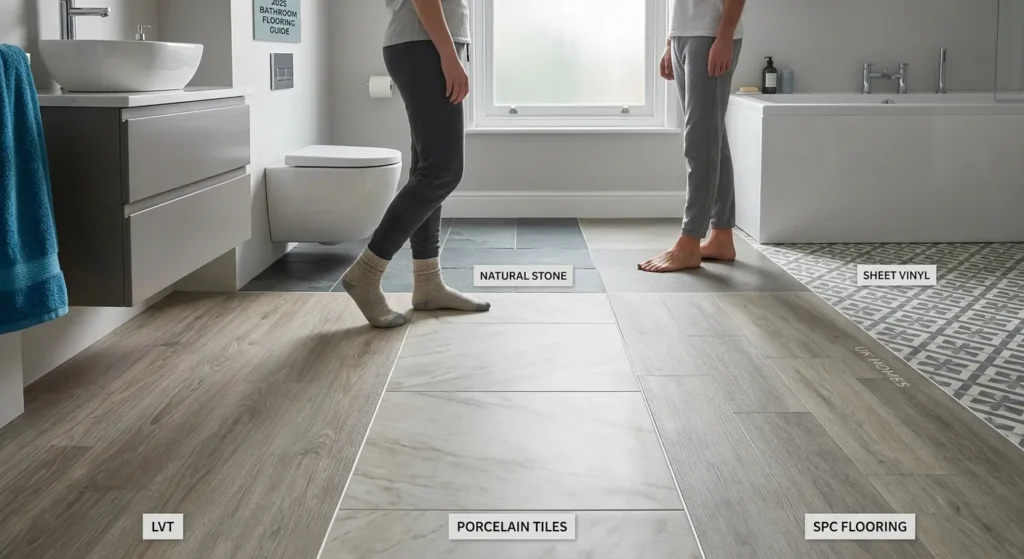
Frequently Asked Questions
What is the best bathroom flooring in the UK?
Luxury vinyl tile (LVT) and porcelain tiles are the best all-round options for UK bathrooms. LVT offers 100% waterproofing, warmth underfoot, and easy installation. Porcelain provides unmatched durability and hygiene. The best choice depends on your budget, heating setup, and how the bathroom is used. Both are suitable for family bathrooms, ensuites, and wet rooms.
Is LVT or porcelain better for a bathroom floor?
LVT is warmer, quicker to install, and more comfortable underfoot. Porcelain is harder, longer-lasting, and better suited to very wet environments like walk-in showers and wet rooms. Both are fully waterproof. If you want a warm, low-maintenance floor that looks great, LVT is often the better everyday choice. If longevity and hygiene are paramount, porcelain wins.
What is the most waterproof bathroom flooring?
LVT, SPC, porcelain tiles, and sheet vinyl are all fully waterproof. Sheet vinyl with a seamlessly installed single piece is arguably the most practically waterproof because it eliminates any joints. For aesthetics combined with waterproofing, LVT and porcelain are the better long-term choices for most UK homes.
What bathroom flooring is best for underfloor heating?
Porcelain tiles conduct heat most efficiently and are widely regarded as the best option for underfloor heating systems. LVT and SPC flooring are also compatible with most UFH systems, though you should verify the maximum operating temperature for the specific product you choose. Always check that your adhesive and underlay are also rated for UFH use before installation begins.
What is the cheapest bathroom flooring in the UK?
Sheet vinyl is the cheapest bathroom flooring available in the UK, starting from around £5 per m² for materials. It is fully waterproof and suitable for small bathrooms and rental properties. Entry-level ceramic tiles are also budget-friendly from around £10 per m² and offer a longer lifespan than sheet vinyl with proper installation and maintenance.
How long does bathroom flooring last in the UK?
Lifespan varies significantly by material. Porcelain tiles can last 30 to 50 years. Quality LVT and SPC typically last 20 to 25 years. Natural stone lasts a lifetime with proper maintenance. Sheet vinyl lasts approximately 10 to 15 years. Engineered wood in bathroom environments typically lasts 10 to 20 years depending on humidity control and maintenance quality throughout its service life.
Is laminate flooring suitable for bathrooms in the UK?
Standard laminate is not recommended for bathrooms due to its susceptibility to moisture swelling. Some waterproof laminate products with a polymer or WPC core can work in low-moisture ensuites when correctly installed with sealed edges. Laminate should never be used in wet rooms or bathrooms with heavy daily water use.
What slip resistance rating do I need for bathroom flooring?
An R10 slip resistance rating is the recommended minimum for domestic bathroom floors in the UK. R11 is preferable in family bathrooms where children are present. For wet rooms and shower areas, look for products that specifically state wet area slip resistance and achieve R11 or above. Always check the product specification sheet rather than relying on general marketing descriptions.
Can I install bathroom flooring myself in the UK?
LVT and SPC with click-lock systems are well within reach for confident DIYers. Sheet vinyl in a small bathroom is also manageable. Porcelain and ceramic tiles require more skill to achieve a high-quality result and professional installation is recommended for anything larger than a cloakroom. Natural stone should always be installed professionally due to the weight, cutting complexity, and sealing requirements involved.
What bathroom flooring adds the most value to a UK home?
Porcelain tiles and natural stone consistently return the highest value in UK property appraisals and buyer perceptions. A well-tiled bathroom with quality fixtures is a recognised selling point across all property market segments. High-end LVT also presents very well to buyers and performs strongly in mid-market homes where full tile renovation would represent over-investment relative to property value.
Final Verdict: Best Bathroom Flooring UK 2025
The best bathroom flooring UK homeowners should consider in 2025 comes down to three clear recommendations based on your specific situation.
For most homes, LVT is the smartest all-round choice. It is waterproof, warm, safe, easy to maintain, and available in designs that suit every interior style from traditional to contemporary. A mid-range LVT product from a reputable UK manufacturer will serve a family bathroom brilliantly for 20 years or more.
For anyone who wants the longest-lasting and most hygienic result, porcelain tiles remain the professional standard. Paired with underfloor heating, a large-format porcelain floor is genuinely hard to beat for performance, cleanliness, and visual impact in both family bathrooms and luxury ensuites.
For budget-conscious renovators, ceramic tiles and sheet vinyl both deliver reliable waterproof performance at accessible price points. Neither is the most glamorous option, but both do the job effectively when installed correctly and maintained properly over time.
Whatever you choose, prioritise genuine waterproofing, a proper slip resistance rating, and professional installation for anything involving tile work, waterproofing membranes, or underfloor heating systems. These are the decisions that determine whether your bathroom floor looks great and performs well for decades, or needs replacing far sooner than it should.