
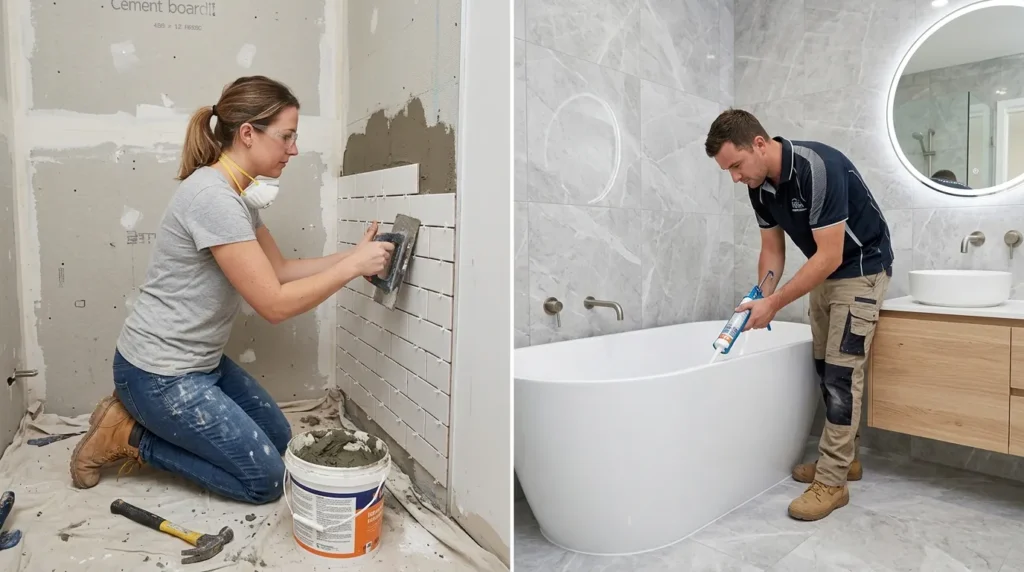
The comparison between DIY bathroom renovation vs professional remodeling comes down to three things most homeowners underestimate: their actual skill level, the true total cost, and how long they can live without a functioning bathroom.
Both paths can produce a beautiful result. Both can also go seriously wrong. The difference lies in knowing which tasks are genuinely DIY-friendly, which ones carry legal and structural consequences if done incorrectly, and where the hidden costs tend to appear on either side.
This guide gives you a complete, honest comparison so you can make the right call for your home, your budget, and your timeline.
DIY Bathroom Renovation vs Professional at a Glance
Choosing between a DIY bathroom remodel and hiring a professional contractor depends on the scope of your project, your existing skills, and your budget. DIY bathroom renovation can cost between $3,000 and $10,000 for a full remodel, while professional bathroom renovation typically runs $12,000 to $30,000 or more. Labour accounts for 40 to 65 percent of a professional remodel budget, which is where most DIY savings come from.
However, DIY projects take significantly longer, carry higher risk of code violations, and often lack warranty protection. Plumbing, electrical work, and waterproofing are the three areas where amateur mistakes create the most expensive consequences. For cosmetic updates like painting, vanity swaps, or fixture replacements, DIY is a realistic option. For structural changes, shower installations, or full remodels, professional work delivers better long-term value.
Quick Comparison Table
| Factor | DIY | Professional |
| Cost | $3,000 to $10,000 | $12,000 to $30,000+ |
| Time | 4 to 12 weeks | 2 to 4 weeks |
| Skill Required | Moderate to High | Handled by contractor |
| Risk Level | Higher | Lower |
| Finish Quality | Varies widely | Consistently high |
| Warranty | None | Usually 1 to 5 years |
| Permits Handled | Your responsibility | Contractor manages |
| Long-Term Value | Risk of costly fixes | Better ROI over time |
| Best Choice For | Cosmetic updates, tight budgets | Full remodels, wet areas, structural work |
What Is DIY Bathroom Renovation?
A DIY bathroom renovation means the homeowner takes on some or all of the work themselves, from demolition and planning through to the finished installation. This might mean pulling out an old vanity on Saturday morning, tiling a shower wall over three weekends, or painting and updating fixtures without touching the plumbing at all.
The term covers a wide range of involvement. Some homeowners do everything themselves. Others handle the cosmetic work and hire out for plumbing and electrical. That hybrid approach is actually the smartest strategy for most people and often produces the best balance of cost savings and quality.
What DIY Typically Includes
Demolition and debris removal, painting walls and ceilings, installing a new vanity, mirror, or medicine cabinet, replacing faucets, towel bars, and hardware, laying bathroom flooring in straightforward layouts, tiling in smaller and simpler areas, and installing light fixtures where the homeowner is comfortable with basic electrical work are all tasks that fall within a realistic DIY scope.
What DIY Rarely Handles Well
Moving plumbing supply or drain lines, shower pan installation and waterproofing, GFCI electrical circuits and outlet installation, structural wall changes, and obtaining and passing permits and inspections are the areas where DIY most commonly creates serious and costly problems. These tasks require consistent technique, professional knowledge, and in most jurisdictions, a licensed tradesperson to carry out and certify the work legally.
What Does a Professional Bathroom Remodel Include?
A professional bathroom renovation involves licensed contractors coordinating multiple trades including a general contractor, plumber, electrician, and tile installer. Depending on the project scope, it also includes permit applications, inspections, demolition crews, and finish carpenters.
A reputable bathroom remodeling contractor manages the sequencing of trades, which matters more than most homeowners realise. Rough plumbing must be completed before cement board goes up. Waterproofing must be inspected before tile is laid. Electrical rough-in happens before drywall. A professional knows this sequence and keeps the project moving efficiently.
Professional Remodeling Services Typically Include
Full project planning and permit acquisition, demolition and structural assessment, plumbing rough-in and fixture installation, electrical work including GFCI protection and ventilation, waterproofing membrane installation in wet areas, tile installation on floors, walls, and shower surrounds, vanity, sink, bathtub, and shower installation, drywall, painting, and finish work, and final inspection and warranty coverage are all components of a comprehensive professional bathroom renovation service.
Pros of DIY Bathroom Renovation
Lower Upfront Cost
Labour typically makes up 40 to 65 percent of a professional remodel budget. When you provide that labour yourself, those savings are real. A bathroom renovation that costs $18,000 professionally might cost $7,000 to $9,000 in materials alone, representing a significant potential saving for homeowners with the right skills and time.
Full Creative Control
You choose every tile, every fixture, every finish without compromise. There is no back-and-forth with a contractor over substitutions or timeline delays caused by supply issues on their end. Every aesthetic decision is entirely yours from start to finish.
Flexibility of Schedule
You work when it suits you. If you have a long weekend or a holiday break, you can make significant progress without coordinating around a crew. This flexibility suits homeowners whose schedules are unpredictable or who prefer to work at their own pace.
Sense of Ownership and Satisfaction
For homeowners who genuinely enjoy hands-on projects, completing a renovation builds real skills and produces lasting satisfaction. That is not a trivial benefit. The pride of having personally transformed a space is a meaningful reward that no professional contractor can replicate for you.
A Valuable Learning Experience
Smaller DIY bathroom projects build a foundation of knowledge that makes future projects easier and cheaper. Each project you complete increases your capability and confidence for the next, creating compounding long-term value from the skills you develop.
Cons of DIY Bathroom Renovation
The Timeline Is Almost Always Longer Than Expected
Professionals who renovate bathrooms every day work with a speed and efficiency that is genuinely difficult to match on evenings and weekends. What takes a professional crew two weeks commonly stretches to two months for a DIY project with a full-time job in the way. For households with only one bathroom, this extended disruption carries a significant quality-of-life cost.
Mistakes in Key Areas Are Expensive
A tile that is slightly unlevel costs you a few hours to fix. A shower waterproofing layer installed incorrectly costs thousands in water damage, mould remediation, and reconstruction. The DIY savings disappear fast when a fundamental error has to be corrected by a professional. The areas where mistakes are most costly are precisely the areas where DIY skill is hardest to develop without repeated professional experience.
Permits Are Your Responsibility
Many homeowners skip permits to save time and money. That decision can result in fines, a forced removal of completed work, and serious complications when selling the home. Unpermitted work that affects plumbing or electrical is a red flag for any buyer or home inspector, and resolving it retrospectively is both expensive and disruptive.
No Warranty Protection
If a professionally installed shower pan fails two years later, the contractor is responsible. If yours fails, you are paying for everything yourself. The absence of any warranty protection on DIY work is a financial risk that belongs in any honest cost comparison between the two options.
Significant Physical Demands
Demolition, tile work, and installation are genuinely labour-intensive. Prolonged kneeling, lifting heavy materials, and extended physical exertion over multiple weekends take a real toll. Factor in the physical cost before committing to a large scope, particularly for homeowners who are not accustomed to physical work.
Benefits of Hiring a Professional Bathroom Contractor
Speed and Efficiency
A professional bathroom remodeling contractor with a coordinated crew typically completes a full renovation in two to four weeks. The same project done by a single homeowner on weekends stretches to three months or longer. For households where bathroom downtime is a genuine practical hardship, professional speed is itself a compelling benefit.
Code Compliance and Legal Protection
Licensed contractors know local building codes, pull the necessary permits, and schedule inspections. This protects your home’s value and prevents legal headaches at resale. Code-compliant work also protects you from liability in the event of an incident related to plumbing or electrical systems in the renovated space.
Access to Better Materials
Professional contractors often have access to commercial-grade waterproofing membranes, grout products, and setting materials that are not available at retail hardware stores. These products last longer and perform better than their retail equivalents, delivering a superior long-term result for the homeowner.
Warranty Protection
Most reputable contractors offer a labour warranty of one to five years. Some material warranties are also transferable to future owners, which is a meaningful selling point when the time comes to sell your home. Warranty protection provides genuine financial security that DIY work simply cannot replicate.
Proper Waterproofing That Lasts
This is where professionals earn their fee most clearly. A correctly installed shower system with a proper waterproof membrane, properly mixed mortar bed, and correctly taped seams will last 20 years. A system that looks fine on the surface but has inadequate waterproofing will fail within five. The long-term cost difference between these two outcomes is substantial.
Better Resale Value
Professionally completed renovations with permits on file consistently perform better during home appraisals and buyer negotiations than unpermitted DIY work. A documented, code-compliant professional renovation is a positive asset on your property record that adds measurable value in any transaction.
When DIY Bathroom Renovation Makes Sense
DIY is a genuinely good choice under the right conditions. It makes practical sense when you are only updating cosmetic elements such as new paint, new hardware, a replacement vanity, new mirrors, or updated light fixtures. It also works well when you have verifiable experience with tile installation and understand substrate preparation, when the project does not require moving any plumbing supply lines or drain lines, when your bathroom is not the only one in the home so downtime is manageable, when you have time over several weeks or months and are not under deadline pressure, when you are comfortable pulling permits and understand what passing an inspection requires, and when you are using the project to build skills and the stakes for a less-than-perfect result are low.
Even in these cases, consider hiring out for one or two specific tasks. Having a licensed plumber connect the final supply lines and drain on a vanity you installed yourself is an inexpensive insurance policy that protects the broader investment you have made in the project.
When You Should Hire a Professional
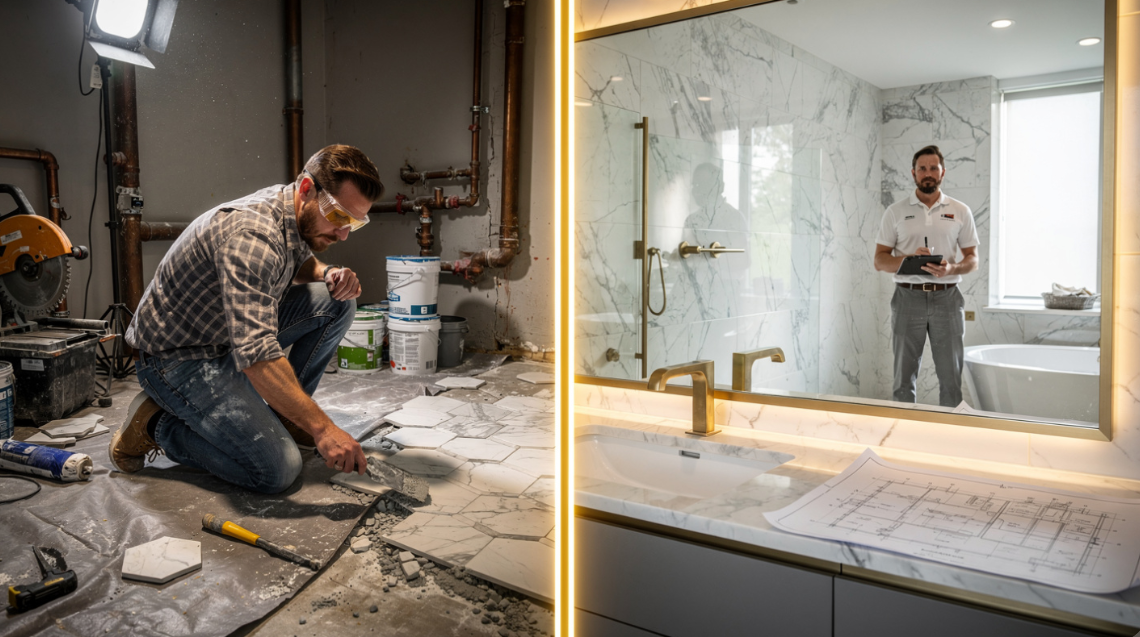
Some situations genuinely require professional involvement. You should not take on the following tasks without proper training and licensing.
Any project that moves or modifies existing plumbing drain lines requires a licensed plumber. Shower pan installation and waterproof membrane application in wet areas must be executed by someone with professional-level experience. Adding or modifying electrical circuits, including GFCI outlets and exhaust fans on new circuits, requires a licensed electrician. Structural wall modifications or load-bearing adjustments require a qualified professional assessment before any work begins. Full gut renovations with significant layout changes are almost always best managed by a professional contractor who can coordinate multiple trades. Any project in a home you plan to sell in the next three to five years benefits from permits and professional documentation that increase buyer confidence. Projects where you only have one bathroom also belong with a professional, as extended downtime is not practically manageable for most households.
The risk calculation changes significantly when plumbing, waterproofing, and electrical work are involved. These are the three areas where errors cause the most damage and the most expensive repairs.
Cost Comparison: DIY vs Professional Bathroom Renovation
Understanding bathroom renovation costs side by side helps clarify the real financial picture.
DIY Bathroom Renovation Costs
| Item | Estimated Cost |
| Materials (tile, fixtures, vanity) | $2,500 to $6,000 |
| Tools (if not already owned) | $300 to $800 |
| Permits (if required) | $100 to $1,000 |
| Waterproofing products | $200 to $500 |
| Disposal and dumpster rental | $150 to $400 |
| Total Estimated Range | $3,000 to $10,000 |
Professional Bathroom Renovation Costs
| Item | Estimated Cost |
| Labour (all trades) | $6,000 to $15,000 |
| Materials and fixtures | $4,000 to $10,000 |
| Permits and inspections | $200 to $1,000 |
| Project management (contractor fee) | 10 to 20% of total |
| Total Estimated Range | $12,000 to $30,000+ |
The average professional bathroom remodel in 2025 runs approximately $12,000 to $15,000 for a mid-range project. High-end renovations with premium tile, custom vanities, and luxury fixtures regularly exceed $30,000.
One important nuance: the DIY cost assumes everything goes smoothly. Factor in one significant mistake that requires professional correction and that gap narrows considerably. The true financial comparison must account for the realistic probability of errors, not just the best-case scenario.
Time Comparison: How Long Does Each Option Take?
Time is a cost most homeowners undercount when evaluating a DIY bathroom remodel.
Professional Renovation Timeline
Planning and permit acquisition takes one to two weeks. Demolition takes one to two days. Rough plumbing and electrical takes two to four days. Waterproofing and substrate takes two to three days. Tile installation takes three to seven days. Fixture installation and finish work takes three to five days. The total professional timeline is two to four weeks from start to completion.
DIY Renovation Timeline
Planning and permit acquisition takes two to four weeks. Demolition across weekends takes one to two weekends. Rough work takes two to four weekends. Waterproofing, substrate, and tile takes four to eight weekends. Fixture installation takes one to two weekends. The total DIY timeline is four to twelve weeks as a minimum estimate, and longer if complications arise or progress is interrupted.
For a household with one bathroom, a two-month DIY project means two months of disruption. That is a meaningful quality-of-life cost that belongs in the comparison alongside the financial figures.
Quality Comparison: DIY vs Professional Results
Quality in bathroom renovation comes down to two things: the visible finish and the systems behind it.
The Visible Finish
The visible finish including grout lines, tile alignment, caulk joints, and fixture mounting can be executed beautifully by a skilled and patient DIYer. With careful preparation, the right tools, and a willingness to take time, cosmetic quality in DIY work is absolutely achievable. The key variables are patience, preparation, and a genuine willingness to redo work that does not meet a high standard.
The Systems Behind the Finish
The systems behind the finish are a different story. Waterproofing, cement board installation, mortar bed preparation, and drain connections require consistent technique built through repetition. A professional tile installer who has laid hundreds of showers will apply a waterproofing membrane with a precision and consistency that a first-time installer simply cannot match, regardless of how many tutorial videos they have watched.
The long-term quality difference usually shows up three to seven years after completion. Professional installations hold up. Poorly waterproofed DIY installations begin showing signs of failure through grout cracking, tile lifting, and moisture intrusion behind walls. The full cost of that failure almost always exceeds the original savings made by choosing the DIY route.
Safety Considerations in Bathroom Renovation
Bathrooms are one of the higher-risk environments in a home from both an electrical and a structural standpoint. Two safety areas deserve particular attention.
Electrical Safety
Water and electricity in close proximity require GFCI protection on all outlets within six feet of water sources. Building codes require this in virtually every jurisdiction. Improper wiring in a bathroom can cause shock, fire, or both. Unless you are a licensed electrician or have significant verified electrical experience, bathroom electrical work belongs with a professional. The consequences of getting this wrong are severe enough that no cost saving justifies the risk.
Waterproofing and Mould Prevention
Inadequate waterproofing behind tile creates a slow, invisible leak. Water accumulates in the wall cavity over months or years, producing mould, rotting the wood framing, and eventually causing structural damage. By the time the problem is visible, the remediation cost often exceeds the original renovation budget. Correct waterproofing is not a step that can be rushed, estimated, or cut back on to save money. It is the single most consequential task in any wet area renovation.
Common DIY Bathroom Renovation Mistakes
Skipping the Waterproof Membrane
Cement board alone is not waterproof. A proper waterproofing layer must go over the substrate before any tile goes up in a shower or wet area. This step is skipped surprisingly often, and the consequences typically appear two to three years after installation in the form of mould, failing grout, and tile that begins to lift from the wall.
Using Wall Tile on the Floor
Wall tile is not rated for floor load or slip resistance. Using it on bathroom floors creates both a safety hazard and a durability problem. Always verify that floor tiles carry an appropriate slip-resistance rating before purchasing and installing them.
Not Allowing Proper Cure Time
Mortar, grout, and waterproofing each require specific cure times before the next step proceeds. Rushing these stages compromises the finished installation in ways that may not be immediately visible but will manifest over time as premature cracking, adhesion failure, and moisture penetration.
Installing a Vanity Without Shutting Off Water Properly
This seems obvious but leads to flooded bathrooms every year. Always confirm the water supply is fully shut off and pressure is relieved from the line before disconnecting any supply connections.
Poor Tile Layout Planning
Starting tile in the wrong corner or failing to plan for even cuts on both sides of a wall results in narrow slivers of tile in visible locations that look unprofessional. Spend time planning your tile layout on paper before touching adhesive, and use dry-lay testing to confirm the final layout before committing to installation.
Ignoring Ventilation Requirements
An exhaust fan that vents into the attic rather than directly outside the home creates a moisture problem in the attic that can cost significantly more to fix than the fan installation itself. All bathroom exhaust ventilation must discharge to the exterior of the building.
Skipping Permits on Plumbing and Electrical Changes
This decision feels like a shortcut and becomes a liability at resale. Unpermitted plumbing and electrical work in a bathroom is among the most common red flags identified during home inspections and can delay or derail a property sale.
Hidden Costs Most Homeowners Ignore
Subfloor Damage
Pulling up old flooring often reveals water-damaged subfloor that needs replacement before new flooring can go in. Budget $500 to $2,000 depending on the extent of the damage, and understand that discovering this issue mid-project cannot be avoided or deferred.
Old Pipe Condition
Older homes with galvanised or corroded supply lines may require full replacement once walls are open. This is rarely optional when the existing pipework is genuinely non-compliant or structurally compromised, and the cost is in addition to any original renovation budget.
Mould Remediation
Finding mould behind a shower surround or under flooring triggers a remediation process that adds $500 to $3,000 or more before renovation can continue. Mould remediation is not a step that can be safely skipped, as leaving active mould behind new surfaces creates an ongoing health and structural problem.
Permit Inspection Delays
If an inspection fails or requires a correction, the project pauses until reinspection. This extends professional timelines and pushes DIY timelines significantly. Budget additional time and, potentially, additional contractor visits if corrections are required.
Tool Investment for DIY
A tile saw, level set, trowels, grout float, and wet saw rental collectively cost several hundred dollars for a single project. Factor this in before comparing DIY versus professional cost estimates, as the tool investment is a real project cost that is frequently omitted from initial DIY budgets.
Disposal Fees
Old tile, drywall, fixtures, and flooring create significant debris. Junk removal or dumpster rental is a real cost that rarely appears in initial DIY budgets but consistently appears on final project accounts.
How to Decide Which Option Is Right for You
Work through these questions honestly before committing either direction.
Question 1: What Is the Scope?
Cosmetic only, or does it involve plumbing, electrical, or structural changes? The larger the scope, the stronger the case for professional involvement. A full gut renovation almost always benefits from professional management regardless of the homeowner’s skill level.
Question 2: What Is Your Actual Skill Level?
Not YouTube-confidence level. Have you tiled a floor before? Have you ever soldered a copper fitting or run a new circuit? Be precise and honest. Overestimating your capability is the single most common cause of costly DIY renovation failures.
Question 3: How Many Bathrooms Does Your Home Have?
If it is your only bathroom, a multi-month DIY timeline is a serious quality-of-life disruption that must be factored into the decision. For families with young children or elderly household members, this consideration alone may make professional work the only practical option.
Question 4: Are You Planning to Sell in the Next Few Years?
Permitted, professionally documented renovations hold up better in appraisals and buyer due diligence. If sale is on the horizon, the investment in professional work with permits on file is almost always recovered through stronger buyer confidence and a smoother transaction.
Question 5: What Is Your Genuine Budget?
If budget is the primary driver, a hybrid approach often makes the most sense. Hire a contractor for plumbing, waterproofing, and electrical, then handle painting, fixture swaps, and accessory installation yourself. This strategy captures meaningful cost savings while protecting the structural integrity of the most critical elements.
Question 6: What Is Your Time Availability?
A bathroom renovation requires consistent attention. If your schedule only allows a few hours on weekends, a full DIY remodel will stretch significantly and the disruption compounds. Be realistic about your available time before committing to a scope that requires more hours than your schedule can accommodate.
Bathroom Renovation Return on Investment
Mid-range bathroom remodels consistently deliver strong returns at resale. According to recent cost versus value data, mid-range bathroom renovations return roughly 70 to 80 percent of their cost at resale, while upscale remodels return closer to 36 to 45 percent.
This means a practical, well-executed mid-range renovation adds more value per dollar spent than a luxury upgrade. A professional renovation costing $18,000 that adds $13,000 to $14,000 in home value is a reasonable investment, not simply an expense.
DIY renovations that cut corners on waterproofing or skip permits can actively reduce home value when issues surface during a home inspection. The net return on investment of a poorly executed DIY bathroom renovation can be negative, making it a worse financial outcome than not renovating at all.
Frequently Asked Questions
Is DIY bathroom renovation really cheaper than hiring a professional?
In materials alone, yes. A full DIY bathroom remodel typically costs $3,000 to $10,000 compared to $12,000 to $30,000 professionally. However, mistakes in waterproofing, plumbing, or tiling can require professional correction that eliminates those savings. The true cost depends on how well the work is executed and whether any significant errors require professional remediation.
What parts of a bathroom renovation can I safely do myself?
Painting, replacing hardware, installing a new vanity, swapping faucets, adding mirrors, and updating light fixtures are all reasonable DIY tasks. Waterproofing a shower, moving drain lines, and running new electrical circuits are best left to licensed professionals regardless of the homeowner’s general DIY confidence level.
Do I need a permit for a bathroom renovation?
It depends on what you are changing. Cosmetic updates typically do not require permits. Any work that modifies plumbing supply or drain lines, adds electrical circuits, or changes the structural layout requires permits in most jurisdictions. Skipping required permits creates liability at resale and in some cases results in fines or mandatory removal of completed work.
How long does a professional bathroom renovation take?
A professional bathroom remodeling contractor typically completes a full renovation in two to four weeks, depending on scope and complexity. Larger projects with custom tile work, structural changes, or special-order fixtures take longer, and the timeline should be confirmed in writing before work begins.
What is the return on investment for a bathroom renovation?
Mid-range bathroom remodels typically return 70 to 80 percent of their cost at resale. Upscale remodels return less, around 36 to 45 percent. A practical, well-executed renovation adds more value per dollar than a luxury upgrade in most markets.
What are the biggest risks of DIY bathroom renovation?
Inadequate waterproofing behind tile, improper electrical work, skipped permits, and plumbing errors are the most costly DIY risks. These issues often remain hidden for months or years before causing expensive structural or mould damage that can cost more to remediate than the original renovation investment.
How do I find a reliable bathroom remodeling contractor?
Ask for references from completed bathroom projects specifically, verify licensing and insurance, review online ratings, and get at least three written estimates. A reputable contractor will also pull permits and schedule required inspections. Avoid any contractor who suggests skipping permits as a way to reduce costs.
Can a hybrid approach work for bathroom renovation?
Yes, and it is often the best strategy. Hiring professionals for plumbing, waterproofing, and electrical while handling painting, vanity installation, and accessories yourself delivers meaningful cost savings while protecting the structural integrity of the renovation. A hybrid approach suits homeowners who have real cosmetic skills but recognise the limits of their technical expertise.
What hidden costs should I budget for in a bathroom renovation?
Budget an additional 15 to 20 percent above your estimate for subfloor replacement, old pipe condition issues, mould remediation, permit delays, and disposal costs. These items appear on the majority of full bathroom renovation projects and are rarely reflected in initial estimates from either DIY planners or contractors.
Does a professionally renovated bathroom increase home value more than DIY?
Generally yes, particularly when the professional work includes permits and inspections on record. Permitted, documented renovations are a positive signal in appraisals and buyer negotiations. Unpermitted DIY work involving plumbing or electrical is a liability during home sale due diligence that can delay or reduce the final sale price.
Final Thoughts on DIY Bathroom Renovation vs Professional
The DIY bathroom renovation vs professional debate does not have a single right answer. It has a right answer for your specific situation, and that answer depends on honest self-assessment.
If you are updating cosmetics, working with a generous timeline, and have real hands-on experience, DIY can absolutely deliver a beautiful result at meaningful savings. If you are tackling a full remodel involving plumbing, waterproofing, electrical, or structural changes, professional expertise protects both your investment and your home.
For most homeowners, the smartest path sits somewhere between the two extremes. Know what you can genuinely handle. Hire out for what you cannot. Protect the work that matters most with proper permits and professional execution. That approach consistently produces the best combination of cost savings, quality, and long-term value.
If you are ready to explore what a professional renovation would look like for your bathroom, consider starting with a consultation before committing to either path. A professional assessment often clarifies the scope, surfaces hidden issues, and gives you a real cost baseline to compare against your DIY estimate.