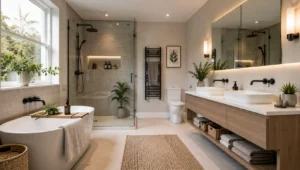
Eco-friendly bathroom fixtures UK homeowners are installing today have become one of the most practical investments you can make. Water bills keep climbing, energy costs remain high, and many regions across England now face genuine water stress during summer months. Upgrading to water-saving bathroom fixtures efficient taps, low-flow showers, and dual-flush toilets can quietly cut a household’s water consumption by a third or more, without anyone noticing a drop in comfort.
This guide covers every type of eco-friendly bathroom fixture available in the UK, explains how each one saves water and energy, and shows how to plan a renovation that balances sustainability with good design. Whether you’re updating a single tap or planning a full bathroom renovation in Wolverhampton, the principles below apply.
What Makes Eco-Friendly Bathroom Fixtures Different?
An eco-friendly bathroom fixture is any tap, shower, toilet, or bath designed to reduce water and energy consumption while still performing well. In the UK, the easiest way to compare products is the Unified Water Label, a voluntary European labelling scheme that displays litres used per minute or per flush directly on product packaging.
Three things generally define an eco fixture:
- Reduced flow rate through aerated or restricted nozzles that maintain pressure while using less water
- Dual or variable settings that let users choose how much water a flush or rinse actually needs
- Material and manufacturing efficiency, including recyclable components and reduced packaging waste
A fixture doesn’t need to feel weaker or less luxurious to qualify. Modern aerated showerheads mix air into the water stream, so the spray feels just as powerful while using far fewer litres per minute.
Why Water-Saving Fixtures Matter Across the UK
England is forecast to face a significant water supply shortfall within the next couple of decades if current consumption patterns continue, according to the Environment Agency’s national framework for water resources. More than half of England’s water resource management zones are expected to experience deficits even after planned supply improvements, which means reducing demand at household level has to play a central role alongside new infrastructure.
Household-level changes like swapping fixtures during a renovation genuinely matter at a regional level, not just for individual bills. Since heating water accounts for a large share of domestic energy use, upgrading to efficient showers and taps lowers both water and gas or electricity costs at the same time. Independent charity Waterwise estimates that simple efficiency measures at home are among the cheapest ways to protect future water supplies while cutting household bills.
Eco-Friendly Bathroom Fixtures: Category by Category
Water-Saving Taps and Mixers
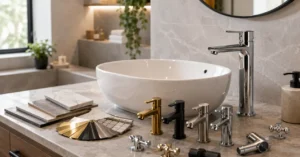
Aerated taps and basin mixers fitted with flow restrictors typically use between four and six litres per minute, compared with older taps that can use over ten. Sensor taps, which shut off automatically when hands are removed, are increasingly common in renovated homes and are particularly useful in busy family bathrooms. If you’re comparing finishes and styles, our taps and brassware buying guide covers chrome, brushed brass, and matte black options in detail.
Low-Flow and Eco Shower Systems
Showers account for the largest share of bathroom water use, so this is often the highest-impact upgrade. Eco showerheads use aerating technology to keep water pressure feeling strong while cutting flow by roughly forty percent. Thermostatic eco shower valves also prevent water waste caused by temperature adjustment, since they hold a set temperature automatically.
If a full renovation isn’t on the table yet, a straightforward shower or bath replacement focused purely on swapping the shower system is the single highest-impact, lowest-cost eco upgrade available. Replacing an old electric shower with a modern thermostatic eco mixer can noticeably reduce both water and energy bills within months.
Dual-Flush and Low-Volume Toilets
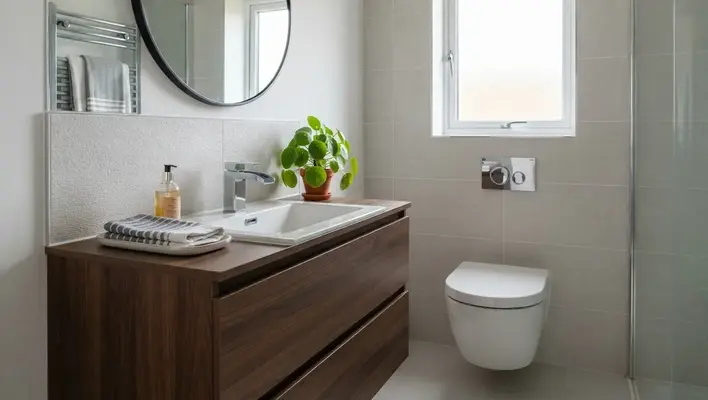
Dual-flush toilets let users choose a smaller flush for liquid waste and a fuller flush when needed. Many modern UK toilets now use as little as four litres for a full flush, compared with older single-flush models using nine litres or more. A household using the reduced flush consistently can save several thousand litres of water per year.
Eco Baths and Bathing Fixtures
Shorter, contoured baths reduce the water volume needed to fill them while still offering a comfortable soak. Some manufacturers now produce baths with built-in overflow limiters that prevent excess filling a small but genuinely useful water-saving feature for family bathrooms with young children.
Planning an Eco-Friendly Bathroom Renovation
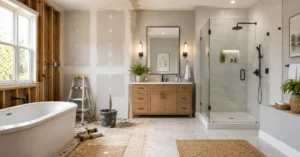
A genuinely water-efficient bathroom isn’t just about swapping individual fixtures. It works best when planned as part of a wider bathroom design project, where pipework, water pressure, and layout are all considered together. Poor pipe insulation or an outdated pressure system can undermine even the most efficient fixtures.
When planning a renovation, think through:
- Current water pressure and whether it suits low-flow fixtures
- Boiler or hot water cylinder capacity, since efficient showers reduce hot water demand
- Whether existing pipework needs updating alongside new fixtures our bathroom plumbing team always checks pressure compatibility before fitting low-flow systems, since some older combi boilers struggle with restrictive valves
- Long-term household needs, including accessibility and family size
Small Bathrooms and Ensuites
Smaller spaces benefit hugely from eco fixtures, since reduced water flow pairs naturally with compact, space-saving designs. A small bathroom renovation can combine slimline eco toilets and wall-mounted basins with sensor taps to maximise both space and efficiency. The same logic applies to an ensuite renovation, where water efficiency matters even more given how frequently ensuites are used throughout the day.
Wet Rooms and Accessibility
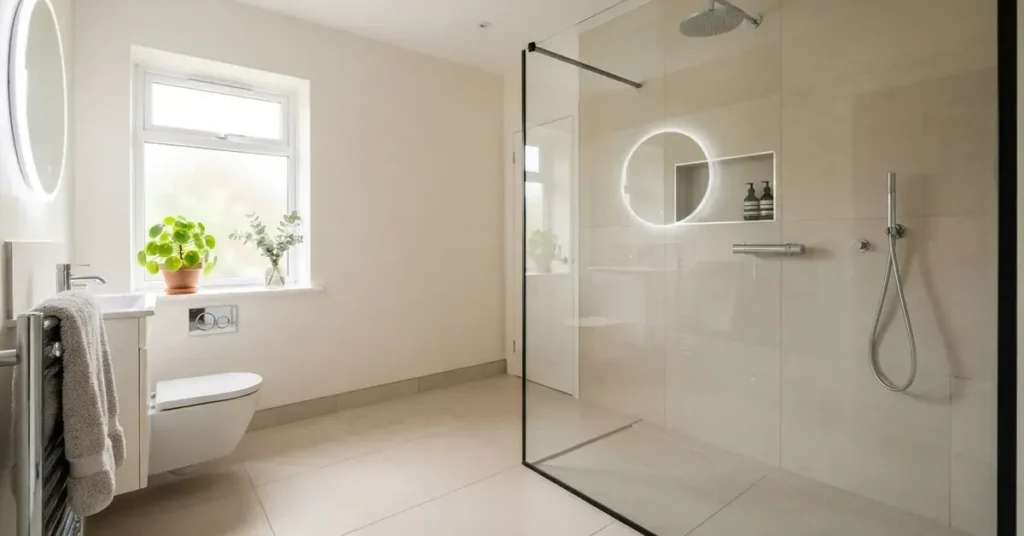
A wet room installation pairs particularly well with eco fixtures, since thermostatic eco shower valves prevent scalding risk while controlling water use precisely. This also matters for disabled bathroom adaptations, where consistent water temperature and pressure are safety features, not just comfort features.
Luxury Bathrooms Without the Water Waste
There’s a common misconception that eco fixtures mean compromising on a high-end finish. In practice, a luxury bathroom renovation can include rainfall showerheads with aeration technology, freestanding baths with overflow limiters, and sensor-controlled taps finished in brushed brass or matte black. None of these require sacrificing water efficiency for style.
Choosing Eco-Friendly Bathroom Suites
When selecting a full suite, consistency matters. A coordinated set of bathroom suite fixtures basin, toilet, and bath from the same eco-rated range tends to perform more predictably than mixing efficiency levels across different brands. Most reputable manufacturers now publish water consumption figures clearly on packaging, so checking these before purchase is worthwhile. Tile choice also plays a small but real role: light-coloured, water-resistant bathroom tiling around eco showers reduces limescale visibility, which becomes more noticeable with lower flow rates.
Practical Tips for Choosing Eco-Friendly Bathroom Fixtures
- Check the water label before buying. Lower litres-per-minute or litres-per-flush figures mean lower running costs.
- Pair low-flow showers with thermostatic valves to avoid temperature-related water waste.
- Choose dual-flush toilets with clearly marked buttons, since unclear controls lead to overuse of the full flush.
- Ask your installer to check water pressure compatibility before fitting restrictive flow fixtures.
- Consider sensor taps in family bathrooms, where taps are often left running unnecessarily.
- Look for baths with built-in overflow protection if children regularly use the bathroom unsupervised.
Frequently Asked Questions
What are the most water-efficient bathroom fixtures available in the UK?
Dual-flush toilets, aerated low-flow showerheads, and sensor or aerated taps are currently the most water-efficient fixtures widely available, often reducing water use by thirty to fifty percent compared with standard fixtures.
Do eco-friendly bathroom fixtures cost more than standard fixtures?
Most eco fixtures cost slightly more upfront typically between ten and thirty percent above standard equivalents but the difference is usually recovered within two to four years through lower water and energy bills.
Can I fit eco fixtures into an existing bathroom without a full renovation?
Yes. Taps, showerheads, and toilets can usually be replaced individually without a full renovation, although checking water pressure compatibility beforehand is recommended.
Are eco-friendly bathroom fixtures suitable for low water pressure homes?
Many modern eco fixtures are designed specifically to maintain performance at lower pressures, though it’s worth checking product specifications or asking an installer before purchase.
Do dual-flush toilets actually save meaningful water?
Yes. A household using the reduced flush option consistently can save several thousand litres of water per year compared with a standard single-flush toilet.
Thinking About an Eco-Friendly Bathroom Upgrade?
Whether you want to swap a single showerhead or plan a complete water-efficient renovation, our Wolverhampton-based team can assess your water pressure, recommend the right fixtures for your home, and handle the full installation. Contact us today for a free, no-obligation home visit and itemized quote.