
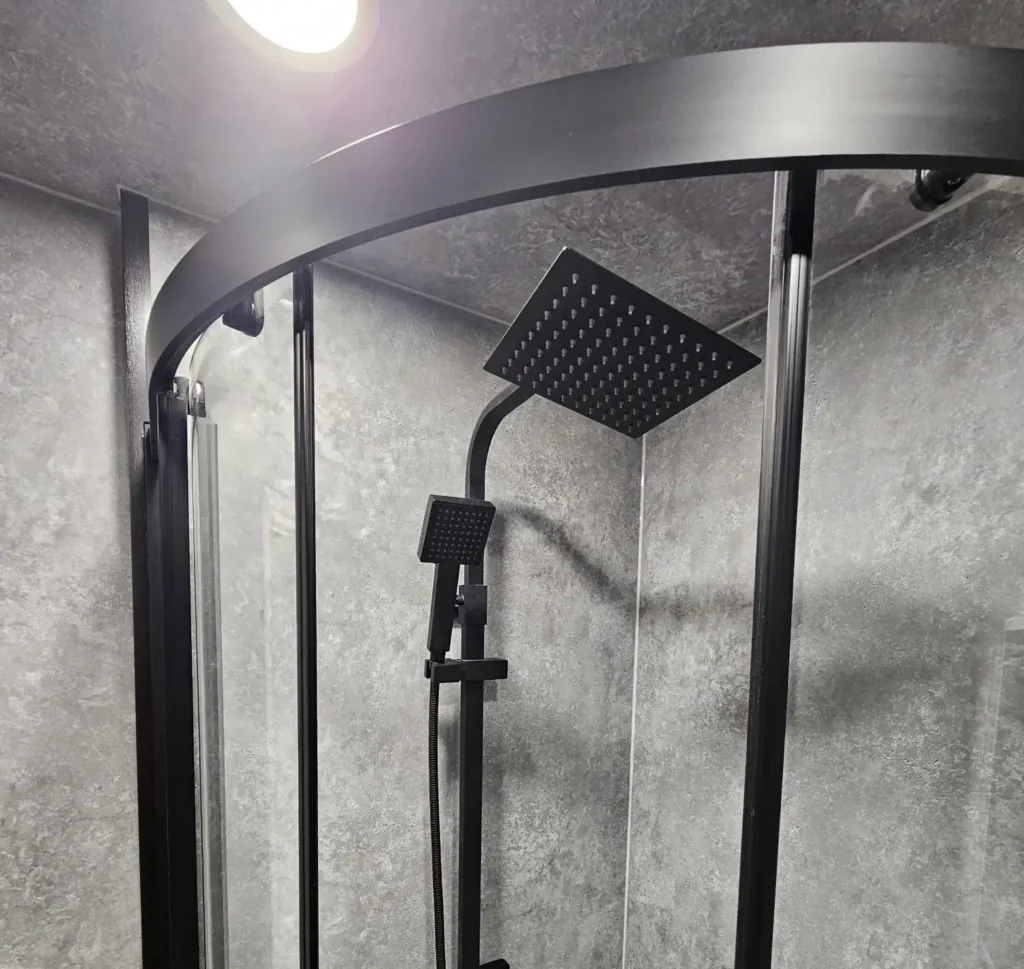
You need a plumber to install a bathroom whenever the work connects to your water supply or drainage system. UK building regulations require a qualified plumber for any plumbing fixtures like toilets, sinks, baths, and showers are involved. At Bathroom Renovation Wolverhampton, we fit complete bathrooms across Wolverhampton and the surrounding areas, and our team includes qualified plumbers who handle every part of the job that touches your water system, so the work meets UK building standards from the first pipe to the final tap.
A plumber is required for any bathroom work connected to your water supply or drainage, including fitting toilets, basins, baths, and showers, running new pipework, and connecting underfloor heating. Cosmetic tasks such as tiling, painting, or adding shelving do not legally require a plumber, though many homeowners still prefer one tradesperson to manage the full project.
What UK Regulations Actually Say About Bathroom Plumbing
Bathroom installations in the UK fall under the Water Supply (Water Fittings) Regulations 1999, along with Building Regulations that cover drainage, ventilation, and water efficiency. These rules exist to protect drinking water quality and stop poorly fitted pipework from causing leaks, contamination, or structural damage.
If your bathroom project involves connecting to the mains water supply, altering existing pipework, or linking new drainage to the public sewer, the work is considered notifiable. This means your local water supplier or building control team may need to know about it before work begins. Most homeowners are not aware of this step, which is one reason a registered plumber is so valuable. They already understand which jobs need notification and which do not.
Skipping these regulations is not just a compliance issue. Non compliant plumbing can affect your home insurance, cause problems if you sell your property later, and lead to costly repairs if an inspector flags the work down the line.
When You Legally Need a Plumber for Bathroom Work
So, do you need a plumber to install a bathroom every single time? The honest answer depends on what the project includes. Here are the situations where hiring one is essential, not optional:
- Water supply lines: Any pipework that connects fresh water to your sink, bath, shower, or toilet.
- Drainage and waste pipes: Carrying wastewater away from fixtures to the main sewage or septic system.
- Toilet and basin connections: Linking new units to both supply and drainage lines correctly.
- Shower and bathtub fitting: Ensuring water flow, pressure, and drainage all work together without leaks.
- Underfloor heating pipework: A popular addition in modern bathrooms that still needs proper plumbing connections.
- Main water alterations: Anything touching your main water line falls under strict regulation.
These tasks carry real risk if handled incorrectly. A loose seal on a toilet base or a poorly soldered joint can lead to hidden leaks that damage flooring, ceilings below, and even the structure of your home.
Tasks You Can Often Handle Without a Plumber
Not every part of a bathroom refit needs professional plumbing skills. Some elements are purely cosmetic or decorative and carry no risk to your water system:
- Hanging mirrors, towel rails, or storage units
- Installing lighting fixtures that do not involve plumbing connections
- Painting walls or applying waterproof paint
- Laying flooring or replacing tiles on walls
- Fitting cabinet hardware or shelving
These jobs are a good starting point if you want to save money by doing some of the work yourself, while still asking, do you need a plumber to install a bathroom for the parts that matter most, such as the suite and pipework.
Plumber vs Bathroom Fitter: What Is the Difference
People often use these two terms interchangeably, but they describe different skill sets.
| Role | Main Focus | Typical Tasks |
| Plumber | Water systems and pipework | Supply lines, drainage, connecting toilets, sinks, baths, showers |
| Bathroom Fitter | Full room installation | Coordinates plumbing, tiling, electrics, and carpentry for a complete fit |
A plumber specialises in pipes and water flow. A bathroom fitter usually manages the entire project and works alongside plumbers, electricians, and tilers to bring everything together. If you are only replacing a toilet or fixing a leak, a plumber alone is enough. If you are renovating the whole room, a fitter who coordinates qualified plumbers tends to give a smoother result.
What a Plumber Actually Does During Installation
Here is a breakdown of where plumbing expertise comes into play during a typical bathroom project:
| Stage | What the Plumber Handles |
| Planning | Assessing existing pipework and water pressure |
| Removal | Disconnecting and removing old fixtures safely |
| Pipework | Installing or rerouting supply and waste pipes |
| Fixture fitting | Connecting toilets, basins, baths, and showers |
| Testing | Checking for leaks and confirming water flow before sign off |
This structured approach is why DIY attempts so often go wrong. A small mistake at the pipework stage can stay hidden behind tiles for months before it causes visible damage.
Electric Showers and Electrical Work in the Bathroom
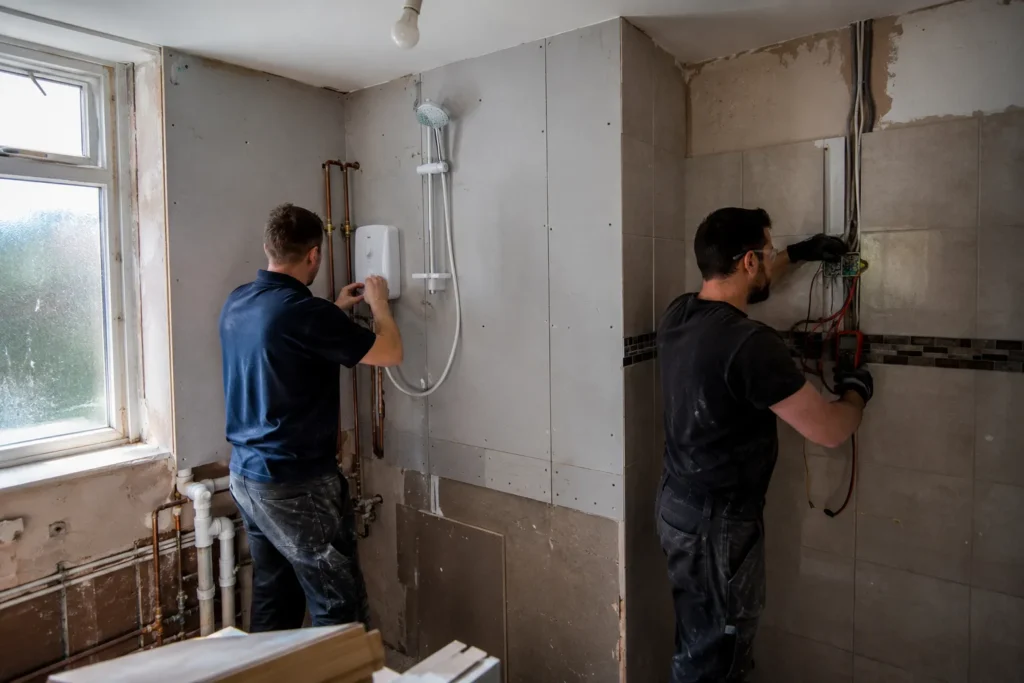
One area that confuses homeowners is the electric shower. While a plumber handles the water supply and drainage side, connecting an electric shower to the mains electricity supply needs a qualified electrician, ideally one holding Part P certification for work in bathrooms. Bathrooms are classed as special locations under UK wiring regulations because water and electricity in close proximity carry obvious safety risks.
This is a clear example of why full bathroom installations often need more than one trade. A plumber fits the shower unit and water connections, while an electrician wires it safely to the power supply.
Why Hiring a Qualified Plumber Is Worth It
Some homeowners weigh up the cost of a plumber against the appeal of a DIY job. In our experience, the long term value almost always favours professional installation, for these reasons:
- Compliance with regulations: A qualified plumber knows which parts of the job need notification under water fittings regulations and building control.
- Leak prevention: Correct sealing and pipe connections reduce the risk of slow leaks that cause hidden water damage.
- Faster completion: A trained plumber works through fixture installation efficiently, often finishing in a fraction of the time a DIY attempt would take.
- Insurance protection: Many home insurance policies expect plumbing work to be carried out or signed off by a qualified tradesperson.
- Long term reliability: Properly fitted pipework and fixtures last for years without the recurring issues that come from amateur installation.
How Much Does a Plumber Cost for a Bathroom Installation
Plumber rates in the UK typically range from around £40 to £80 per hour, though full bathroom installations are often quoted as a fixed project price rather than an hourly rate. The final cost depends on:
- The size and layout of your bathroom
- Whether pipework needs to be rerouted or extended
- The number of fixtures being installed
- Whether underfloor heating or an electric shower is part of the project
- Your location and the plumber’s experience level
Always ask for a written estimate before work begins, and confirm whether VAT is included. A clear quote protects you from unexpected costs partway through the project.
How to Choose the Right Plumber for Your Bathroom
When deciding who to hire, keep these points in mind:
- Confirm they are registered with a recognised scheme such as WaterSafe or hold relevant qualifications.
- Ask for proof of insurance, ideally public liability cover of at least £500,000.
- Request references or examples of previous bathroom installations.
- Get at least two or three written quotes before committing.
- Clarify whether they coordinate with electricians and tilers if your project needs multiple trades.
Taking these steps helps you avoid unqualified labour and ensures the final installation meets the standard your home deserves.
Frequently Asked Questions
Do you need a plumber to install a bathroom, or can a handyman do it?
A handyman can manage cosmetic tasks like tiling or shelving, but any work connected to water supply or drainage should be carried out by a qualified plumber to meet UK regulations and avoid leaks.
Is a bathroom fitter the same as a plumber?
No. A bathroom fitter typically oversees the full installation, including tiling and layout, while a plumber specialises specifically in pipework, water supply, and drainage connections.
Do plumbers install complete bathrooms, including tiling and electrics?
Most plumbers focus on pipework and fixtures rather than tiling or electrical work. For a complete bathroom, plumbers often work alongside electricians and tilers, or a bathroom fitter coordinates the whole team.
Do you need a plumber or an electrician for an electric shower?
Both. A plumber connects the water supply and drainage, while a qualified electrician with Part P certification handles the electrical connection safely.
Can I install a new bathroom myself without breaking UK plumbing rules?
Minor tasks like changing a tap washer are fine to do yourself, but installing a new bathroom suite, altering pipework, or connecting to mains water requires a qualified plumber under the Water Supply (Water Fittings) Regulations 1999.
Final Thoughts
If you are weighing up whether to call a professional, the short answer to do you need a plumber to install a bathroom is yes for nearly every part of the job that touches water supply or drainage. UK regulations exist for good reason, and the cost of getting plumbing wrong almost always outweighs the cost of hiring a qualified tradesperson from the start. For homeowners across Wolverhampton planning a new bathroom or a full renovation, working with a team that understands both the practical fitting work and the regulatory side gives you a result that is safe, compliant, and built to last.