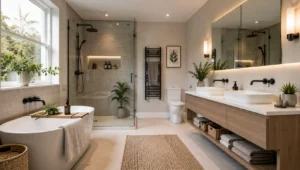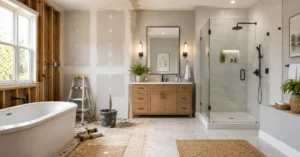
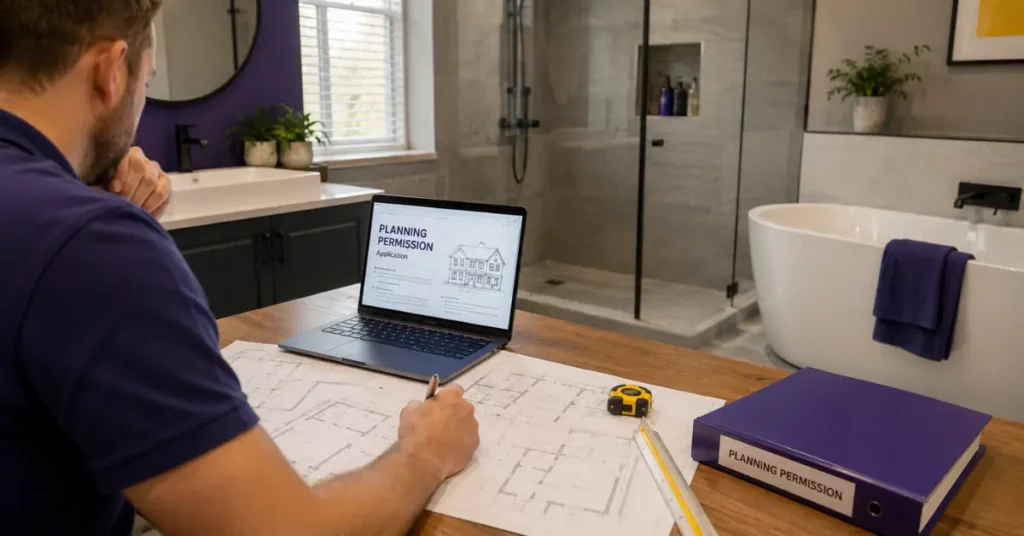
You do not need planning permission for a bathroom renovation in most UK homes. Replacing a bath, fitting a new shower, or updating tiles counts as internal work. Councils treat this as normal home maintenance. A few situations change that answer, though. Listed buildings, conservation areas, and major layout changes can bring planning permission back into the picture. This guide walks through each case so you know exactly where you stand.
In most UK homes, you do not need planning permission for a bathroom renovation. This covers refits, new fixtures, and plumbing updates. You only need planning permission for a bathroom renovation if your property is listed, sits in a conservation area, or the work changes the building’s structure or use.
When Planning Permission Is Not Required for a Bathroom Renovation
Most bathroom work falls under permitted development rights. These rights let homeowners make internal changes without council approval. You can replace a bath, swap a toilet, or update old pipework without asking anyone first. Retiling walls and floors needs no extra paperwork either. Removing a wall between a small toilet and a bathroom to create one larger room usually stays within these rights too.
A new electric shower, a fresh suite, or a different layout inside the same footprint all fall under this same protection. The room keeps its original use and the outside of the building stays untouched, so the council has no reason to step in.
Building regulations still apply, even when permission is not required. These rules cover drainage, electrical safety, and ventilation. A project can skip planning permission and still need to meet these safety standards.
When You Do Need Planning Permission for a Bathroom Renovation
Three situations bring planning permission back into play: property type, structural change, and a change in how a room gets used.
Listed Buildings and Conservation Areas
A listed building carries legal protection because of its history or design. Work inside a listed home, including a new bathroom, may need both planning permission and listed building consent. Even small internal jobs, like moving a pipe run through original plaster, can fall under this protection. Check a property’s status through Historic England’s National Heritage List before you start any work.
Homes in a conservation area face similar limits, since councils protect the character of a street or neighbourhood. Internal changes can still need permission if the local authority sets extra conditions, and any new external fittings, like a soil pipe on a front wall, draw closer scrutiny here than elsewhere.
Structural Changes, Extensions and Change of Use
Moving a bathroom to a new room, removing a load bearing wall, or adding an extension all count as structural change. These projects affect the shape and safety of the building. A structural engineer should assess any load bearing wall before work begins, regardless of whether planning permission applies.
Turning a garage, loft, or outbuilding into a bathroom counts as a change of use, and this shift almost always needs planning permission. The council wants to confirm the space can handle drainage, ventilation, and access safely before it becomes a livable room.
Bathroom Renovations in Flats and Leasehold Properties
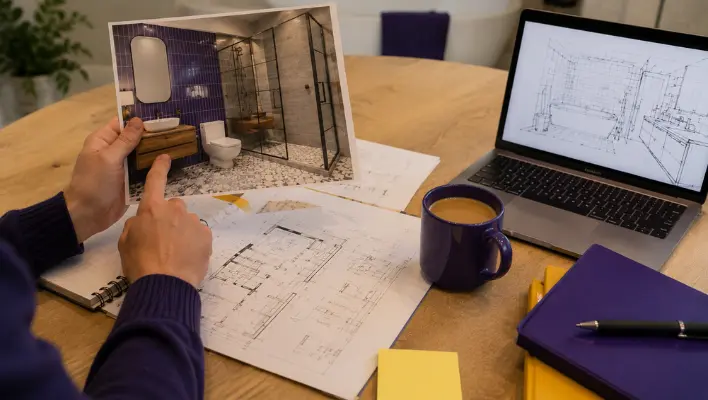
Flat owners face an extra layer of rules. Planning permission and your lease are two separate things. Most leases require written consent from the freeholder before any internal work starts, even a simple refit. A freeholder can refuse consent for reasons that have nothing to do with planning law, such as noise concerns for neighbours below.
Some blocks sit under an Article 4 Direction, which removes standard permitted development rights for that building. This means work that would normally need no permission at all, like a soil stack change, suddenly needs a full application. Check your lease and speak to your freeholder before booking any work, and confirm your block’s Article 4 status with your local council.
Who Is Responsible – Homeowner or Contractor
The legal duty to secure the correct permission sits with the property owner, not the contractor. A builder or plumber can guide you and even submit paperwork on your behalf, but the consequences of missing a required application land on you. This matters most when you hire a tradesperson who is not registered under a competent person scheme, since unregistered work often needs a separate building control inspection that gets missed.
Ask any tradesperson directly whether they are registered, and ask for proof in writing. A short conversation before work starts avoids a costly correction later.
Building Regulations vs Planning Permission – What’s the Difference
These two terms get mixed up often, but they cover different ground. Planning permission asks whether a project should go ahead at all. Building regulations ask whether the work gets done safely. A bathroom renovation can skip planning permission completely and still need to follow building regulations.
Key areas covered by building regulations include:
- Drainage and waste pipework, including correct falls and connections to the foul system
- Ventilation through a window or extractor fan, with a minimum airflow rate for fans without a window
- Electrical safety under Approved Document P, which governs special locations like bathrooms where water and electricity meet
- Water safety under Part G, including unvented cylinders, thermostatic mixing valves, and scald protection on showers and baths
A tradesperson registered under a competent person scheme can certify much of this work directly. This saves you from a separate application to building control for routine jobs like fitting an electric shower or a new boiler linked to the bathroom.
Cost and Timeline for a Planning Permission Application
Budget for both time and money if you need planning permission for a bathroom renovation. A standard householder application currently costs £258 in England through the Planning Portal, though fees can change, so check the current rate before applying. Listed building consent applications carry no fee, since this process protects heritage rather than regulating new development.
A Lawful Development Certificate sits at a lower cost than a full application, since the council is confirming existing rights rather than approving new work. This certificate becomes useful proof during a future sale.
Timelines vary by project type. A standard application takes up to eight weeks for a decision. Larger projects tied to an extension can take up to thirteen weeks, since these applications often need input from more than one council department. Build this waiting period into your renovation schedule from day one, rather than booking a contractor before you have a decision in hand.
Lawful Development Certificate – Proof You Did Not Need Permission
A Lawful Development Certificate gives you written proof that your renovation did not need planning permission. This document protects you later, especially during a house sale. Buyers, mortgage lenders, and solicitors often welcome this clear record, since it removes any doubt about past work.
You can apply for one through your local planning authority, and the fee sits well below a full planning application. The council reviews your plans against permitted development rules and issues the certificate once satisfied, usually within a similar timeframe to a standard application.
What Happens If You Renovate Without Required Permission
Skipping planning permission when it is required can lead to enforcement action. The council can ask you to undo the work and restore the room to its original state. Enforcement rules give councils up to four years for most building work and up to ten years for a change of use, so older unpermitted work can still surface during a sale.
An estate agent or solicitor will often flag missing permissions during a sale, which can delay or even end a deal. You can appeal a refused application through the Planning Inspectorate. An independent inspector reviews the case if you believe the council made the wrong call.
How to Check Before You Start Your Bathroom Renovation
A few steps confirm where you stand before work begins.
- Contact your local planning authority and describe the project clearly.
- Search the Planning Portal for guidance on your specific project type.
- Ask a qualified builder or architect to review your plans before any work starts.
- Check your property’s listed status and conservation area status online.
- Apply for a Lawful Development Certificate if you want written proof on file.
- Confirm your lease terms first if you live in a flat, since this sits apart from planning law entirely.
Taking these steps early avoids delays and protects your investment.
Frequently Asked Questions
Do I need planning permission for a bathroom extension?
Yes, in most cases. Extending your home to fit a bathroom changes the building’s structure, so it usually needs planning permission.
Do I need planning permission to add an ensuite to my bedroom?
Usually not, since this counts as internal work. Exceptions apply for listed buildings, flats under an Article 4 Direction, and new outside soil stacks.
Do I need planning permission to install a new soil stack outside?
Often yes on a front wall or in a conservation area. A stack on a rear wall or kept inside the building usually avoids the need for permission.
What happens if I ignore planning regulations?
The council can issue an enforcement notice and ask you to reverse the work, which can affect a future sale.
How long does the planning permission application process take?
Most standard applications take up to eight weeks, while larger projects linked to an extension can take up to thirteen weeks.
Do I need planning permission for a simple bathroom renovation?
No, since replacing fixtures or fitting a new shower falls under permitted development rights.
Do I need planning permission to convert a garage into a bathroom?
Yes, in most cases. Converting a garage changes its original use, so it usually needs planning permission along with building regulations approval.
Can a freeholder refuse a bathroom renovation in a flat even without planning issues?
Yes. A freeholder can refuse consent under lease terms for reasons separate from planning law, such as noise or disruption to other residents.
Here Is What Matters Most
Most bathroom renovations move ahead without needing planning permission, since internal updates and fixture swaps fall under permitted development rights. The exceptions sit with listed buildings, conservation areas, structural changes, and any shift in how a room gets used. Check your property’s status early, confirm your lease terms if you live in a flat, and apply for a Lawful Development Certificate when you want written proof on file. A short conversation with your local planning authority before work begins saves you time, protects your budget, and keeps your renovation moving without interruption.