
Signs Your Bathroom Needs a Renovation: How to Know It Is Time to Upgrade
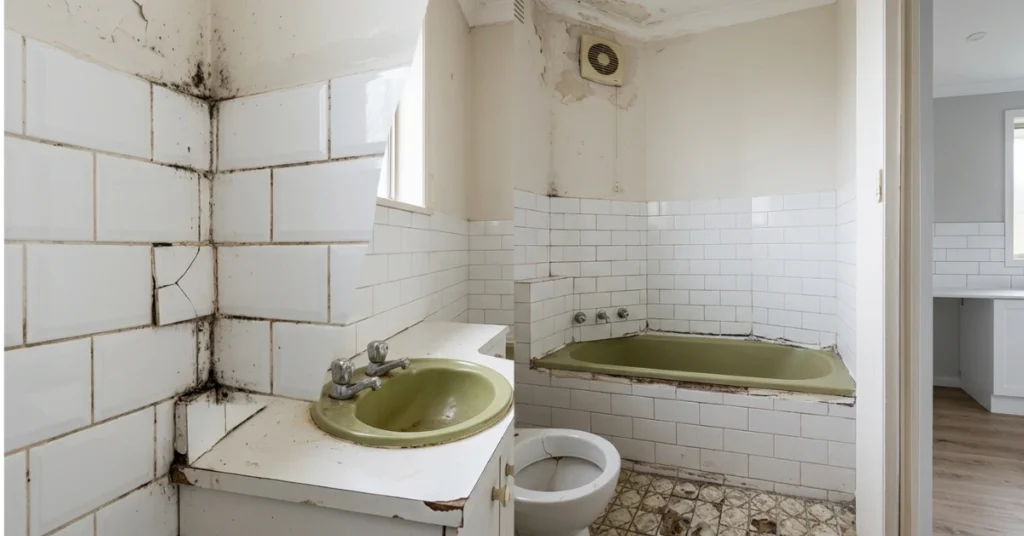
The most telling signs your bathroom needs a renovation are ones you live with every day without realising how much they are affecting your comfort, safety, and home value. Peeling tiles, persistent damp smells, outdated fixtures, and a layout that simply no longer works are all signals worth taking seriously.
This guide walks you through every major indicator that your bathroom has reached the point where a refresh is the smartest investment you can make. Whether you are planning to sell your home or simply want a space that functions and feels better, understanding these signs puts you in the right position to act at the right time.
You will learn how to spot structural and cosmetic issues early, understand what each problem means in practical terms, and discover when a minor refresh is enough versus when a full bathroom remodel makes more sense.
What Signs Your Bathroom Needs a Renovation Really Means
Recognising the signs your bathroom needs a renovation means understanding the difference between cosmetic wear and issues that affect the function, hygiene, and safety of the space.
A bathroom renovation is the process of updating or replacing elements of your bathroom, ranging from surface finishes like tiles and paint to full structural changes involving plumbing, waterproofing, and layout redesign.
Bathrooms are high-moisture, high-use environments. Unlike other rooms in a home, they face daily exposure to water, steam, temperature changes, and chemical cleaning agents. Over time, even well-built bathrooms show deterioration. The key is identifying which signs indicate cosmetic ageing and which point to deeper problems that require professional attention.
Why Spotting These Signs Early Protects Your Home and Your Budget
Acting on bathroom renovation warning signs at the right time is one of the most cost-effective decisions a homeowner can make. Here is why recognising these indicators early delivers real value.
Water damage caught early costs significantly less to repair than structural damage that has spread behind walls or under floors. Mould and mildew in a bathroom affect indoor air quality and can trigger respiratory issues if left unaddressed. Outdated plumbing wastes water and inflates utility bills over time. A refreshed bathroom adds measurable value to your property, with bathroom renovations delivering an average return on investment of 60% to 70% in the UK housing market. Modern sanitaryware and water-efficient fixtures reduce water usage by up to 50% compared to older installations. A functional, well-designed bathroom improves daily quality of life in practical, measurable ways.
Waiting until problems become urgent almost always results in higher costs and more disruption. Identifying the signs early keeps you in control of both the project and the budget.
The Key Signs Your Bathroom Needs a Renovation
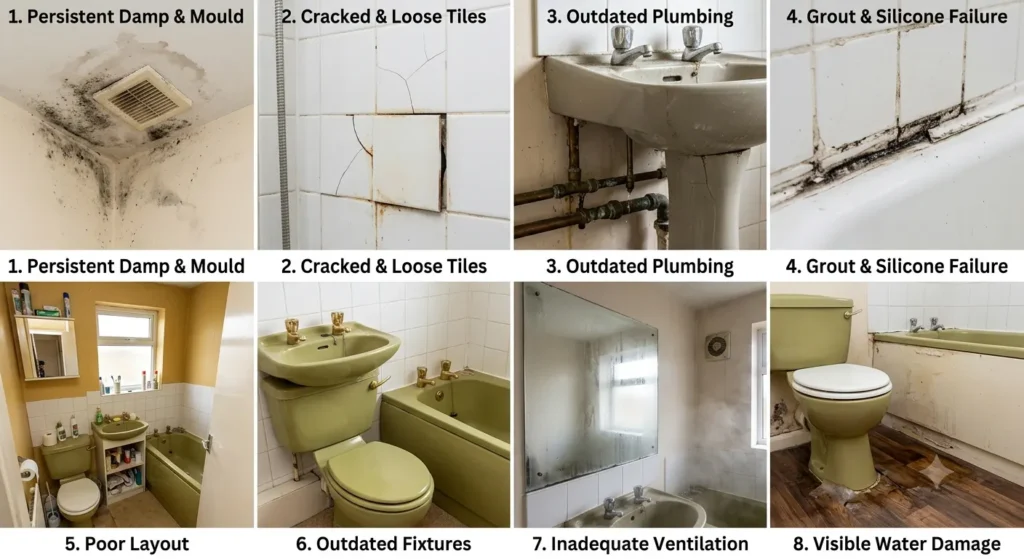
Sign 1: Persistent Damp, Mould, or Mildew
Mould appearing regularly on grout lines, around the bath seal, or on the ceiling is one of the clearest renovation indicators. A small amount of surface mould is manageable with cleaning, but recurring mould growth after repeated treatment suggests moisture is penetrating beneath the surface.
This often means the waterproofing membrane behind your tiles has failed, or the ventilation in the room is no longer adequate. Both issues require professional assessment and are best addressed as part of a broader renovation. If mould returns within weeks of being cleaned, that pattern confirms a structural moisture issue rather than a simple surface problem.
Sign 2: Cracked, Loose, or Stained Tiles
Tiles that have cracked, lifted from the wall, or developed stubborn stains that cleaning products cannot remove are a strong sign your bathroom surfaces need replacing. Cracked tiles around the shower or bath area allow water to travel behind the wall, leading to hidden damp and potential structural damage over time.
Loose tiles indicate that the adhesive bond has broken down, which is common in bathrooms over 10 to 15 years old. Once tiling starts to fail in one area, the surrounding tiles are usually not far behind. A simple test is to tap suspect tiles gently with your knuckle. A hollow sound confirms that the tile has detached from the substrate behind it and water may already be finding its way through.
Sign 3: Outdated or Inefficient Plumbing
Low water pressure, slow drainage, noisy pipes, or frequent blockages are all signs that the plumbing system in your bathroom is ageing and underperforming. Older plumbing infrastructure, particularly in homes built before the 1990s, may include lead pipes or fittings that no longer meet current Building Regulations standards.
Replacing plumbing as part of a bathroom renovation allows you to install modern, water-efficient systems that reduce consumption and improve performance significantly. It also provides the opportunity to address any non-compliant infrastructure before it causes a more serious and costly failure.
Sign 4: Grout Deterioration and Silicone Seal Failure
Grout that has cracked, discoloured, or begun to crumble is more than a cosmetic issue. Failing grout creates gaps where water can penetrate the wall structure. Similarly, silicone seals around the bath, shower tray, and basin that have turned black or pulled away from the surface have lost their waterproofing function entirely.
Re-grouting and resealing are temporary solutions in a bathroom that is otherwise showing multiple signs of wear. If grout is failing throughout the room, a full retile is the more sensible long-term approach. Black silicone that cannot be fully removed with cleaning products has typically been colonised by mould throughout its thickness, meaning replacement is the only effective remedy.
Sign 5: Poor Layout and Inadequate Storage
A bathroom that feels cramped, has poor traffic flow, or lacks sufficient storage for a modern household is a strong candidate for redesign. Layout issues are often overlooked because homeowners adapt to them over time, but a poorly configured bathroom reduces daily comfort considerably.
Modern bathroom design prioritises functional zoning, accessible layouts, and integrated storage solutions. Reconfiguring the space during a renovation can transform how the room feels and functions without necessarily increasing its footprint. Wall-hung sanitaryware, recessed shelving, and vanity units with integrated storage can make even a compact bathroom feel organised and spacious when incorporated into a thoughtful redesign.
Sign 6: Outdated Fixtures and Sanitaryware
Avocado green basins, harvest gold bathtubs, and chunky chrome fittings from the 1980s are obvious visual indicators that a bathroom renovation is overdue. Beyond aesthetics, older sanitaryware often uses significantly more water per flush or per fill than current water-efficient models.
WC cisterns installed before 2001 commonly use 9 litres per flush. Modern dual-flush toilets use as little as 4 litres for a reduced flush, saving a typical household thousands of litres of water annually. If your bathroom fixtures look dated by two or more decades, the combination of aesthetic impact and efficiency savings from replacement makes a compelling case for renovation regardless of whether structural issues are also present.
Sign 7: Inadequate Ventilation and Persistent Condensation
A bathroom that steams up quickly and takes a long time to clear, or one where condensation consistently appears on mirrors and walls long after use, is a sign that ventilation is insufficient. Poor ventilation accelerates mould growth, damages paint and plasterwork, and increases humidity levels that affect the whole home.
Building Regulations in the UK require mechanical ventilation in bathrooms without openable windows. If your bathroom extractor fan is undersized, noisy, or completely absent, upgrading ventilation should be a central part of any renovation plan. An adequately sized extractor fan connected to an external duct is the most effective single measure for controlling bathroom humidity and protecting the room’s structure over the long term.
Sign 8: Visible Water Damage or Staining on Floors and Walls
Water staining on the floor around the toilet base, discoloration on walls near the bath or shower, or soft spots in the flooring are signs that water has been penetrating the structure of the room over a period of time. These issues escalate when left unaddressed and can compromise the subfloor or wall cavity.
A professional bathroom fitter will assess the extent of water damage before any new installation begins, ensuring the underlying structure is sound before new surfaces are applied. Soft flooring around the toilet base in particular is a sign that the toilet seal or a nearby pipe connection has been leaking, and the longer this is left, the more extensive the subfloor remediation required will be.
Sign 9: The Bathroom Is Becoming Unsafe
Safety concerns represent the most urgent signs that a bathroom renovation is necessary. Slippery floor tiles with no grip, a bath that is difficult for elderly or less mobile household members to enter and exit safely, grab rails that were never installed, inadequate lighting that makes the room feel dark and hazardous, and electrical fixtures that are visibly old or non-compliant all create genuine safety risks in daily use.
Modern bathroom renovation addresses safety alongside aesthetics, incorporating non-slip flooring, appropriate lighting levels, accessible shower and bath solutions, and correctly installed electrical systems that comply with current Part P regulations.
Sign 10: You Simply No Longer Enjoy Using the Space
One of the most honest signs your bathroom needs a renovation is that you have stopped enjoying it. A bathroom should be a functional, comfortable, and pleasant environment to start and end each day. If yours feels dingy, dated, cramped, or simply uninspiring, that experience has a genuine effect on your daily quality of life that a well-considered renovation can directly address.
Your bathroom does not need to be falling apart to justify renovation. A space that no longer reflects how you want to live, or that fails to meet your household’s current needs, is a perfectly valid reason to invest in an upgrade.
Expert Tips for Assessing Your Bathroom Before Renovation
Start With a Systematic Inspection
Walk through your bathroom and assess each element individually, covering tiles, grout, silicone seals, fixtures, flooring, walls, ventilation, and plumbing access points. Make a written list of everything that is showing wear or underperforming. Photograph each issue so you have a clear visual record to share with bathroom fitters when requesting quotes.
A systematic inspection conducted room by room, surface by surface, gives you the most accurate picture of your bathroom’s current condition and forms the basis of a realistic renovation brief.
Separate Cosmetic Issues From Structural Ones
Cosmetic issues like faded paint or a dated mirror can be resolved with minor updates. Structural issues involving waterproofing failure, plumbing, or subfloor damage need to be addressed as part of a full renovation. Prioritising structural integrity before aesthetics always delivers a better long-term result and prevents the situation where a newly decorated bathroom develops deeper problems within a short time of completion.
Get Multiple Professional Quotes
Before committing to a renovation, obtain at least three quotes from registered bathroom fitters. A detailed quote should include a breakdown of labour, materials, waste removal, and any structural remediation work. This gives you a realistic picture of scope and cost before work begins.
Compare quotes carefully to ensure they cover the same scope of work. A significantly lower quote often reflects either a reduced scope or lower quality materials rather than genuine cost efficiency.
Consider the Age of Your Bathroom
Bathrooms typically have a functional lifespan of 10 to 20 years before they require significant renovation. If your bathroom is approaching or has passed this threshold and is showing multiple signs of wear, a comprehensive renovation delivers better value than piecemeal repairs over time. Each individual repair is a cost that contributes nothing to the long-term value of the space, whereas a planned renovation upgrades the entire room in a single, coordinated project.
Consult a Professional Before Making Final Decisions
A professional bathroom designer or fitter can assess your bathroom in person and give you an informed view of which issues are cosmetic and which require structural attention. Many bathroom renovation specialists offer free initial consultations, and a professional assessment at this stage helps you plan your renovation with accurate information rather than assumptions.
A professional can also identify issues that are not immediately visible to an untrained eye, such as early waterproofing failure or subfloor movement, before they develop into more significant and costly problems.
Renovation Versus Refresh: Choosing the Right Level of Intervention
Understanding which level of intervention your bathroom requires helps you plan an appropriately scoped project that solves the right problems at the right cost.
Cosmetic Refresh
If your bathroom has surface staining or dated decor but no structural issues, a cosmetic refresh covering fresh paint, new accessories, an updated mirror, and small fixture replacements is the appropriate response. A cosmetic refresh typically costs between £500 and £1,500 and can be completed without major disruption or tradesperson involvement.
Partial Renovation
When grout is failing, silicone seals have broken down, or individual fixtures need replacing, a partial renovation covering retiling, resealing, and selected fixture updates is the right level of intervention. A partial renovation addresses the specific elements that are underperforming without the cost and disruption of a full strip-out.
Full Bathroom Renovation
Where plumbing issues, water damage, widespread tile failure, or layout problems are present, a full renovation is required. This involves a complete strip-out of the existing bathroom and replacement of every element from the structure outward, including waterproofing, plumbing, electrical work, tiling, and all fixtures. A full bathroom renovation in the UK typically costs between £4,000 and £10,000 depending on the size of the room and the specification chosen.
Full Bathroom Redesign
When layout problems, structural concerns, or a combination of multiple issues across all areas are present, a full bathroom redesign provides the most comprehensive solution. This approach reconfigures the entire space from scratch, including new plumbing positions, a revised layout, new structural elements, and a completely new design scheme. A full bathroom redesign is the highest investment level but delivers the greatest transformation in terms of function, aesthetics, and long-term value.
How Many Signs Are Enough to Justify a Bathroom Renovation
A single cosmetic sign such as faded paint or an outdated mirror does not necessarily justify a full renovation. However, when two or more of the signs covered in this guide are present simultaneously, particularly when any structural signs such as water damage, mould, or plumbing issues are among them, a renovation becomes the most sensible and cost-effective course of action.
The cost of addressing multiple issues together within a planned renovation is almost always lower than the cumulative cost of addressing each issue separately over time. A planned renovation also gives you the opportunity to upgrade and redesign the space comprehensively rather than simply returning it to its previous condition through a series of repairs.
Conclusion: Take the Signs Seriously and Renovate at the Right Time
The signs your bathroom needs a renovation are rarely subtle once you know what to look for. From failing waterproofing and cracked tiles to outdated plumbing and poor ventilation, each indicator points toward a space that is working against you rather than for you.
A well-timed bathroom renovation protects your property, improves daily comfort, and delivers genuine return on investment. The key is acting before minor issues escalate into costly structural repairs.
If your bathroom is showing two or more of the signs covered in this guide, now is the right time to consult a qualified bathroom fitter and begin planning your renovation with confidence.
Frequently Asked Questions
How do I know if my bathroom needs renovating or just updating?
If your bathroom has surface-level issues like faded decor, dated accessories, or a worn mirror, a cosmetic update may be enough. However, if you are seeing signs of water damage, mould that returns after cleaning, cracked tiles, or plumbing problems, a proper renovation is the right course of action. A professional assessment will confirm which level of intervention is appropriate for your specific situation.
How long does a bathroom last before needing renovation?
Most bathrooms have a functional lifespan of between 10 and 20 years before they require significant renovation work. The timeline depends on the quality of the original installation, how heavily the bathroom is used, and how well it has been maintained. Bathrooms that were fitted with higher-quality materials and proper waterproofing tend to last toward the upper end of this range.
Can mould in a bathroom be a sign of a deeper problem?
Yes, recurring mould in a bathroom is often a sign of a deeper issue rather than just a surface problem. If mould returns within weeks of being cleaned, it usually indicates that moisture is penetrating behind tiles, the ventilation is inadequate, or the waterproofing membrane has failed. These are structural concerns that require professional attention as part of a renovation.
What adds the most value to a bathroom renovation?
The upgrades that add the most value to a bathroom renovation are updated sanitaryware, walk-in shower installation, quality tiling, improved lighting, and efficient ventilation. In the UK housing market, a well-executed bathroom renovation typically returns 60% to 70% of its cost in added property value. Functional improvements consistently outperform purely cosmetic ones in terms of buyer appeal.
Is it worth renovating a small bathroom?
Renovating a small bathroom is absolutely worth it, particularly when the space has structural issues or very outdated fixtures. A thoughtfully designed small bathroom renovation can dramatically improve both the function and the perceived size of the room through smart layout choices, larger format tiles, and wall-hung sanitaryware that frees up floor space.
What are the most common signs that bathroom tiles need replacing?
The most common signs that bathroom tiles need replacing include cracking across the tile surface, tiles that sound hollow when tapped, tiles lifting away from the wall, grout that is crumbling or has turned black throughout the room, and persistent staining that does not respond to cleaning. Any of these signs in a wet area like a shower or around a bath should be assessed promptly to prevent water from reaching the structure behind the wall.
How much does a full bathroom renovation cost in the UK?
A full bathroom renovation in the UK typically costs between £3,000 and £10,000 or more depending on the size of the room, the quality of materials chosen, and the complexity of any plumbing or structural work involved. A basic but complete renovation in a standard family bathroom sits around £4,000 to £6,000. Luxury finishes, underfloor heating, and bespoke features will increase costs beyond this range.
Should I renovate my bathroom before selling my house?
Renovating your bathroom before selling your house is a sound investment when the existing bathroom is visibly dated or showing signs of wear. Buyers consistently rank kitchen and bathroom condition among their top priorities when assessing a property. A clean, modern, well-functioning bathroom can positively influence buyer perception and support a stronger asking price.