Standing in your Wolverhampton bathroom, wondering whether to rip everything out and start again, the decision between a wet room and a walk-in shower can feel overwhelming. Both promise that sleek, modern look you see in glossy magazines, but they are fundamentally different in how they are built, how much they cost, and how they will perform in your home day after day.
One is a fully waterproofed room where the entire floor becomes the drainage zone. The other is a defined showering area inside an otherwise normal bathroom. Getting this decision wrong can mean thousands of pounds wasted or, worse, expensive leaks and damage that are a nightmare to fix. This guide breaks down everything you need to know about the wet room vs walk-in shower debate, with practical advice tailored for Wolverhampton homeowners and the realities of UK bathrooms.
What Is the Real Difference Between a Wet Room and a Walk-In Shower?
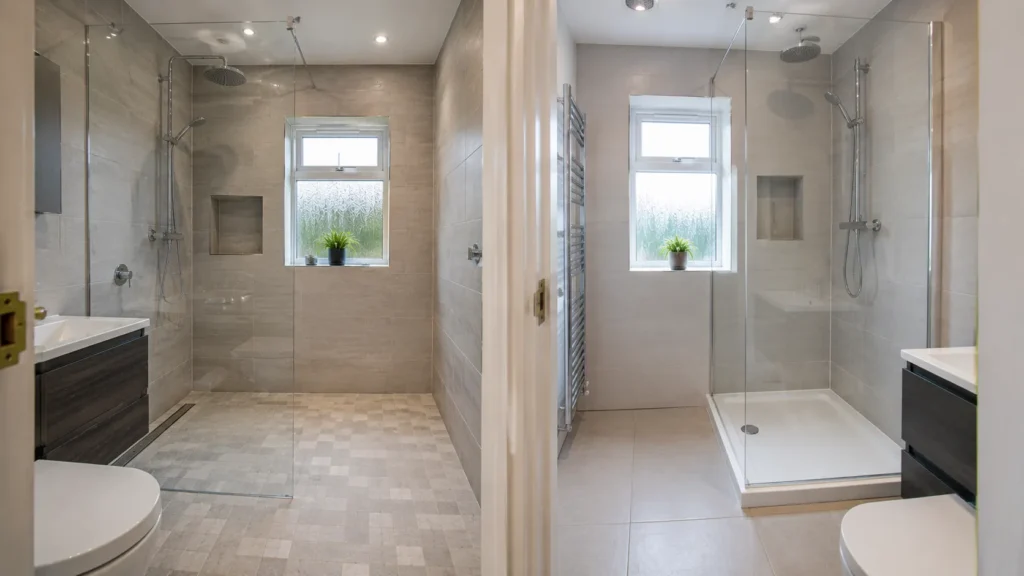
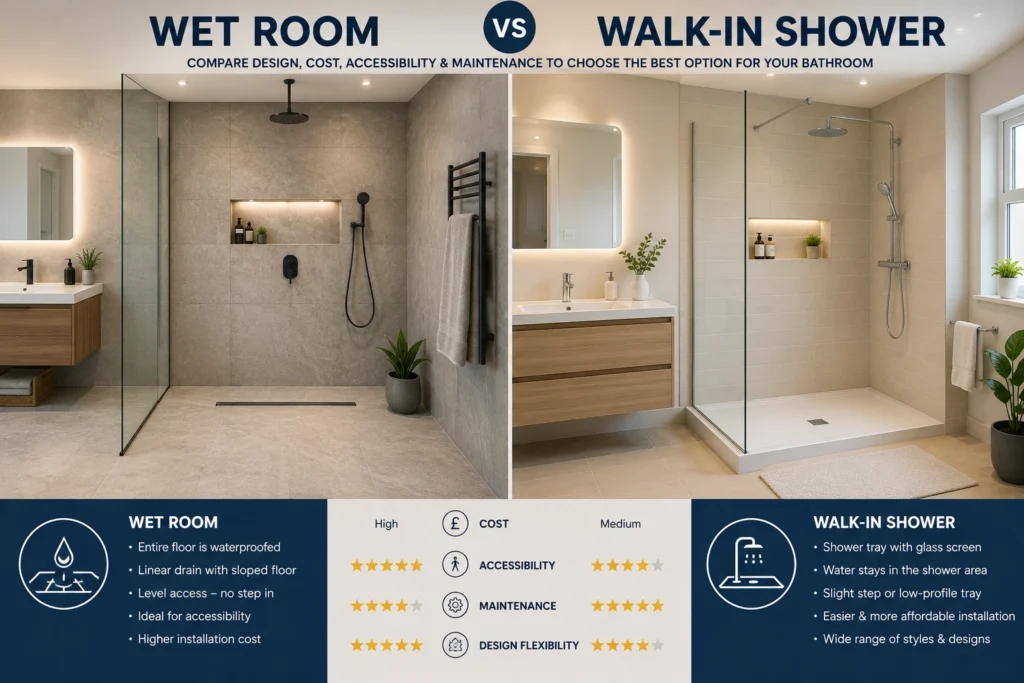
The confusion starts because many retailers use these terms interchangeably, but they are not the same thing. A wet room is a fully tanked bathroom where the entire floor acts as the shower base. There is no shower tray at all. The whole floor is graded with a gentle slope towards a linear drain, and the room is effectively a single waterproof envelope from wall to wall. This means the entire bathroom gets wet when you shower, so careful planning of where you place your basin and toilet is essential.
A walk-in shower, on the other hand, is a defined showering area within a normal bathroom. It features a low-profile tray, typically sitting at 40 to 70 millimetres above the floor, paired with one or more frameless glass panels that contain the water. The rest of the bathroom floor stays dry. The visible difference is mostly the drain. A wet room has a linear drain set into the floor, while a walk-in shower has a drain inside the tray. This structural difference matters because the cost, installation timeline, and what happens if something goes wrong are genuinely different for each option.
How Much Does Each Option Cost in the UK in 2026?
Cost is often the deciding factor for homeowners, and the reality is that wet rooms command a significant premium. For a standard UK bathroom of around five to six square metres, a walk-in shower installation typically costs between £3,500 and £6,500 for a mid-range finish, rising to £10,000 or more for premium specifications. A wet room, by comparison, starts at around £7,000 for a basic installation, with mid-range projects falling between £9,000 and £12,000, and premium options exceeding £12,000.
The cost difference comes down to the floor build-up. A walk-in shower uses a pre-formed tray with built-in gradients, which is simpler and quicker to install. A wet room requires a professionally installed substrate former or a screeded gradient fall, a full-room tanking system, a linear drain, and additional labour days. The wet-room premium over a walk-in shower typically breaks down to about £1,500 to £3,500 extra on the total project cost. For that premium, you are paying for a more complex installation that requires specialist skills and carries higher risks if not done correctly
Installation Requirements and Technical Considerations
This is where the two options really diverge, and it is essential to understand what your property can accommodate before making a decision. A walk-in shower is the more straightforward installation. The shower tray is set into position, the glass panels are fixed, and no major structural alterations to the floor are required. This makes walk-in showers a practical choice for bathrooms with limited floor depth, which is common in many Wolverhampton homes, particularly in upstairs bathrooms with timber floors. Most good general bathroom installers can handle a walk-in shower competently.
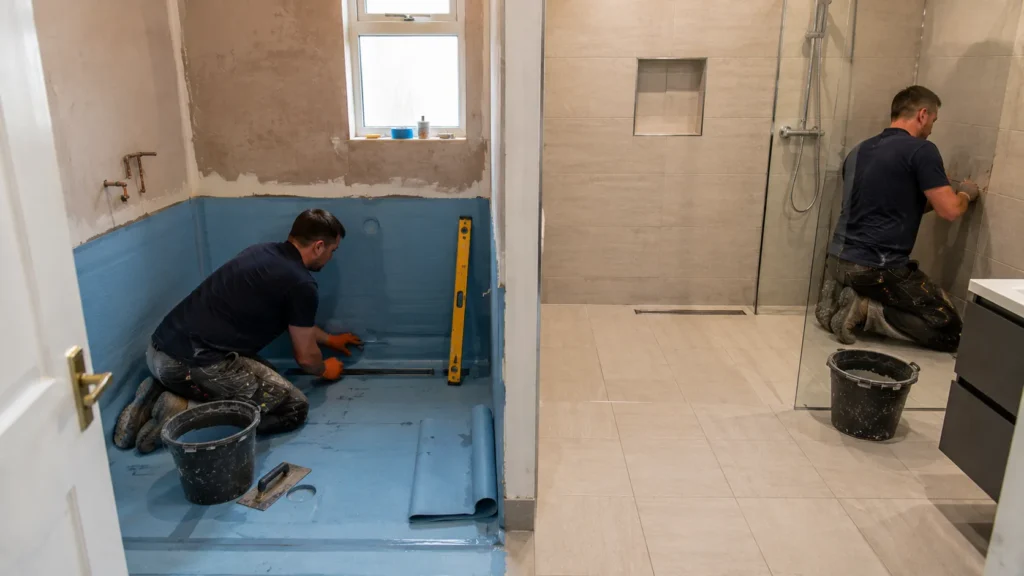
A wet room requires considerably more preparation. The entire bathroom floor and the wet-zone walls must be professionally tanked before tiling. This involves applying a waterproofing membrane, reinforcement tape at joints and corners, and careful sealing around all pipe penetrations. The floor gradient must be subtle enough to go undetected underfoot whilst still clearing water efficiently. Getting this wrong is one of the most common wet room installation failures, leading to pooling water or drainage in the wrong direction.
Experts strongly recommend professional installation for wet rooms. Poor tanking can lead to damp, mould, and structural damage that is often expensive to fix and difficult to detect until significant harm has occurred.
Which Option Is Better for Accessibility?
Both wet rooms and walk-in showers offer excellent accessibility compared to traditional shower enclosures, but there are important differences. A wet room is the only bathroom configuration that fully complies with Approved Document M4(3) without modification, which is the UK standard for wheelchair-user dwellings. The level-access shower area, with no kerb or step to navigate, and a minimum showering area of 1200 by 1200 millimetres, is exactly what a properly built wet room provides. This makes it the superior choice if you or a family member uses a wheelchair or walking aids.
A walk-in shower with an ultra-low-profile tray at 25 millimetres or less is very close to flush and removes the trip hazard of a standard shower tray lip. It is suitable for people with reduced mobility, older users, or those requiring easier shower access for children. However, there is still a minor edge to step over, which can be a barrier for some.
For most Wolverhampton homeowners who are not specifically designing for wheelchair use, a walk-in shower with a low-profile tray offers a very good balance of accessibility and practicality ..
Design, Aesthetics, and How They Work in Practice
Both options deliver a clean, contemporary look that suits modern bathrooms. Frameless glass panels allow light to pass across the room, making the space appear larger. Traditional shower enclosures, with their bulkier frames and hinged doors, break up the visual flow of a bathroom. Walk-in and wet room designs avoid this entirely. The distinction comes down to how defined you want the shower zone to be. Walk-in showers use a tray-and-panel configuration that creates a clear boundary within the room. Wet rooms go further, removing the tray altogether for a truly seamless floor finish from wall to wall.
In practice, a walk-in shower tends to be more comfortable in cooler bathrooms. With no enclosing door, warm steam escapes more readily, which can make the showering experience feel less comfortable, particularly in winter. A wet room, being open to the entire room, can feel colder still.
Some users compensate by running underfloor heating or additional radiators to maintain a comfortable temperature, which increases energy costs. Water containment is another practical consideration. If the glass panel configuration of a walk-in shower is not well planned, water may escape beyond the shower zone. A wet room avoids this issue because the whole floor is designed to handle water, though the entire room does get wet.
Maintenance and Cleaning
Day-to-day maintenance for wet rooms versus walk-in showers is manageable with the right habits. For walk-in showers, keeping the glass panels clear is the main task, and many panels now come with easy-clean coatings that repel soap scum and reduce cleaning time. Wet rooms simplify cleaning overall because fewer ledges and joints give grime fewer places to accumulate. The floor drain in a wet room will need regular cleaning to remove soap residue, limescale, and hair, and a drain with an easy-access trap and hair strainer makes this considerably more straightforward.
Good ventilation matters for both options, helping the room dry out quickly and preventing mould. An extractor fan is recommended in any enclosed bathroom, and UK guidance in Approved Document F specifies minimum intermittent extraction rates of around 15 litres per second. The repair implications are also worth considering. If a walk-in shower develops a problem, the issue is usually localised to the tray or screen and is quicker to fix. A tanking failure in a wet room is expensive and disruptive, often requiring the entire floor to be taken up and the job started again.
Frequently Asked Questions (FAQ)
What is the difference between a wet room and a walk-in shower?
A wet room is a fully waterproofed bathroom where the entire floor acts as the shower base with no tray, and water drains through a gradient floor into a linear drain. A walk-in shower is a defined showering area within a normal bathroom that uses a low-profile shower tray and glass panels to contain water, with the rest of the bathroom floor staying dry.
Which is cheaper, a wet room or a walk-in shower?
A walk-in shower is significantly cheaper. For a standard UK bathroom, a walk-in shower typically costs between £3,500 and £6,500, while a wet room starts at around £7,000 and can exceed £12,000. The wet room premium is usually £1,500 to £3,500 more than a walk-in shower for the same footprint.
Can you fit a wet room upstairs in a Wolverhampton home?
Yes, but it requires careful planning. A wet room needs a minimum of 100 millimetres of floor depth to accommodate the gradient and drainage, which can be challenging in timber-floored upstairs bathrooms. A walk-in shower with a low-profile tray needs only about 50 millimetres, making it a more practical choice for many upstairs installations .
Are wet rooms worth the extra cost?
A wet room is worth the extra cost if you need full accessibility for a wheelchair user, want the most seamless open-plan look possible, have a small ensuite under five square metres where floor continuity makes the room feel larger, or have a short ceiling height where a tray would eat into headroom. For most family bathrooms, a walk-in shower offers better value.
Which is better for a small bathroom?
Both can work, but the choice depends on your priorities. A walk-in shower is simpler, cheaper, and easier to install in small spaces. However, a wet room in a small ensuite under five square metres can make the room feel larger because the continuous tiled floor reads as more space than a tray-and-screen arrangement that breaks the room up.
Do walk-in showers cause water to splash everywhere?
They can if not properly designed. Proper screen sizing and positioning are essential to contain water within the shower zone. A good glass panel that is long enough and positioned correctly will manage splashing effectively. Wet areas are best tiled with slip-resistant tiles rated R10 or R11, which is standard practice.
Can I convert my existing shower to a wet room?
Converting an existing shower to a wet room is a major renovation that requires removing the existing tray, altering the floor structure to create a gradient, fully tanking the room, and often changing the drainage. It is significantly more complex and expensive than replacing a shower with another walk-in shower. Professional installation is essential.
Ready to Transform Your Wolverhampton Bathroom?
Choosing between a wet room and a walk-in shower comes down to understanding your specific situation. Think about how you use your bathroom every day, who uses it, what your budget can realistically stretch to, and what your property can structurally accommodate. A wet room is the right choice if you need full accessibility, want the most seamless visual finish possible, or are working with a very small space where every inch counts. A walk-in shower is the more practical, cost-effective choice for most family bathrooms and homes where budget and installation simplicity matter.
Whichever option you choose, professional installation by a specialist is crucial, particularly for wet rooms where the risks of getting it wrong are high. Wolverhampton has several experienced bathroom installers who can guide you through the process and ensure your new shower meets all UK building regulations. Take your time, weigh up the options carefully, and do not be afraid to ask for professional advice. With the right approach, you can create a bathroom that works beautifully for your home and your lifestyle.